


Stephen Hopkins’s hand shook constantly.
It was palsy, a tremor that made everyday tasks difficult. Writing was the worst of it. When Hopkins picked up a pen, his hand trembled. His signature wandered across the page.
This was the hand that would sign the Declaration of Independence.
Hopkins was sixty-nine years old on August 2, 1776, the second oldest signer after Benjamin Franklin. He had been in politics for nearly fifty years. Longer than some of his fellow delegates had been alive.
People say he looked at the wavering line he had just drawn and remarked: “My hand trembles, but my heart does not.”
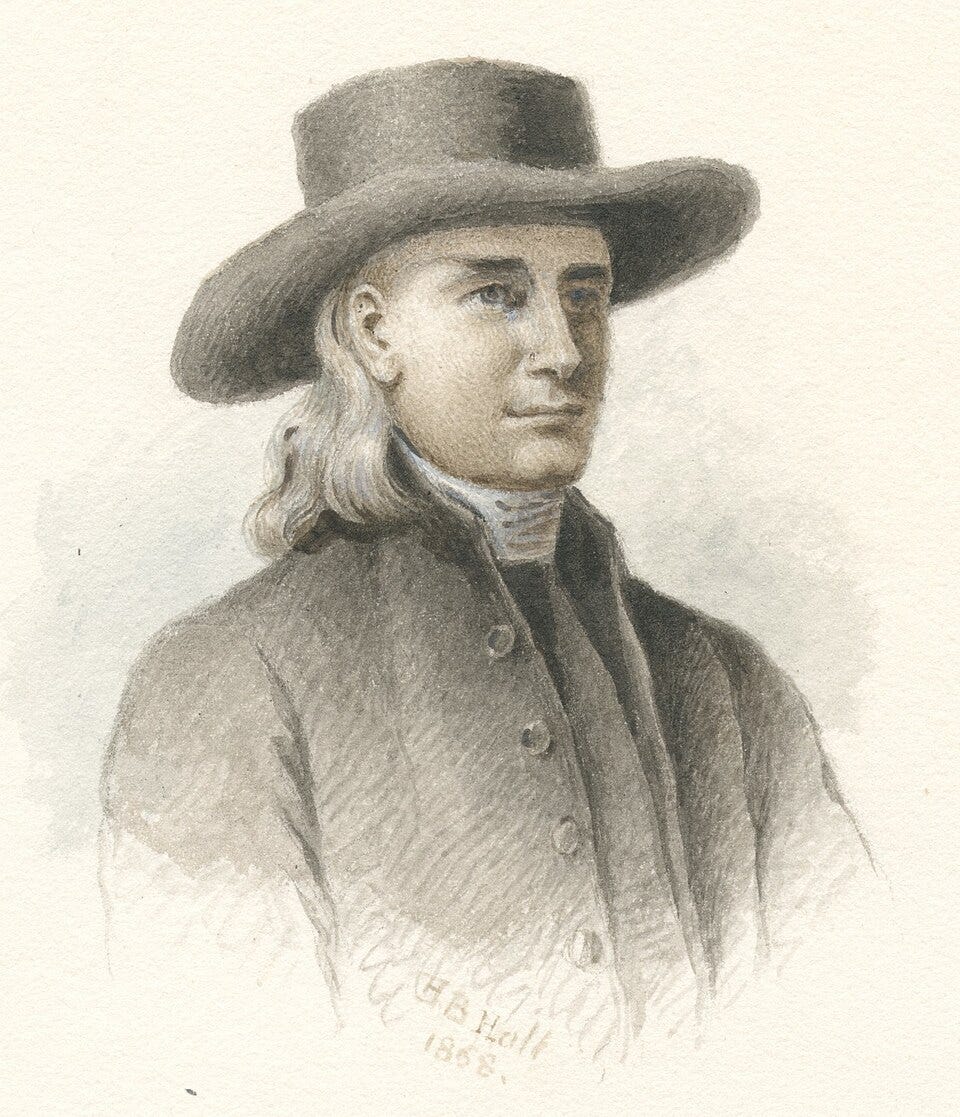
The story may be legend.
Many famous founding-era quotes turn out to be invented decades after the fact. But this one captures something true about the man and the moment.
Hopkins was old and sick. Fifty years in politics had taught him exactly what they were risking.
And his heart did not tremble.
The Self-Made Man
Stephen Hopkins was born in Providence, Rhode Island, on March 7, 1707.
His father was a farmer. Not wealthy, but respectable. Young Stephen received a basic education, enough to read and write and work with numbers, but nothing like the classical training that Virginia gentlemen received.
He educated himself. Like Roger Sherman (the cobbler who signed every founding document), Hopkins read a lot. He taught himself mathematics, surveying, and astronomy, and studied law without attending any law school. There weren’t any in Rhode Island anyway.
By his twenties, Hopkins was working as a surveyor and a farmer, with a growing trade business on the side. He married, had seven children, and slowly accumulated property and influence. At twenty-five, he was elected to the Rhode Island General Assembly.
This was the beginning of a political career that would span half a century.
The Political Animal
Rhode Island was the smallest colony, but its politics were ferocious.
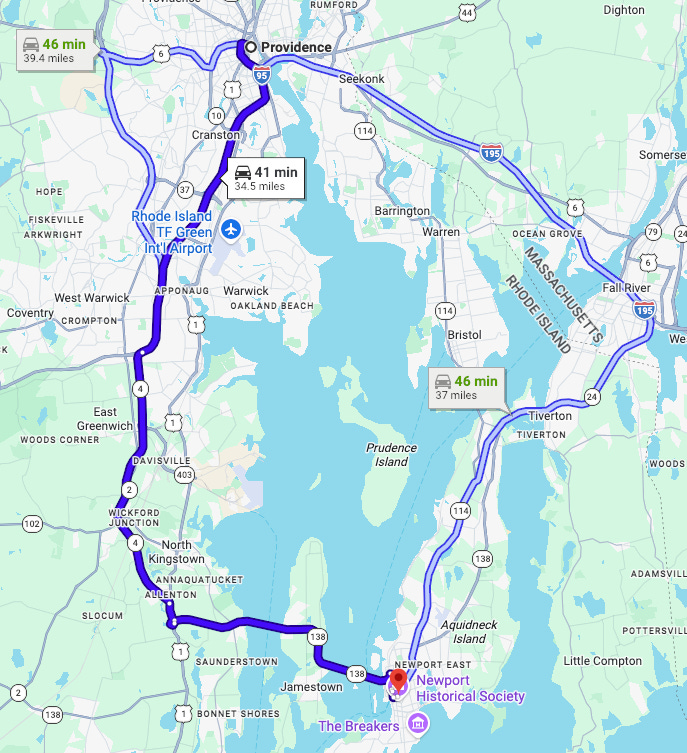
The colony was divided between two factions. One centered in Providence, the other in Newport. The factions fought over everything: taxes, trade policy, paper money, patronage. Elections were bitterly contested. Alliances shifted constantly.
Hopkins was a master of this environment.
He served in the General Assembly almost continuously from 1732 to 1752. He was elected governor nine times between 1755 and 1768. Not consecutively, because his chief rival, a Newport merchant named Samuel Ward, beat him three times. But Hopkins kept coming back.
When he lost, he organized for the next election. When he won, he rewarded his allies and punished his enemies. He and Ward traded the governor’s office back and forth for over a decade.
This was politics in its rawest form. No high-minded debates about liberty and tyranny. Just favors, threats, and deals.
He built coalitions and cut deals. By the 1760s, he was one of the most experienced politicians in any American colony.
The Revolutionary
When the Stamp Act crisis erupted in 1765, Hopkins was ready.
He had been thinking about colonial rights for years. In 1764, he published a pamphlet called The Rights of Colonies Examined. It was one of the first printed colonial arguments against British taxation without representation. The pamphlet was widely circulated and translated into French.
Hopkins argued that the colonies had their own legislatures, and only those legislatures could impose taxes on colonial subjects. The British Parliament, in which the colonies had no representatives, had no authority to tax them. The Rhode Island General Assembly endorsed Hopkins’s pamphlet and sent copies to other colonies. It was a small step, but it helped other colonies see that they had the same argument.
When the First Continental Congress met in 1774, Hopkins was there. He was sixty-seven years old. Already ancient by colonial standards. But his mind was sharp and his political instincts were intact.
He served in both the First and Second Continental Congresses, becoming one of the senior statesmen of the revolutionary movement. Younger delegates like John Adams and Thomas Jefferson looked to men like Hopkins for wisdom and experience.
The Network
Hopkins mattered because of who he knew.
His house in Providence was a gathering place for curious minds. He corresponded with Benjamin Franklin about science, and in 1769 the two men independently observed the Transit of Venus across the sun. He helped found the Providence Library Company and the college that would become Brown University.
When Franklin arrived at the Continental Congress, he and Hopkins renewed an old friendship. They understood each other. Self-educated men drawn to science, shrewd enough to count votes before a debate started.
This network mattered. The Continental Congress ran on trust. Delegates needed to know who would hold a vote and who would waver.
Hopkins, with his fifty years of political experience, was a bridge between generations. He could connect the old guard and the young radicals. He knew when debate was finished and it was time to vote.
The Signing
On August 2, 1776, the delegates gathered in the Assembly Room of the Pennsylvania State House to sign the final copy of the Declaration of Independence.
The engrossed parchment lay on a table. Delegates came forward one at a time, dipped their quills in ink, and scratched their names onto the page. No speeches. No ceremony. Just signatures.
Then Hopkins stepped forward.
The palsy had been getting worse for years. Writing was painful and slow. The signature Hopkins left that day wobbles across the page, the letters unsteady where other signatures are crisp.
“My hand trembles, but my heart does not.”
Whether he actually said it or not, the line became part of Hopkins lore. It said everything about him. The hand trembled. The name went on the page.
The Later Years
After signing the Declaration, Hopkins’s health continued to decline.
He attended the Continental Congress intermittently through 1778, but travel from Providence to Philadelphia was brutal on a body already failing. By 1780, he had largely retired from public life.
He spent his final years at his home in Providence, surrounded by books and correspondence. He died on July 13, 1785, at the age of seventy-eight. Nine years after signing the Declaration, too soon to see the Constitution ratified but late enough to know that independence had been won.
Hopkins was buried in Providence’s North Burial Ground. His gravestone identifies him as a signer of the Declaration. The marker that has kept his name alive when other Rhode Island politicians have been forgotten.
What Hopkins Teaches Us
Stephen Hopkins’s story is about persistence.
Fifty years in politics.
Nine terms as governor.
Two Continental Congresses.
His body was failing, but his mind stayed sharp. His hand shook, but he signed.
Most people don’t last that long. They burn out, lose elections, make enemies, retire in disgust. Politics is exhausting, and the founders’ era was no exception. The Continental Congress was a grind: long debates, uncomfortable lodgings, uncertain outcomes, constant threats.
Hopkins kept showing up.
Not every act of courage is dramatic. Sometimes the most valuable thing you can do is stay in the room.
Hopkins stayed in the room. His hand trembled, but he signed anyway.
Next: Edward Rutledge
From the oldest signers, we turn to one of the youngest.
Edward Rutledge of South Carolina was just twenty-six years old when he signed the Declaration. The youngest of all fifty-six signers. He was a lawyer, educated in London, polished and ambitious. He would go on to become governor of South Carolina.
But in 1776, Rutledge was a skeptic. He thought independence was premature. He wanted more time to prepare, more assurance of foreign support, more certainty of success.
He was outvoted. And then, remarkably, he changed his mind. Having lost the argument, Rutledge signed anyway. Putting his name on a document he had argued against, because the cause was bigger than his reservations.
Next time, we’ll tell the story of the youngest signer and what it means to sign something you didn’t entirely support.
This is Essay #11 of 56 in the “The 56” series, profiling every signer of the Declaration of Independence. New essays every Friday and Sunday, culminating on July 4, 2026, the 250th anniversary of American independence.
Subscribe to follow the journey.
Sources: