


Somewhere below the waterline of HMS Jersey, Thomas Clark was starving.
The ship sat anchored in Wallabout Bay, off the coast of Brooklyn. The British had decommissioned it as a warship and repurposed it as a floating prison. The British packed over a thousand men into a hull built for four hundred. Guards had sealed the portholes. Iron bars covered breathing holes drilled every ten feet along the sides. The air below deck was so thick that a candle couldn’t stay lit.
According to later accounts, Thomas wasn’t in the general population. His captors had locked him in the ship’s dungeon, a separate cell below even the main prisoner hold. They had stopped bringing him food.
He survived because the other prisoners fed him. Men who were themselves living on moldy biscuits and rancid meat pushed what scraps they could spare through the keyhole of his cell door. Stale bread. Dried peas.
Every morning, guards opened the hatches above and called down: “Rebels! Turn out your dead!” Six to eleven bodies were carried up each day and buried in shallow pits along the sandbars.
Thomas Clark captained an artillery unit in the Continental Army. He was around twenty-five years old.
His father, Abraham Clark, was sitting in the Continental Congress in Philadelphia. The British had sent word: if Abraham Clark would take back his signature on the Declaration of Independence and swear loyalty to the Crown, his sons would be released.
Abraham Clark said no.
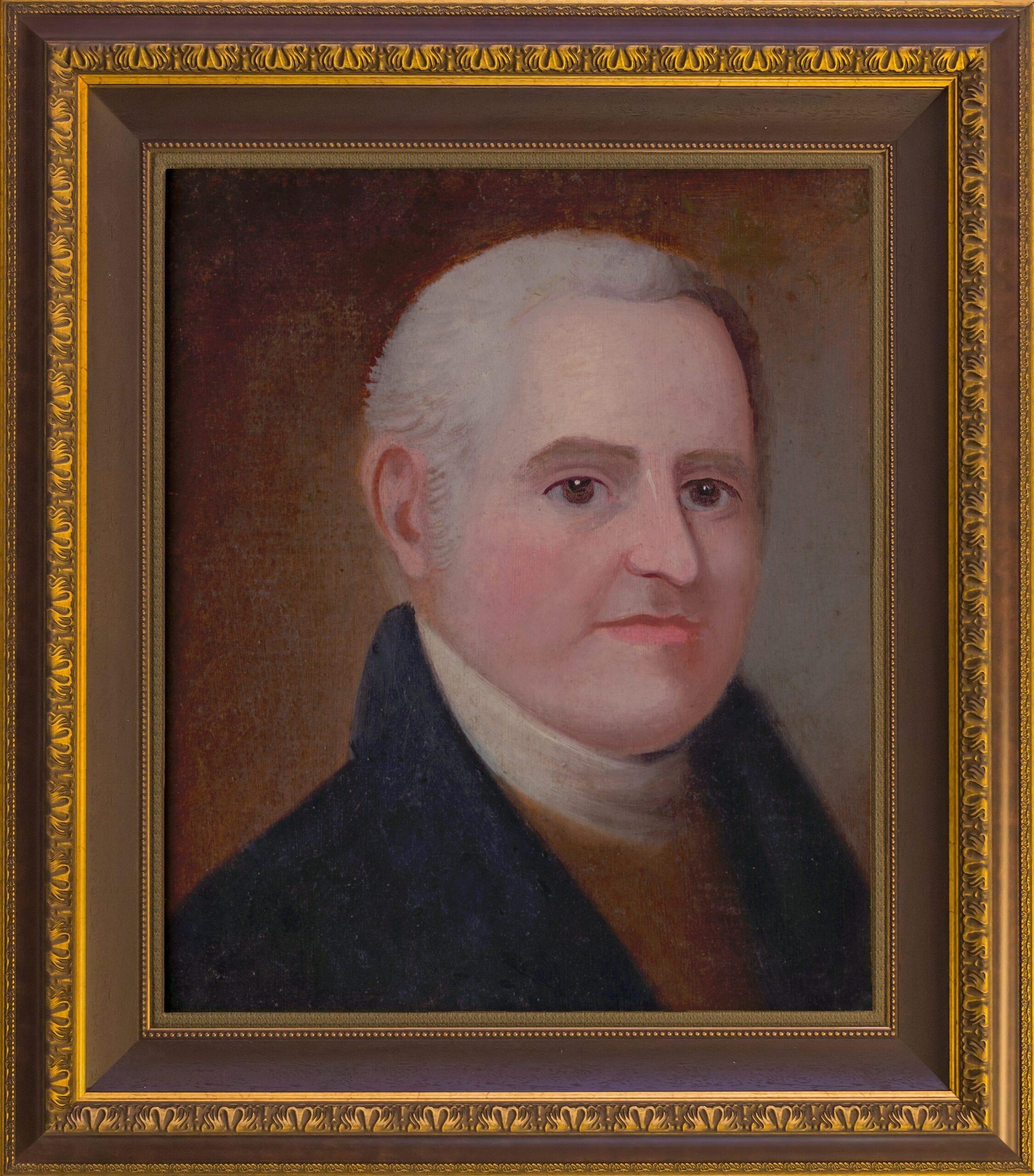
The Poor Man’s Counselor
To understand why Clark refused the deal, you have to understand what kind of man he was.
Abraham Clark was born on February 15, 1726, in Elizabethtown, New Jersey. His father was a farmer. His mother was Hannah Winans, whose family had been among the original settlers of the town.
Clark was a sickly child, too frail for farm work. His father hired a math tutor instead, and young Abraham discovered he had a mind for numbers and logic. He taught himself surveying. Then he taught himself law by reading borrowed books.
He never earned a law license or attended a university. But he learned enough to help people, and that’s what he did. Farmers in Essex County came to him with land disputes and legal problems they couldn’t afford to take to a real lawyer. Clark helped them for free.
This is how he earned his nickname: The Poor Man’s Counselor.
He didn’t look like a revolutionary. He wore no wig. He owned no ruffled shirts. Historian Dennis Brindell Fradin later described him as perhaps “the signer who was closest to being a typical citizen.” He married Sarah Hatfield in 1748, and together they raised ten children on a modest farm.
Clark’s politics grew from his law practice. He saw how the legal system worked against ordinary people: expensive courts and fees that made justice available only to those who could pay. He didn’t trust anyone who had too much power. Historian Ruth Bogin would later call him “an enemy to every form of privilege.”
By the 1770s, Clark had served as clerk of the New Jersey colonial legislature and High Sheriff of Essex County. He was also a member of the Provincial Congress, a local leader known and trusted. Not famous or rich. Just useful.
The Replacement
On June 21, 1776, New Jersey did something unusual. The Provincial Convention replaced its entire delegation to the Continental Congress.
The old delegates had refused to vote for independence. New Jersey replaced all of them in a single stroke, sending five new men to Philadelphia with clear instructions: vote yes.
Abraham Clark was one of the five. The others were Richard Stockton, John Witherspoon, Francis Hopkinson, and John Hart. They arrived in Philadelphia on June 28, four days before the July 2 vote on independence.
Clark had barely unpacked when he sat down to write a letter to his friend Colonel Elias Dayton, who led a group of New Jersey soldiers stationed hundreds of miles away. The letter is dated July 4, 1776, the day Congress approved the Declaration.
“We are now Sir embarked on a most Tempestious Sea,” Clark wrote. “Life very uncertain, Seeming dangers Scattered thick Around us... Let us prepare for the worst, we can Die here but once.”
He wasn’t being dramatic. Every man who signed the Declaration was committing treason against the British Crown. The punishment for treason was death. Clark knew this when he picked up the pen.
Ten days later, he wrote to Dayton again: “A few weeks will probably determine our fate. Perfect freedom, or Absolute Slavery. To some of us freedom or a halter.” A halter was a rope around the neck.
The Prison Ship
Clark’s two oldest sons, Aaron and Thomas, both served in the Continental Army.
Thomas enlisted early and rose through the artillery under Henry Knox’s command. He succeeded to Captain after his commanding officer was killed at the Battle of Princeton in January 1777, and fought through some of the war’s hardest campaigns. He crossed the Delaware for the surprise attack at Trenton and fought at Princeton.
Both brothers were captured during coastal operations and sent to British prison ships. Thomas, according to later accounts, ended up on HMS Jersey.
The Jersey was the deadliest prison in the American Revolution. An estimated 11,000 or more men died on British prison ships anchored in New York harbor during the war. The Jersey alone held roughly 8,000 prisoners. A prisoner writing in 1781 recorded burying “6, 7, 8, 9, 10 and 11 prisoners a day.”
The British used the prison ships as a weapon. They offered prisoners a choice: join the Royal Navy, or rot. Most refused. The ones who survived did so through stubbornness and luck.
But the Clark brothers received special attention. The British knew who their father was. They knew his name was on the Declaration. And they had a use for that.
The Deal
The terms were simple. Abraham Clark would publicly take back his signature on the Declaration of Independence. He would swear an oath of loyalty to King George III. In exchange, his sons would be released.
Clark knew this deal existed. Members of Congress knew it too.
He refused.
Among his fellow New Jersey signers, Clark had already seen what British pressure could do. Richard Stockton had been captured in November 1776 and imprisoned. According to members of the Provincial Congress, Stockton accepted a British pardon under duress. His reputation suffered, and he died of cancer on February 28, 1781.
Clark’s situation was worse in some ways. Stockton had been the one suffering. Clark had to watch his children suffer and know he could stop it.
He didn’t.
When Clark refused, Thomas’s conditions got worse. He was locked in a cell by himself. His food was cut off entirely. The keyhole became his lifeline.
The Intervention
Clark never went to Congress himself to ask for help. By all accounts, he thought it was his family’s problem and refused to ask Congress for special treatment.
But other members of Congress found out what was happening. According to accounts preserved by Clark’s descendants, they arranged for General Washington to threaten similar treatment against a British prisoner of equal rank. Later retellings credit this intervention with improving Thomas’s conditions, though no contemporary British or congressional record confirms the exchange.
Both sons survived the Jersey. Aaron recovered. Thomas did not.
The British released Thomas in a prisoner exchange, reportedly in 1781. He came home with his health permanently destroyed. The years of starvation and being locked up had taken something from him that couldn’t be given back.
He died on May 13, 1789. He was thirty-six years old. He is buried in the Presbyterian Cemetery in Rahway, New Jersey.
Thomas Clark lived long enough to see freedom. Not long enough to enjoy it.
His father couldn’t give that back. But he could change what his son had fought for.
The Reformer
Clark turned back to what he’d always done: making the law work for the people his son died protecting.
After the war, he turned his instincts into legislation. In 1784, he pushed through the New Jersey legislature what became known as “Clark’s Law,” a reform that shortened how long court cases dragged on and cut what people had to pay. His stated goal was to make justice available to ordinary citizens. “It will tear off the ruffles from the lawyers’ wrists,” he said.
In February 1786, he published a forty-page pamphlet. He signed it “A Fellow Citizen.” In it, he attacked what he called a small group of powerful lawyers and merchants who were strangling farmers with debt. That same year, thousands of farmers across New Jersey signed petitions backing him. He pushed a bill through the legislature that let people pay their debts in paper money instead of gold or silver coins. Creditors hated it. Clark didn’t care.
He attended the Annapolis Convention in 1786, one of only twelve men who showed up. The meeting didn’t accomplish much on its own, but it led directly to the Constitutional Convention the following year.
Clark was elected as a delegate but was too ill to attend. When the Constitution was drafted without a Bill of Rights, Clark opposed it until one was promised. He didn’t trust any government, not even the one he’d helped create, to protect personal freedom without being forced to.
In 1791, Clark was elected to the U.S. House of Representatives. He served in the Second and Third Congresses, still fighting the same fights.
When the Federalists pushed a bill to let the federal government call out state militias to crush internal rebellions, Clark mocked it on the floor of the House. Under those provisions, he said, if “an old woman was to strike an excise officer with a broomstick, forsooth the military is to be called out to suppress an insurgency.” The bill was defanged.
Around the same time, when Federalists proposed stamping the president’s face on American coins (the way monarchies put kings on theirs), Clark was among those who opposed it. The Coinage Act of 1792 required instead an image representing liberty. By law, each coin had to include the word “LIBERTY.” That requirement is still in force. If you pick up a coin today, you can read what Clark put there.
In 1794, he introduced a bill to suspend commercial intercourse with Britain until they kept the promises they’d made in the Treaty of Paris. The House passed it. The Senate killed it on Vice President John Adams’s tie-breaking vote.
That was his last major act.
On September 15, 1794, Clark was watching workers build a bridge near his farm in Rahway. The afternoon was hot. He suffered a sunstroke and collapsed.
He was dead within two hours. He was sixty-eight years old.
No deathbed speech. No dramatic final words. He died watching something practical get built.
What Clark Teaches Us
Most of the signers risked their fortunes. Abraham Clark risked his children.
That is a different kind of sacrifice. You can choose to put yourself at risk. But watching your children starve for a decision you made, knowing you could stop it and choosing not to? Most of us hope we will never be tested on that.
Clark wasn’t a wealthy man who gave up luxury. He was a plain man from a modest farm who believed ordinary people deserved a fair system. He gave free legal advice to his neighbors and fought for cheaper courts.
And when the British told him the price of his signature was his sons’ lives, he decided the signature was worth more.
Thomas Clark paid for that decision. He came home from the Jersey a broken man and died at thirty-six. His father outlived him by five years.
There’s no way to make that story comfortable. It doesn’t resolve neatly or have a happy ending. Abraham Clark believed in something strongly enough to let his sons suffer for it, and one of them never recovered.
We call the men who signed the Declaration “founders.” We imagine them as marble statues, but Abraham Clark was different. He was a farmer’s son who taught himself law from borrowed books. He signed his name because he believed ordinary people deserved freedom. He kept his name on the document because he believed that freedom was worth more than his family’s safety, more than his own son’s life.
Next: James Wilson
From the plainest man in Congress, we turn to one of the most brilliant.
James Wilson was a Scottish immigrant who became one of America’s leading legal minds. He signed the Declaration and helped write the Constitution. He was appointed to the first Supreme Court.
Then he died on the run, hiding from creditors who wanted him imprisoned for debt.
Wilson’s story is Robert Morris’s story all over again: a brilliant man destroyed by risky bets on buying land. But Wilson’s fall was even more dramatic. He fled from state to state, dodging arrest warrants, dying in the home of a fellow justice who took him in.
Next Friday, we’ll tell the story of the genius who couldn’t stop gambling.
This is Essay #19 of 56 in “The 56” series, profiling every signer of the Declaration of Independence. New essays every Friday and Sunday, ending on July 4, 2026, the 250th anniversary of American independence.
Subscribe to follow the journey.
Sources: