

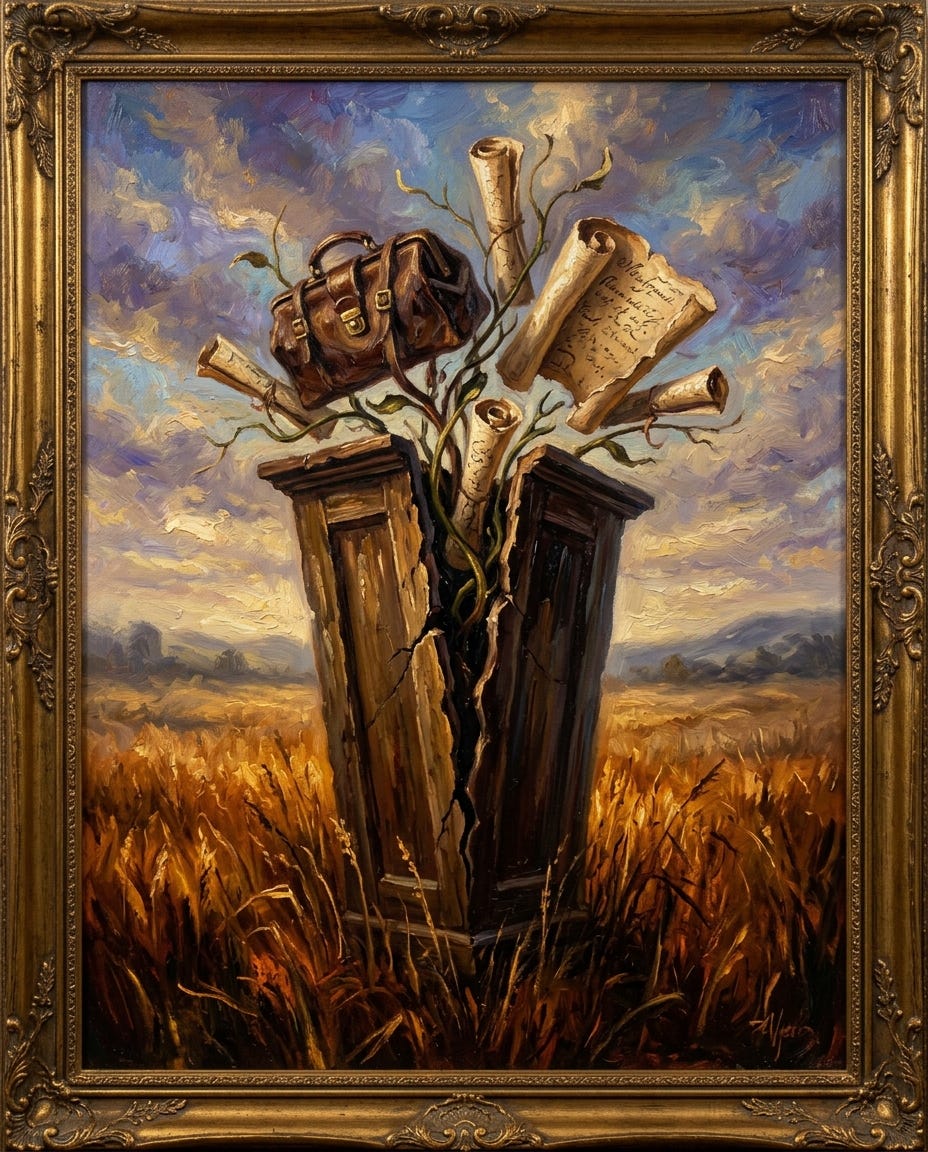
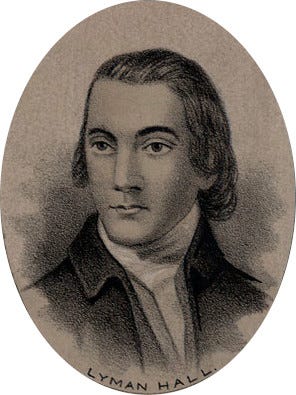
In June 1751, a twenty-seven-year-old minister named Lyman Hall stood up in a Connecticut church and confessed to “immoral conduct.” The church stripped him of his pulpit. Whatever he did was bad enough to end his career, but the specific offense was never recorded. All we have is the label and the result.
Twenty-four years later, that same man walked into the Continental Congress in Philadelphia. He was carrying papers from a single Georgia parish. Not from the colony of Georgia, which had refused to send anyone. From one parish, acting on its own. Congress gave him a seat in the room but would not give him a vote.
What happened between those two rooms is one of the strangest reinventions in the founding generation.
The Fall
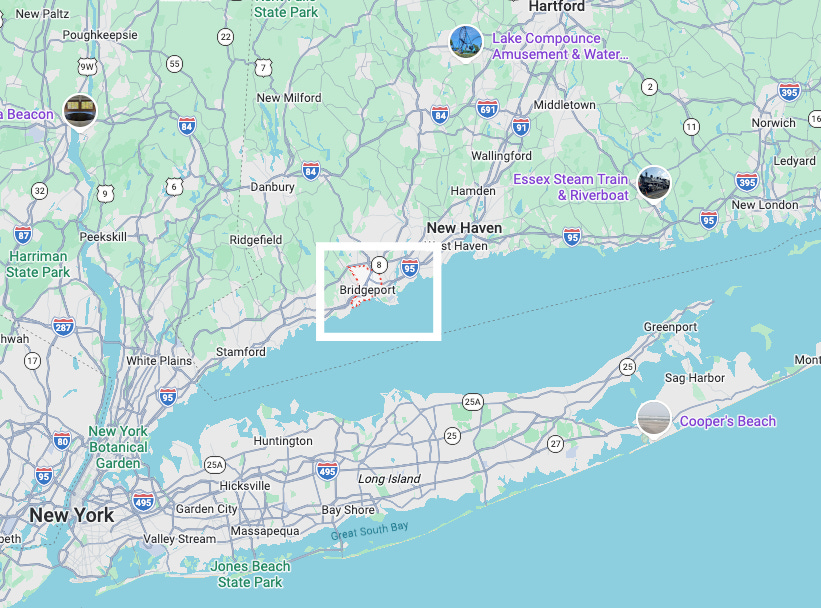
Hall graduated from Yale in 1747 and studied theology under his uncle Samuel Hall. By 1749 he was preaching at a parish in Stratfield, Connecticut, in what would later become Bridgeport. A few months later, a regional church council called the Fairfield West Consociation ordained him as a full minister.
The ordination was messy from the start. Sixteen members of the congregation formally protested it. They were loyal to the previous pastor, Reverend Samuel Cooke, who had served the parish for thirty-two years. Connecticut churches in the 1740s were tearing themselves apart over the Great Awakening, a wave of emotional, revival-style preaching that split congregations into rival camps. One side, called “New Lights,” wanted more passion in worship. The other side, the “Old Lights,” thought the revivalists were dangerous. Hall sided with the Old Lights, which put him on the wrong side of Cooke’s supporters from the day he took the pulpit.
Two years later, those parishioners had ammunition. On June 18, 1751, the Consociation convened a formal hearing and charged Hall with “immoral conduct.”
In a Congregational church, discipline was a public event. The meetinghouse was not just where people worshipped. It doubled as the town’s courthouse, its meeting hall, its center of civic life. Outside, the town green had stocks and a whipping post. Moral failure in colonial Connecticut was not a private matter. It was something your neighbors watched.
Hall stood up in that room and confessed. The charges, the records say, were “supported by proof and also by his own confession.” The Consociation dismissed him but then did something unexpected: they voted to restore him, saying they believed his repentance was sincere. Hall went back to preaching, filling vacant pulpits while quietly studying medicine on the side. But it did not hold. By 1753, he had abandoned the ministry entirely.
The specific offense was never made public. Church records from this period typically used vague phrases like “immoral conduct” without spelling out what happened. Sexual wrongdoing was the most common reason for that label, but drunkenness or other violations could trigger it too. And given the factional warfare tearing through Connecticut churches at the time, even a real charge could have been pushed harder than it deserved.
What we do know is the result. The experience in the room could be devastating, but the written record would preserve only a cold sentence: “dismissed on charges of immoral conduct.” By age twenty-nine, Lyman Hall’s first career was over.
The Reinvention
Hall needed a new way to earn a living, and medicine was the obvious choice. In colonial New England, there were no medical schools. The first one in America would not open until 1765. Doctors learned by apprenticing with other doctors, and plenty of ministers had already made the same switch. Nobody asking a doctor to set a bone or treat a fever cared whether he had been thrown out of a church.
Hall apprenticed with a practicing physician, returned to his hometown of Wallingford, and started over.
In May 1752, Hall married Abigail Burr, the daughter of one of Fairfield’s most prominent families. Fourteen months later, she was dead. Hall buried his wife, kept practicing medicine, and at some point made a decision that tells you everything about where his head was.
He remarried in 1757, to a woman named Mary Osborne, and left Connecticut entirely. He did not move one town over. He moved eight hundred miles south. He had befriended a group of Congregationalist families who were migrating from Dorchester, South Carolina to the Georgia coast, and he went with them. By 1760, he had a rice plantation called Hall’s Knoll on the Savannah-Darien road, a summer residence in the port town of Sunbury, and a medical practice. He was a doctor in a colony where nobody knew his name, let alone his story.
The Puritan Island
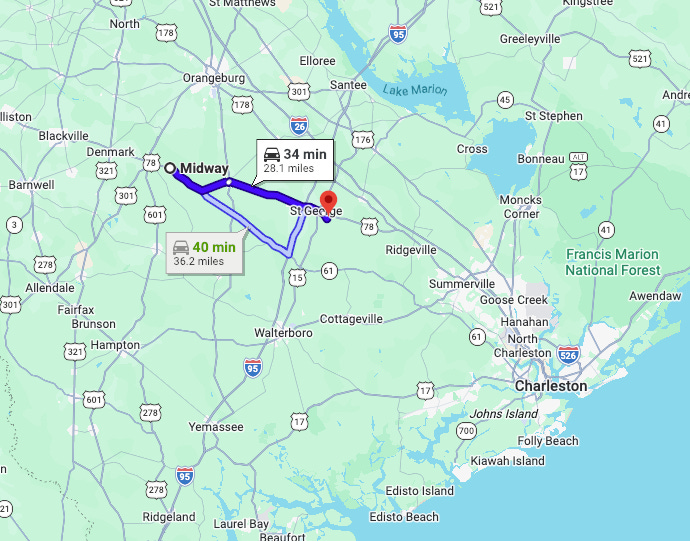
St. John’s Parish was unlike anywhere else in Georgia. The families who settled there had originally come from New England. They migrated first to Dorchester, South Carolina, and then, in the early 1750s, moved again to the Georgia coast. They founded the town of Midway, formed the Midway Society in 1754, and built a permanent meetinghouse by 1756. The first service was held in 1758. They were Congregationalists, the same tradition Hall had grown up in, and they brought with them the same culture of self-governance and distrust of royal authority that had defined New England since the Puritans.
The land they carved out was not easy, but it was productive. The naturalist William Bartram visited plantations near Midway and described rice fields engineered with canals and water gates, shaded groves along slow creeks, and tables loaded with “plain but plentiful” food. These families had built a rice and indigo economy out of the coastal swamp. They ran their own church, chose their own leaders, and answered to nobody in Savannah. Later writers claimed the parish held an outsized share of Georgia’s wealth, and whether or not that was literally true, it tells you how the community saw itself.
Georgia’s royal governor, James Wright, saw the problem clearly. He called the parish’s rebellious energy the work of “descendants of New England people of the Puritan Independent sect” who retained a “strong tincture of Republican or Oliverian principles.” He was calling them revolutionaries before they even used the word.
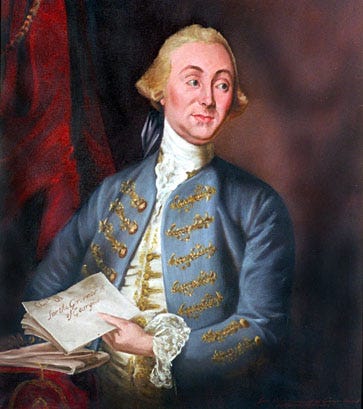
Georgia was the only colony in America that sent zero delegates to the First Continental Congress in 1774. St. John’s Parish was furious. When Georgia still could not agree on delegates for the Second Congress in early 1775, the parish stopped waiting. It declared itself “a body detached” from the rest of the colony, negotiated its own trade agreements through South Carolina’s resistance network, and chose a delegate to send to Philadelphia on its own authority.
They chose the doctor. The one who had once been thrown out of a church just like theirs.
The Non-Voting Delegate
Hall arrived in Philadelphia in May 1775 with 160 barrels of rice and a set of credentials that nobody in Congress had ever seen before. The rice was a gift from St. John’s Parish to the people of Boston, whose port the British had shut down. The credentials said Hall represented that one parish, not the colony of Georgia. Georgia had officially sent nobody.
Congress had to figure out what to do with him. They seated him “as a delegate from the Parish of St. John” and let him join debates, but they would not let him vote on anything decided by colony. He sat in every session. He argued in the hallways. When it came time to raise hands, his stayed down.
Hall accepted the terms. He told colleagues he believed the parish’s example would be “speedily followed” and that Georgia would eventually send a full delegation. It was a bold prediction from a man representing a few thousand people in a coastal parish. But Hall understood something about how momentum works. A single parish showing up with rice and credentials was a harder thing for the rest of Georgia to ignore than a colony that simply never appeared.
Within months, he was right. Georgia sent a complete delegation, and in the summer of 1776, Hall signed the Declaration of Independence alongside Button Gwinnett and George Walton.
A man who had once confessed before a Connecticut congregation now put his name on a document the British Crown called treason.
The War and After
The cost came quickly.
On November 24, 1778, a British force of 750 soldiers, Loyalists, and Indian warriors marched north from Florida toward the Midway settlement. They outnumbered the local defenders nearly eight to one. General James Screven was shot multiple times and killed in the fighting. American officers left a forged letter inside the Midway Meeting House claiming reinforcements were on the way from Savannah. The trick worked. The British commander occupied Midway but then pulled back, and on his way out, he ordered the meetinghouse burned to the ground. His troops also burned most of the surrounding town and seized two thousand livestock from the area.
Five weeks later, Savannah fell. The British issued a bill of attainder against Hall, branding him a traitor and ordering the confiscation of his property. Both Hall’s Knoll and his Sunbury residence were burned. The British burned every house on the King’s Highway whose owner refused to swear allegiance to the Crown.
The community that had sent Hall to Congress no longer existed. Hall’s wife Mary and their son John fled north. Hall himself had been elected to Congress through 1780, but he had stopped attending sessions after February 1777. By the time the British were finished with St. John’s Parish, there was nothing left to go back to.
When the war ended in 1782, Hall returned to Savannah and quietly resumed practicing medicine. Georgia elected him governor in January 1783. The state was broke and broken. Property seized from Loyalists sat in limbo, not yet redistributed. Government funds were nearly empty.
His most lasting act came in 1785, when he helped charter the University of Georgia, the first state-chartered university in America. A man who had been expelled from his own religious community helped build an institution that would educate Georgia’s leaders for the next two and a half centuries.
Hall sold what was left of Hall’s Knoll that same year. In 1790 he moved to Burke County and bought Shell Bluff Plantation. He died there on October 19, 1790, at sixty-six.
What Hall Teaches Us
Most people who get publicly humiliated at twenty-seven do not end up signing the founding document of a nation at fifty-two.
Hall lost his pulpit and his first wife within the span of a few years. He could have stayed in Connecticut and lived small. Instead he learned a new trade and moved eight hundred miles to a community radical enough to send him where nobody else would go.
The parish chose him precisely because he was the kind of person who had already survived being judged. A man who had stood before a congregation and confessed was not afraid to walk into Congress and take an empty seat.
In 1751, a church told Lyman Hall he did not belong. In 1776, he put his name on the document that told a king the same thing.
Next: Oliver Wolcott
From Georgia’s disgraced minister, we turn to Connecticut’s statue destroyer.
Oliver Wolcott was a military man, a veteran of the French and Indian War who later became a Revolutionary general.
But he’s best remembered for what he did to a statue.
In July 1776, after independence was declared, a crowd in New York pulled down a large statue of King George III. The statue was made of lead, and Wolcott had an idea.
He sent pieces to Connecticut, where they were melted into musket balls. The figure often cited is about 42,000 rounds.
King George III, transformed into ammunition to be fired at his own soldiers. It’s the kind of poetic justice that the Revolution specialized in.
Next Sunday, we’ll tell the story of the governor who tore down a king.
This is Essay #22 of 56 in the “The 56” series, profiling every signer of the Declaration of Independence. New essays every Friday and Sunday, ending on July 4, 2026, the 250th anniversary of American independence.
Subscribe to follow the journey.
Sources: