

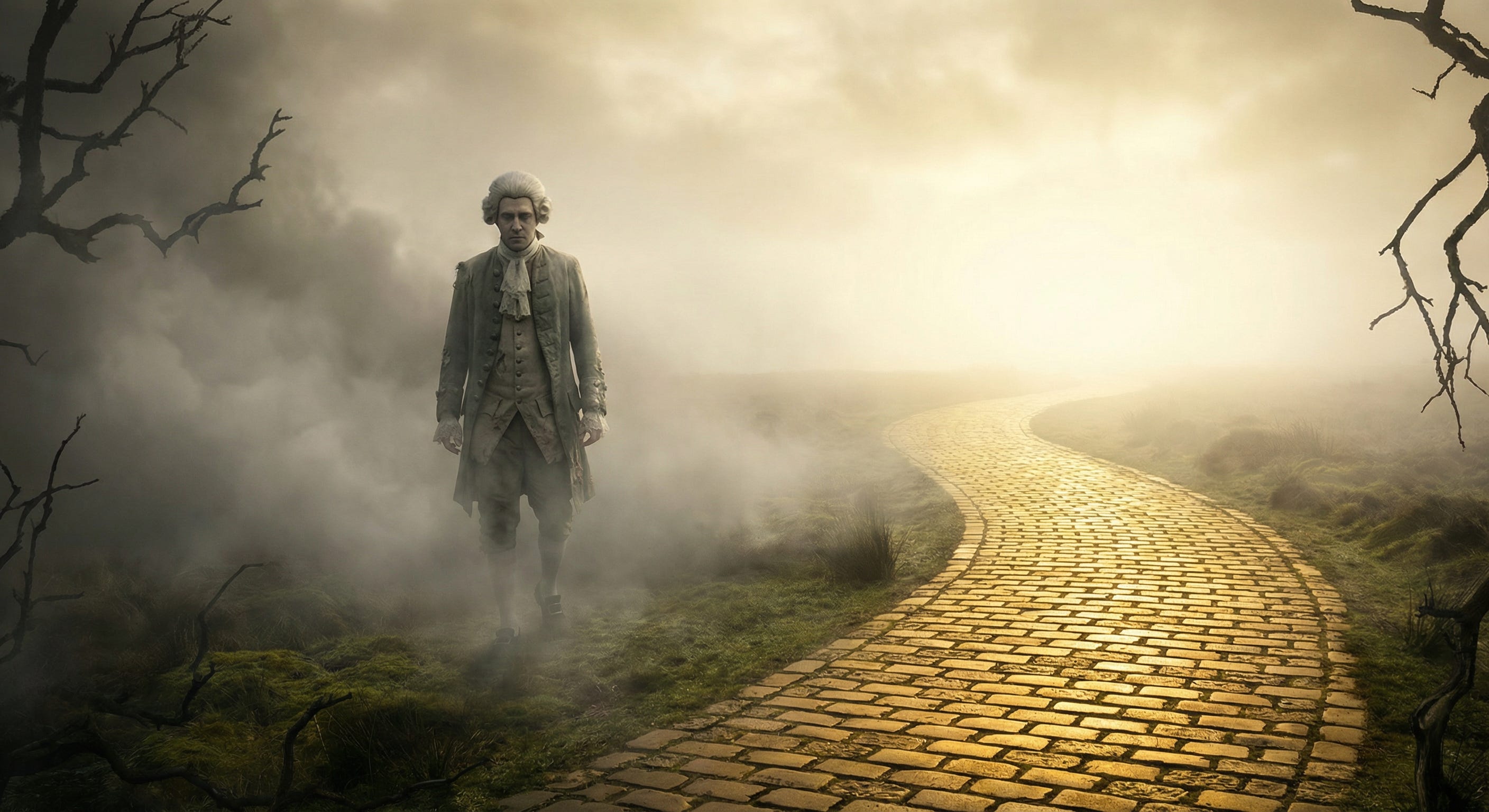
George Walton had no right to sign the Declaration of Independence.
He was an orphan. His parents died when he was young, so young that the details are lost to history. He was raised by relatives who saw him as a burden, not an opportunity. At some point in his teens, he was sent to work under a carpenter.
This was the 18th-century version of a dead end. Apprentices worked for years learning a trade, bound to their masters until they came of age. They had little schooling and no path to power. A carpenter’s apprentice in colonial Georgia could expect to spend his life building houses for people who mattered.
Walton had other ideas.
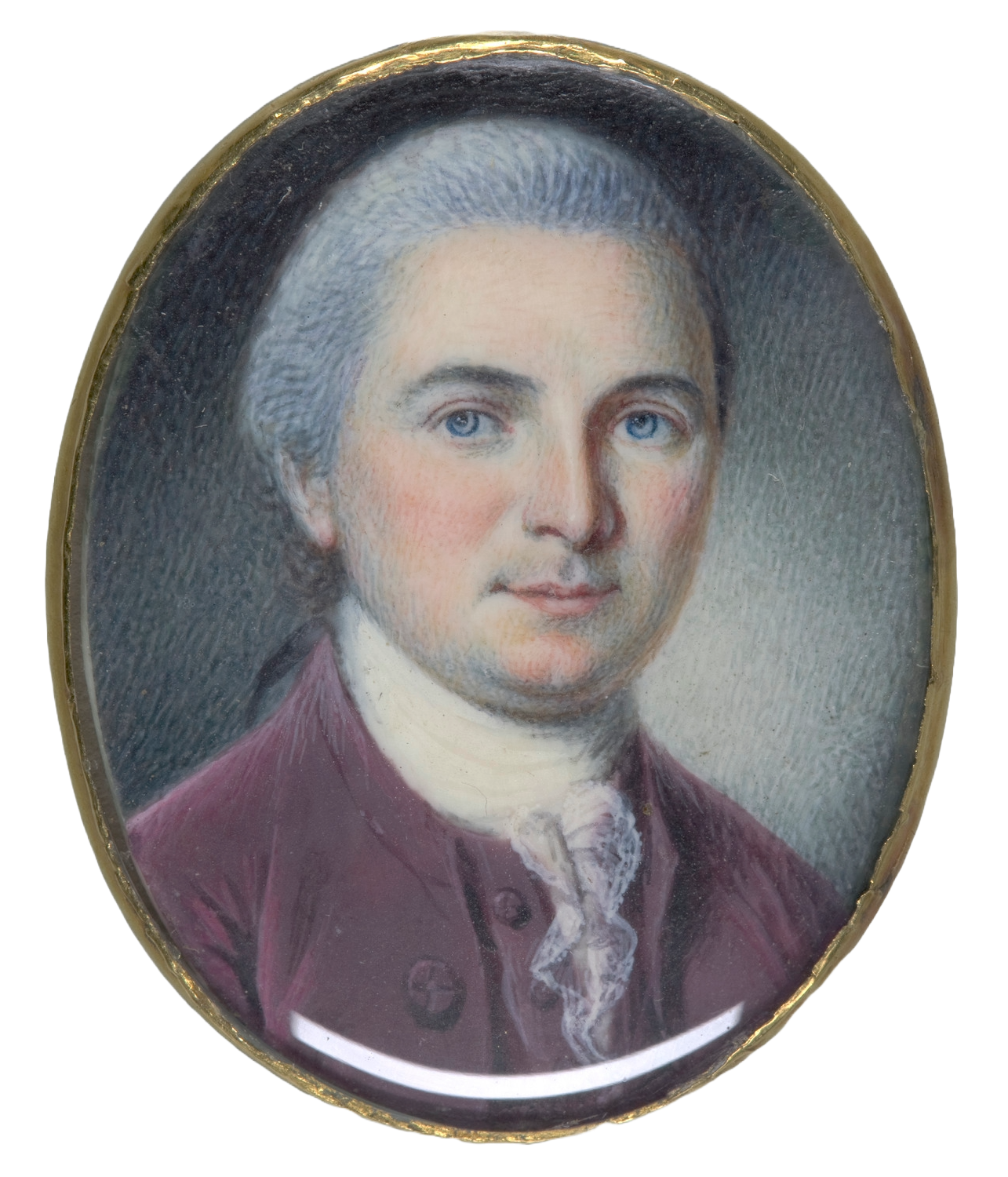
The story goes that his master refused to let him study. Books were a distraction from work. Young George was supposed to learn to cut wood, not read.
So Walton taught himself at night, by candlelight, after the day’s work was done. He read whatever he could find. He taught himself law from borrowed books. He was determined to escape the life that circumstances had assigned him.
By his mid-twenties, George Walton was a practicing attorney in Savannah. By his late twenties, he was one of Georgia’s delegates to the Continental Congress. He was likely twenty-seven when he signed the Declaration of Independence. Some records place his birth in 1749, while others point to 1750.
The carpenter’s apprentice had made himself a founder.
The Self-Made Lawyer
Walton arrived in Savannah sometime in the early 1770s.
Georgia was the youngest and poorest of the thirteen colonies. Savannah was a frontier town, more village than city, with a population of around 3,000. The colony had been founded only forty years earlier, as a buffer between the Carolinas and Spanish Florida.
For an ambitious young man with no connections, Georgia was perfect. The colony was so short of educated people that anyone with legal training could find work. Walton opened a law practice and began climbing.
He climbed fast.
By 1774, he was involved in the revolutionary movement. By 1775, he was secretary of Georgia’s Provincial Congress. By 1776, he was a delegate to the Continental Congress in Philadelphia.
The speed of his rise was striking. In older colonies, men often spent decades building the connections needed for high office. Walton did it in five years.
Part of this was talent. Walton was ambitious and willing to work harder than anyone else. But part of it was Georgia. The colony’s elite was so small and so desperate for capable people that they took talent wherever they could find it.
The orphan had found a place where orphans could succeed.
The Signing
Walton arrived at the Continental Congress in the summer of 1776, just in time to participate in the debates over independence.
Georgia’s delegation was small, and it changed over time. Button Gwinnett, whose name now sells for millions at auction, drew the most attention. Lyman Hall, a physician, gave the group weight. Walton gave it youth and drive.
When the Declaration was signed in August 1776, Walton added his name alongside Gwinnett and Hall. They represented a colony that most delegates had never visited, a distant and underpopulated place on the edge of the British Empire.
Walton’s signature is neat and legible. No fancy loops. Just a name, written carefully.
But he must have felt something. The carpenter’s apprentice was signing his name next to men like Adams and Jefferson. He was pledging everything he had. Most of it he had built from nothing.
The Soldier
After signing, Walton went to war.
He served as a colonel in the Georgia militia, commanding troops in the defense of Savannah. When the British invaded Georgia in late 1778, Walton was in the thick of the fighting.
The Battle of Savannah, fought on December 29, 1778, was a disaster. About 3,500 British troops under Lieutenant Colonel Archibald Campbell attacked at dawn. The American force, roughly 700 Continental soldiers plus militia under General Robert Howe, was badly outnumbered. Walton commanded a section of the defensive line near the edge of the city. The British overwhelmed the American defenses in under an hour. Men scrambled for cover as the line collapsed. Walton was wounded in the battle, shot through the thigh, and captured by the British as he tried to retreat with his men. The British took Savannah and effectively ended patriot control of Georgia.
Walton spent nearly a year as a prisoner of war, held first in Savannah and later in Sunbury. The British treated him as a high-value prisoner. Walton still spent months not knowing if he would ever be free.
In late 1779, he was exchanged for a British naval officer. Walton limped back to patriot lines, his leg never fully healing from the wound.
The Governor
After the war, Walton kept climbing. And kept falling.
He served as governor of Georgia twice. First in 1779-1780, during the darkest days of the war, and again in 1789-1790, after the Constitution was approved. Between terms, he served as chief justice of Georgia’s highest court. He later served in the U.S. Senate.
But his career was also marked by controversy. Walton had a talent for making enemies. He feuded with other Georgia politicians and spent years tangled up in disputes that historians still struggle to untangle.
In 1789, Walton won a bitter governor’s race. His opponents said the vote was tainted, and the legislature had to settle the dispute. The fight became a symbol of Georgia’s rough postwar politics. Walton served out the term, but the controversy stayed with him.
Some of this was personal. Walton could be proud and quick to take offense. The same drive that pulled him from being an orphan to being powerful could also make him hard to work with.
Some of it was Georgia. The state’s politics in the 1780s and 1790s were brutal even by founding-era standards. Factions fought over land and power with an intensity that made other states look calm.
Walton survived it all.
He kept coming back and kept winning office. By the time he died in 1804, he had served as governor and as a federal senator. He had also served as chief justice in Georgia and as a delegate to the Continental Congress. Few men around him built a public record that wide.
The Mystery
One thing about George Walton doesn’t add up: nobody knows how old he was when he signed the Declaration.
Most sources give his birth year as 1749 or 1750, which would have made him twenty-six or twenty-seven at the signing. But some historians have argued for earlier dates, which would make him older.
This uncertainty reflects the mystery of his origins. Walton’s early life is almost completely undocumented. We do not know exactly when he was born or where. We do not know who his parents were, or how they died. We know he was sent to work under a carpenter, but the carpenter’s name is lost.
For most signers, we have thick records. Family papers survive. So do letters and legal files. For Walton, we have almost nothing until he appears in Savannah in the early 1770s, already a young lawyer on the rise.
The orphan left no record of his orphanhood. He emerged from nowhere fully formed, like a character who appears in Act II of a play without explanation.
What Walton Teaches Us
George Walton’s story is the American dream, before there was an America to dream of.
He started with almost nothing.
No parents. No money.
He was sent to work under a carpenter and expected to stay there. He refused.
He taught himself to read. He taught himself law. He thrived in a frontier colony where his lack of family name didn’t matter. He worked harder than anyone else and rose faster than anyone expected.
Before he turned thirty, he had signed the Declaration and served as governor. By fifty, he had held more offices than most men hold in a lifetime.
This is the story America tells about itself.
A self-made life, built from almost nothing. Part of that story is true. Part is myth. Walton’s rise also depended on timing and place. Georgia needed talent fast, and he arrived ready.
But the core of it is real. Walton had no advantages and he built his life from nothing.
His reward?
Having is signature preserved for eternity on the Declaration of Independence.
That’s worth something.
Even 250 years later.
Next: John Witherspoon
From the orphan who made himself, we turn to the preacher who blessed the Revolution.
John Witherspoon was a Scottish minister who came to America to run the College of New Jersey. Today we call it Princeton. Within a decade of his arrival, he was signing the Declaration of Independence.
Witherspoon was the only active clergyman to sign. He brought something to the revolutionary cause that lawyers and merchants couldn’t: the authority of God. When Witherspoon declared that independence was morally right, he wasn’t just making a political argument. He was delivering a sermon.
His influence extended far beyond the pulpit. Witherspoon trained a generation of American leaders, including James Madison, who would later be called the Father of the Constitution.
Next time, we’ll tell the story of the preacher who declared independence from the pulpit.
This is Essay #15 of 56 in the “The 56” series, profiling every signer of the Declaration of Independence. New essays every Friday and Sunday, ending on July 4, 2026, the 250th anniversary of American independence.
Subscribe to follow the journey.
Sources: