

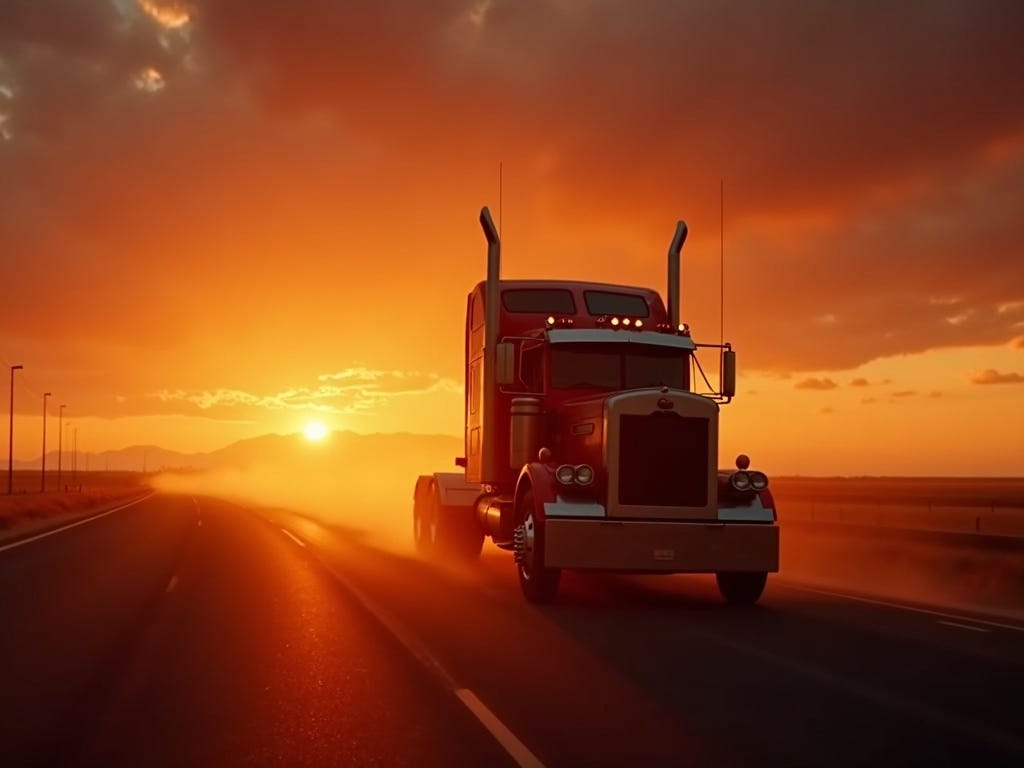
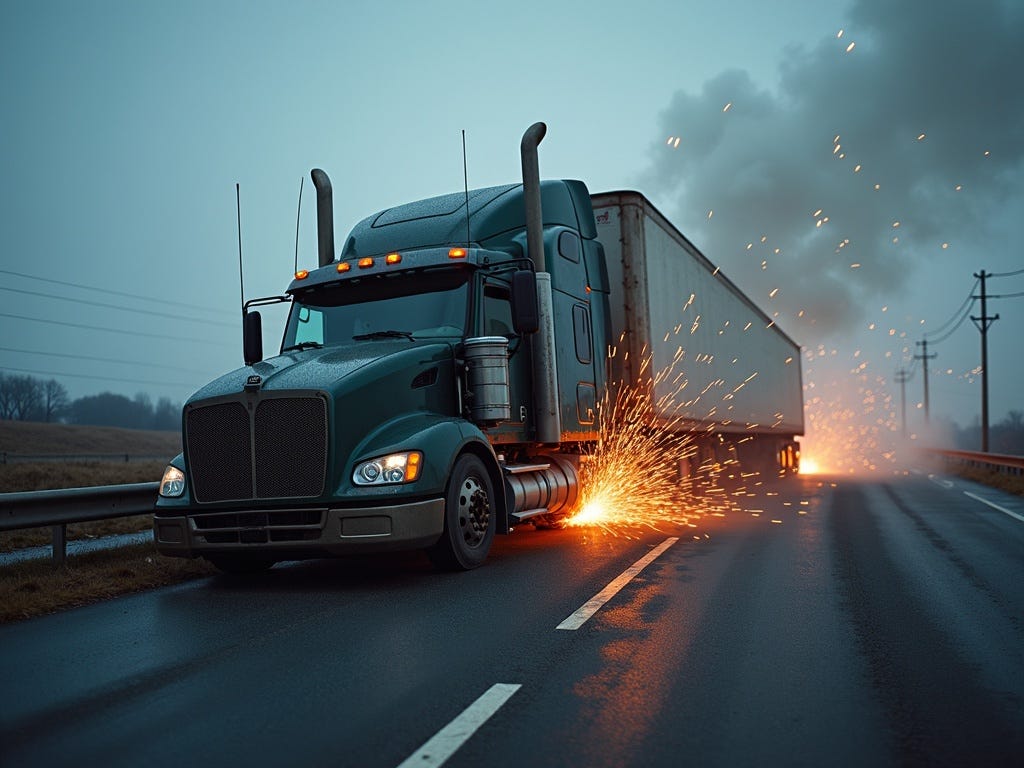
On a sunny Arizona afternoon, an 80,000-pound semi-truck traveling at 65 mph on Interstate 10 suddenly ripped the steering wheel from the hands of its human safety driver. The autonomous system, the supposed future of logistics, lurched violently to the left. It careened across a lane of traffic before its front tire slammed into the concrete median in a shower of sparks and dust as the truck scraped along the barrier. Only the human operator's desperate, quick reflexes prevented a multi-vehicle catastrophe.
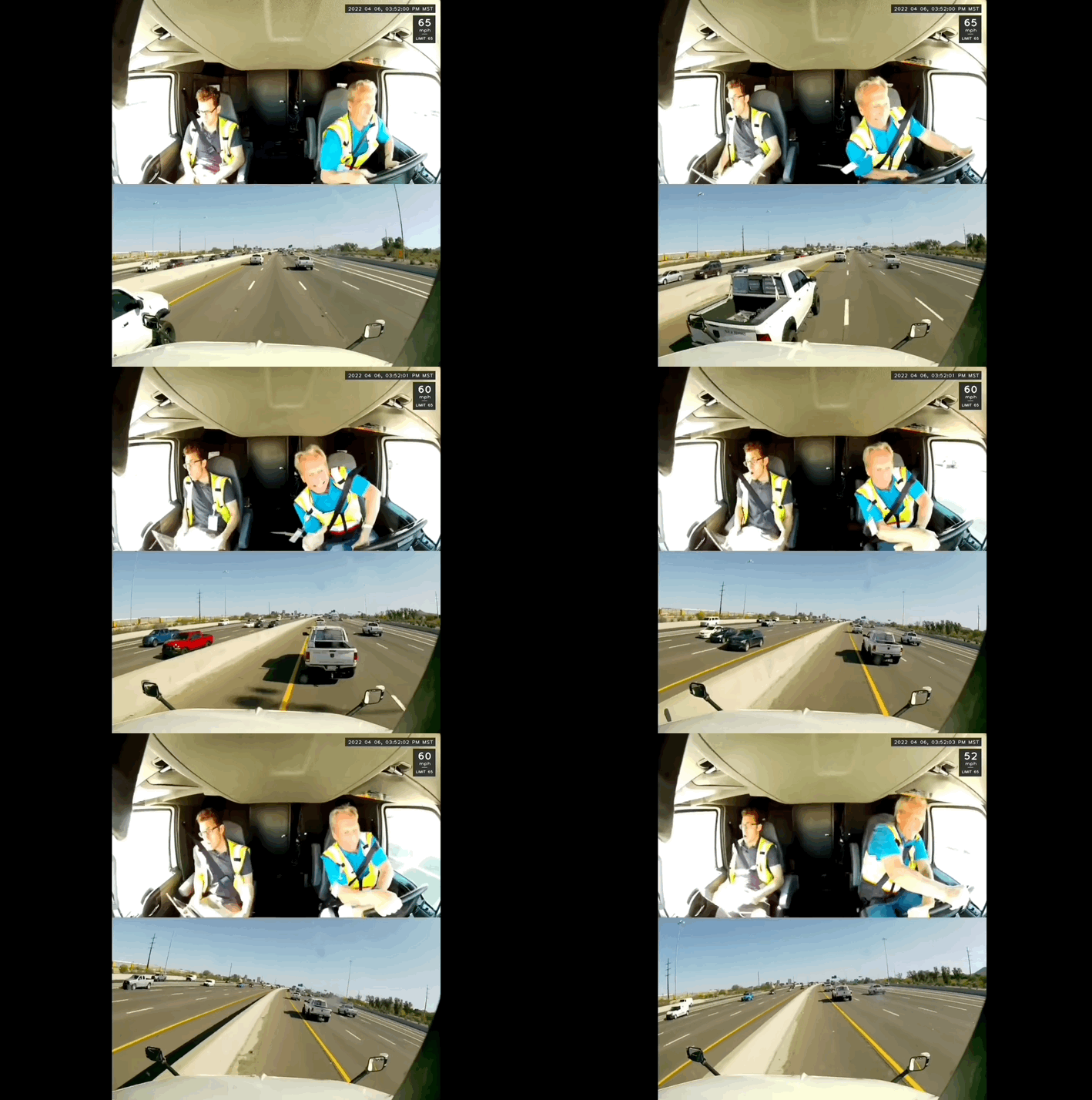
The crash lasted only seconds, but its impact would shake an entire industry to its core. This wasn't just an accident; it was a revelation. Silicon Valley had spent a decade and tens of billions of dollars trying to build a self-driving truck to replace the human behind the wheel. In doing so, they revealed a humbling truth: they never truly understood the job they were trying to automate.
The Fall of the King
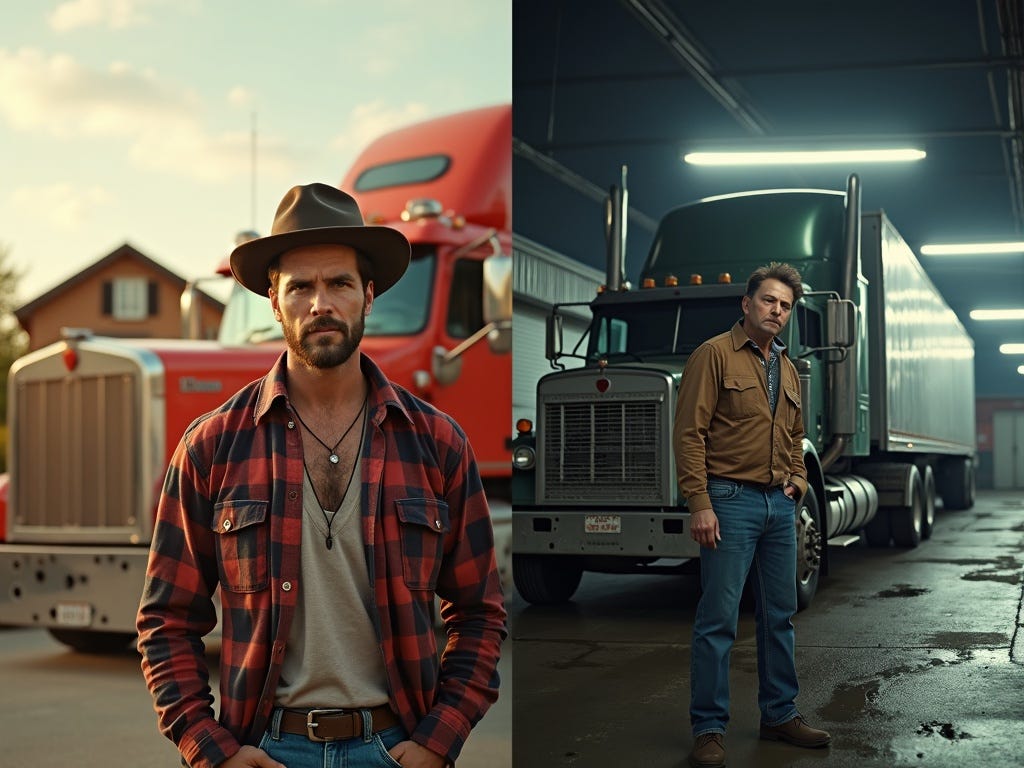
There was a time when the American trucker was a hero. In the 1970s, they were modern-day cowboys, rebels on the open road, their CB radios crackling with a language of defiance against "Smokey Bear" and the establishment. This resistance, coordinated over the airwaves in a unique slang of "10-4s" and "Smokey" alerts, captured the public imagination. They were the little guys fighting an unfair system, the last defenders of American individualism on the endless highways.
Hollywood seized upon this story with excitement. Smokey and the Bandit (1977), the second-highest-grossing film of its year, turned Burt Reynolds' charming outlaw into a national icon. A year later, Sam Peckinpah's Convoy (1978), based on the chart-topping song by C.W. McCall, cemented the trucker's status as a movie legend. These weren't just stories about transportation; they were modern Westerns where big rigs replaced horses and highways replaced dusty trails.
This image reached its peak for me in one of my favorite films, Big Trouble in Little China. Kurt Russell's Jack Burton was the perfect trucker hero: a wise-cracking, blue-collar warrior who stumbled into a world of ancient magic but never lost his down-to-earth charm. He was tough, capable, and deeply human, facing down demons with the same practical grit he'd use to fix a flat tire. But looking back, I can't think of another major film since then where a trucker was the hero. Jack Burton was, in many ways, the last of his kind.
That cultural shift wasn't an accident. The Motor Carrier Act of 1980 changed everything. By deregulating the industry, it destroyed the economic foundation that supported the trucker's middle-class lifestyle. Before this change, life was good. A Teamster like Larry Heine, profiled in a 2020 Business Insider article, could work eight hours a day, see his family every night, own his home, and send his kids to college. He could even retire at 51 with a pension. After 1980, everything changed. A flood of new, non-union competition drove wages down by as much as 50%. The stable, desirable career became a grueling, low-paying job.
In this new, high-pressure world of Just-in-Time manufacturing, trucks became more critical than ever, and express shipping turned every delay into a potential crisis. Yet the industry itself was highly fragmented, with dispatch systems often run by small mom-and-pop shops. It was a system stretched to its limits and seemingly ripe for disruption.
With their economic status in decline, the trucker's cultural image followed. The heroic figures of the 70s became caricatures on reality TV in the 2000s and 2010s. Shows like Ice Road Truckers were heavily criticized by actual professionals for their misleading portrayals of danger. One veteran of the same ice roads featured on the show noted, "I do not watch the show because it is infuriating to see the drivers intentionally ignore safety guidelines".
Similarly, Big Rig Bounty Hunters was widely dismissed by the trucking community as completely staged, featuring "bad actors" in "fake situations". This "bozo effect" was dangerous. It reduced a complex profession to manufactured drama, reinforcing the idea that trucking was low-skill work. The cultural caricature perfectly aligned with Silicon Valley's worldview: if truckers were just bozos, how hard could it be to replace them with an algorithm?
The Promise of Code

The promise was a driverless revolution, born from a perfect storm of technological optimism and economic incentive. By the mid-2010s, the tech world was buzzing with deep learning, and Google's self-driving car project made it seem like AI could handle any chaos. To an industry obsessed with optimization, the 3.5 million American truckers weren't people; they were a massive, inefficient, expensive variable. An autonomous truck could operate 24/7 with no sleep, no breaks, and no salary, potentially cutting costs by 30-40% per mile.
The gold rush began. Between 2014 and 2017, investment in autonomous vehicles surpassed $80 billion globally. In October 2016, the startup Otto staged a masterful publicity stunt, hauling 50,000 cans of Budweiser beer 120 miles on a Colorado highway with a safety driver in the sleeper cab. The event was a sensation, and Uber soon bought Otto for $680 million. The race was officially on. From this frenzy, two groups of "hares" emerged to challenge the "tortoise" of the traditional trucker.
The American hares were startups fueled by venture capital.
TuSimple was the industry's "moonshot," promising a camera-based system that could "see" 1,000 meters, farther than any human. Chasing full "Level 4" autonomy from day one, it was valued at over $1 billion by 2018.
Embark Trucks pursued an "asset-light" model, aiming to be the "Windows" of autonomous trucking by developing a standardized Embark Universal Interface that could be installed on any rig. In 2017, they claimed the first coast-to-coast journey by an autonomous truck.
Aurora Innovation, founded by the former heads of Google's, Tesla's, and Uber's self-driving projects, had the most impressive pedigree. Their ambitious goal was to create "The Driver," a single AI platform for any vehicle, from a Class 8 truck to a passenger taxi.
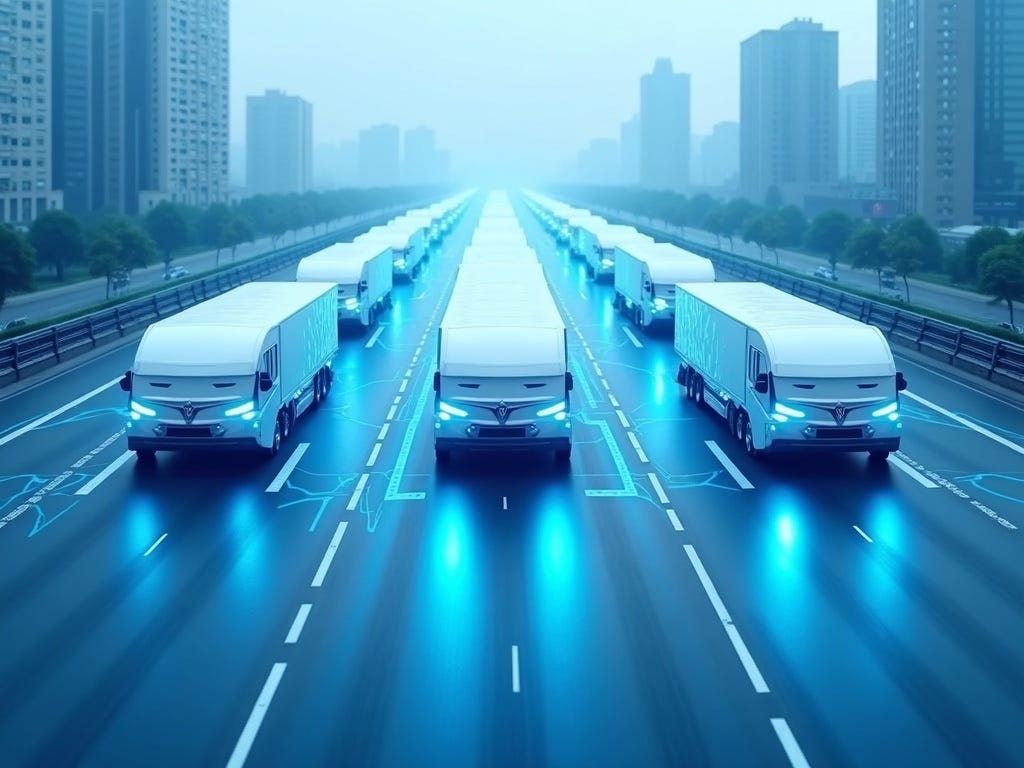
Meanwhile, the Chinese hares took a different path, one driven by national strategy. As part of its "Made in China 2025" initiative, Beijing poured billions into creating "smart" infrastructure, retrofitting highways with 5G networks and Vehicle-to-Everything (V2X) communication systems. Instead of building a truck smart enough for a chaotic world, China focused on building a world that was easy for a truck to handle. Companies like Pony.ai, Plus.ai (now Zhijia Technology), and Inceptio Technology began running revenue-generating commercial operations on fixed expressway routes between major logistics hubs and ports.
A Voice of Caution
Yet as both groups of hares sprinted forward, a crucial warning from a dissenting voice went largely ignored. In March 2020, Starsky Robotics quietly shut down. The company was the pioneer of remote-controlled, hybrid autonomy.
It couldn't raise more money. Co-founder Stefan Seltz-Axmacher wrote a brutally honest post-mortem. It should have been a wake-up call for the whole industry. Instead, most dismissed it as sour grapes.
“The space was too overwhelmed with the unmet promise of AI to focus on a practical solution,” Seltz-Axmacher wrote.
“It isn’t actual artificial intelligence akin to C-3PO. It’s a sophisticated pattern-matching tool.”
He argued that Silicon Valley never understood what a trucker actually does. It's five jobs in one:
mobile logistics manager
safety inspector
mechanic
diplomat
problem-solver
An AI can't sweet-talk a warehouse foreman, balance an 80,000-pound load, or diagnose a strange engine noise. Supervised machine learning, he explained, wasn't true intelligence. "It's a sophisticated pattern-matching tool," he warned. It could recognize patterns but couldn't truly reason or handle the unexpected "one-percent situations" that define the job. He concluded with a chilling forecast for the industry: "the jump from 'sometimes working' to statistically reliable was 10–1000x more work".
His warning proved prescient. The entire industry was building advanced pattern-matchers and calling them drivers. This fundamental flaw was exposed on that sunny Arizona afternoon. The full report on the TuSimple crash, leaked by a whistleblower, revealed the cause was a catastrophic software flaw. The AI had tried to execute a "left turn" command that was over two and a half minutes old because the system had failed to clear its memory after a reboot. The system lacked even the simplest safeguards to prevent a sharp turn at high speed.
The fallout was swift and brutal. Federal regulators launched investigations. Investors filed lawsuits, and the river of venture capital dried up. Embark Trucks, once valued in the billions, sold its assets for a mere $71 million in May 2023 and shut down (source). After a corporate meltdown that saw its founder fired and rehired, TuSimple delisted from Nasdaq in early 2024 and ceased its U.S. operations. The American hares hadn't just stumbled; they had crashed, burned, and been sold for scrap.
Act III: The Return of the Tortoise
While the hares crashed, the tortoise of the traditional human driver had never stopped moving. As the noise of the driverless revolution faded, the COVID-19 pandemic made the people behind the wheel visible again. Suddenly, truckers went from invisible to essential.
Something else was happening online. The old "bozo" reality shows faded away, and in their place, a new kind of trucking culture grew. Video games like American Truck Simulator and Euro Truck Simulator 2 exploded in popularity, treating the profession not as a grind, but as something peaceful and even meditative.
This digital revival didn't stop with games. On Twitch, streamers like Trucker Dylan built big audiences. They shared the real, unfiltered day-to-day of life on the road. Viewers tuned in for honest talk about the job. The challenges. The freedom of the highway.
The dream of a fully driverless future has now been replaced by a more realistic "hub-and-spoke" model. This model works in two parts. First, autonomous trucks handle the long, monotonous highway stretches, also known as the 'middle mile.' Then, human drivers take over for the complex and unpredictable 'first and last mile. Automation is no longer seen as a job killer, but as a potential lifeline for an industry facing a massive labor shortage. The U.S. is currently short more than 80,000 drivers, a gap that could double by 2030.
Silicon Valley promised a world of perfect, automated efficiency. They poured billions into creating a robotic driver, only to discover that some human jobs require more than just programming. They require a soul. They forgot that logistics isn't just a math problem to be solved with enough code and money; it's a deeply human endeavor. It is the driver who performs the five jobs the algorithm could not, the one who can diagnose a strange engine noise or sweet-talk a warehouse foreman into loading a trailer an hour early.
The future of trucking wasn't found in a billion lines of code, but in the grit, ingenuity, and enduring spirit of the people behind the wheel. The king of the road was never truly gone. He was just waiting for the world to remember why it needed him.
Longer version

Resources
Seltz-Axmacher, Stefan. "The End of Starsky Robotics." Medium, March 19, 2020.
Korosec, Kirsten. "Embark sells autonomous trucking assets to Knight-Swift for $71M." TechCrunch, May 25, 2023.
Miao, Hannah and Bob Tita. "Self-Driving Truck Company TuSimple Faces Federal Probes After Crash." The Verge, August 4, 2022.
Wikipedia. "Motor Carrier Act of 1980."
Steam. "American Truck Simulator."
Steam. "Euro Truck Simulator 2."