


It’s 10:27 PM. A blue light illuminates a face in Bangkok, one of millions staring into a screen. On it, an offer glows with seductive simplicity: “Buy Now, Pay Later.” One tap, and the new phone, the holiday trip, the small luxury that makes life feel a little less relentless, is yours. It’s a moment of relief, a tiny dose of dopamine in a world of stagnant wages and rising costs. It is also another link in a chain.
Multiply that moment by millions, and you begin to understand the quiet crisis gripping Thailand. The elephant, the proud and powerful symbol of the nation, is in chains. Not the chains of colonialism or conquest, but modern, invisible shackles forged from debt. At over 91% of GDP, Thailand’s household debt is among the highest in Asia, a crushing weight that suffocates consumption, stifles dreams, and poses a systemic threat to the nation’s future.
This isn’t just about bad financial habits. It’s the symptom of a deeper national malaise: the Middle-Income Trap. For decades, Thailand was a celebrated success story, its car factories made it the “Detroit of Asia,” and its beaches brought tourists whose spending helped lift millions from poverty. But the engine has stalled. The old formula of cheap labor, foreign investment, and tourism is no longer enough. The nation finds itself caught in a perilous limbo. It is increasingly unable to compete with low-wage manufacturers, yet not innovative enough to challenge the high-tech giants.

The result is a fractured society of “Two Thailands.” One is the gleaming, cosmopolitan world of Bangkok’s skyscrapers and five-star resorts. The other is the reality for the majority: a world of informal work, inadequate social safety nets, and a gnawing sense that the ladder of opportunity has been pulled up. This deep-seated inequality has fueled decades of political turmoil, creating a vicious cycle where instability breeds economic stagnation, and stagnation fuels more instability.
How did the elephant get so entangled?
And more importantly, is there a way out?
The answer isn’t in another short-term stimulus package or a new tourism campaign. The path to freedom requires a fundamental transformation, a bold reimagining of the nation’s economy. It’s a story about confronting the ghosts of the past to build a future based not on dependence and debt, but on innovation, talent, and a shared national vision. This is the story of how Thailand can break its chains.
Act I: The Forging of the Chains
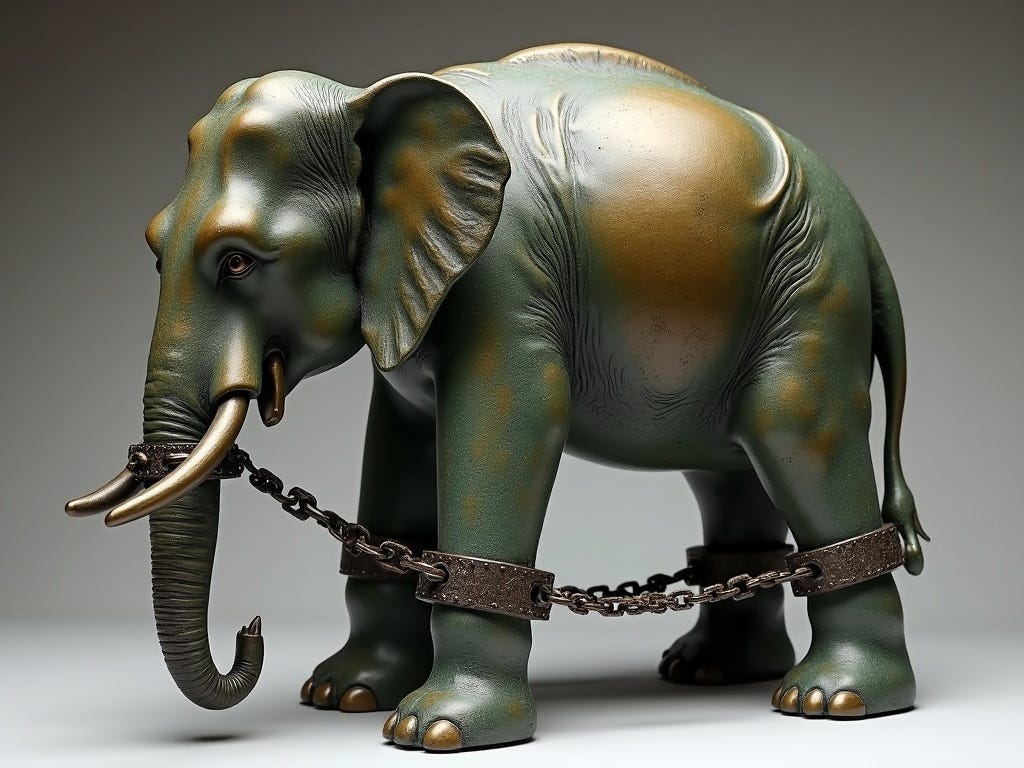
To understand why Thailand is stuck, you have to rewind the clock. The modern kingdom’s DNA was coded during the 70-year reign of King Bhumibol Adulyadej (Rama IX), who ascended the throne in 1946. In the wake of a revolution that ended absolute monarchy, the palace, in a powerful alliance with the military and bureaucracy, meticulously rebuilt its central role in Thai life. This “triple threat” of monarchy, military, and moneyed elites became the bedrock of the establishment.
This system was designed for stability, not dynamism. It was set against a backdrop of chronic political turmoil—a dizzying cycle of ten successful coups and seventeen different constitutions during Rama IX’s reign alone. Each military intervention, often justified by concerns over corruption or national security, served to institutionalize the army’s power, creating a political landscape The Economist described as designed to "freeze the hands in place."
The monarchy, standing as the ultimate arbiter, often intervened in moments of crisis, like the violent clashes of 1973 and 1992, de-escalating conflicts and reinforcing its position above the political fray. But this stability came at a cost. The system was predicated on maintaining the status quo, on ensuring that no political force could fundamentally challenge the established order.
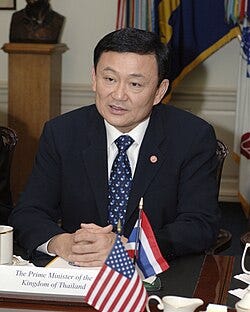
This became painfully clear with the rise of populism in the 2000s. When tycoon Thaksin Shinawatra won the premiership on a platform of rural development and universal healthcare, he electrified millions of marginalized Thais. But his consolidation of power was seen as a threat by the Bangkok elite. The result was a decade of polarization that brought Thaksin’s supporters the rural “Red Shirts” against the urban “Yellow Shirts”. In response, Thailand experienced two coups, in 2006 and 2014, to neutralize the populist wave.
The pattern of challenges to the existing order continued with the rise of the youth-supported, reformist Future Forward Party. The party's platform, which included curbing military influence and debating the monarchy’s role, prompted a strong institutional response. The party and its successor, Move Forward, were dissolved by the Constitutional Court, even after a strong performance in the 2023 election.
This sequence of events highlighted a core tension in the Thai political economy: the challenge of balancing institutional stability with calls for structural reform. The resulting environment of policy uncertainty can make both domestic and foreign investors hesitant, which in turn acts as a drag on an economy seeking dynamic new sources of growth.
The Fragile Foundation
Thailand's economic model became dangerously dependent on the outside world. With exports and services accounting for 60% of GDP, the nation’s fortunes are tied to the fickle winds of global demand. This vulnerability was laid bare by the COVID-19 pandemic. When global travel ceased in 2020, the tourism sector, which contributed up to a fifth of GDP, collapsed overnight, leaving millions jobless.
The recovery has been slow and painful. By 2025, tourist arrivals had still not fully recovered, hampered by a sluggish Chinese market and a global perception of Thailand as more expensive and less safe than before. The strong Thai baht, a sign of investor confidence, became a double-edged sword, making exports and tourism less competitive. In early 2025, as the baht strengthened, tourist arrivals contracted for the first time in five years, forcing economists to slash the nation’s GDP growth forecast in half. The country’s four economic engines: investment, consumption, exports, and tourism had, as one analyst put it, all but “burned out,” leaving it dangerously reliant on its last, most volatile engine.
The inability to pivot away from this dependency comes from a chronic lack of internal dynamism. Private investment is low, and spending on research and development is a paltry 1% of GDP. The education system, criticized for emphasizing rote memorization over critical thinking, has produced a human capital crisis, with businesses starved for skilled labor.
The Human Cost
Behind the macroeconomic data lies a story of profound human struggle. This is the story of the “Two Thailands.”
Wealth and government resources are overwhelmingly concentrated in Bangkok. Roughly 70% of all state expenditure is funneled into the capital region, which is home to only a quarter of the population. The rest of the country is left to compete for the scraps. This has created a deep sense of marginalization in the rural heartlands, the primary driver of the political conflicts that have defined the 21st century.
The most acute symptom is the debt crisis. For millions, credit is not for investment; it’s for survival. A medical bill, a failed crop, or simply covering daily expenses is enough to push a family into the red. The explosive growth of Buy-Now-Pay-Later schemes has accelerated this trend, with installment payments now making up over 40% of all online purchases.
This is worsened by a gaping social safety net. A huge portion of the labor force works in the informal sector—street vendors, farmers, gig workers—with no insurance, pension, or unemployment benefits. When crisis hits, their only recourse is to borrow, often from loan sharks charging exorbitant rates.
This system is reinforced by a cultural mindset of 'mai pen rai' ('never mind, it’s okay') and 'sabai sabai' ('relax, take it easy'). This ethos, a source of remarkable social resilience, allows society to bend with the wind rather than break in a storm. However, some observers note it can also foster a complacency that allows systemic issues to persist. While this mindset has historically contributed to social harmony, a generational shift appears to be underway. A younger, more globalized cohort of Thais is showing new expectations for transparency and participation, introducing a new dynamic into the public sphere.
The Looming Tremors
As if the structural problems weren't enough, immediate financial dangers are circling. The Thai real estate sector is a potential time bomb. Between 2025 and 2026, over $7.7 billion in property developer bonds are coming due, many of them high-yield junk bonds. With a slumping market, there is a serious risk of defaults that could trigger a financial chain reaction.
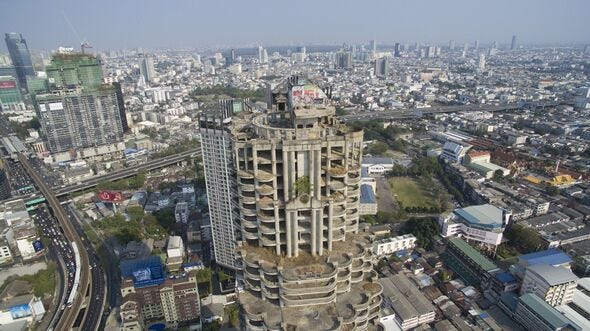
Bangkok is now grappling with a severe glut of unsold property. An estimated 74,000 condo units sit empty, a legacy of a market once reliant on foreign buyers. The city’s office vacancy rate has soared to 27%, the highest since the 1997 Asian financial crisis, as companies downsize in the era of hybrid work. The haunting image of the unfinished Sathorn Unique Tower, a ghost of the last crisis, looms large in the public imagination.
The diagnosis is grim. But a diagnosis is not a death sentence. It is the starting point for a cure.
Act II: The Blueprint for a New Chapter
The path out of the trap cannot be paved with the tools of the past. It requires a new national consensus, a bold, long-term vision that can survive political transitions and unite the country around a common purpose. Thailand can look to the strategic planning of its neighbors, not to copy their politics, but to learn from their methods. China’s Five-Year Plans and Vietnam’s focused industrial strategy offer lessons in creating a unifying blueprint that aligns government, industry, and society.
Thailand needs its own National Development Plan, but one forged differently. It must be built on broad consultation and institutionalized through an empowered agency like the National Economic and Social Development Council (NESDC), making it resilient to political shifts.
This plan cannot be a generic wish list. It must make strategic bets on the industries of the future. By concentrating resources on a few high-potential sectors, Thailand can build world-class ecosystems that create high-value jobs and durable competitive advantages. Four pillars stand as the foundation for this new economic architecture.
Pillar 1: Unleashing the Elephant: AI-Driven Mobility and Logistics
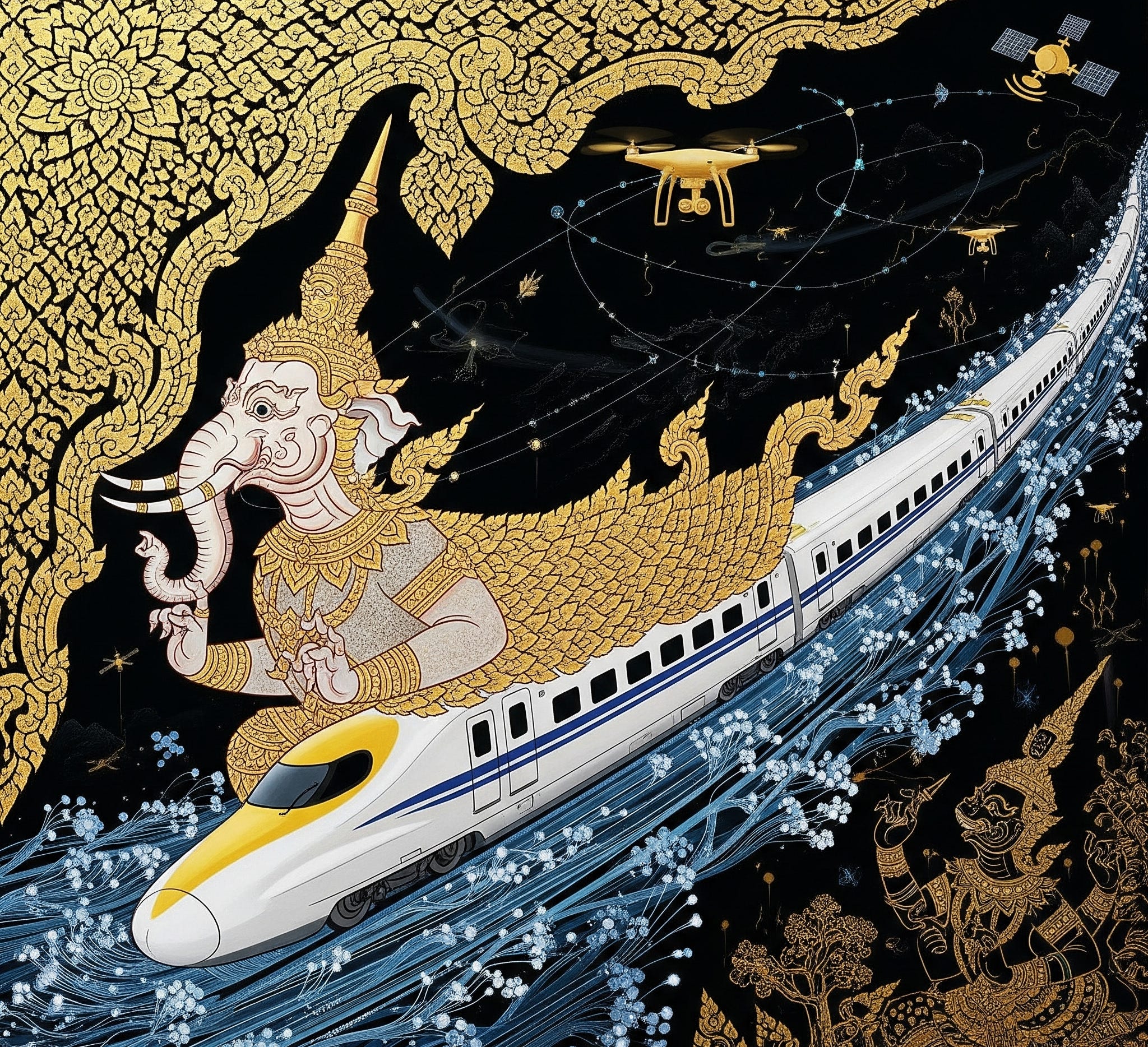
Thailand’s identity as the “Detroit of Asia” is a powerful asset. The country should leverage its deep automotive manufacturing base to leapfrog into the future of mobility. The government’s target to have 30% of vehicle production be electric by 2030 is a strong start, but the vision must be bolder.
Drones: The applications for drone technology in Thailand are immediate and practical. In logistics, they offer a solution to the "last-mile" delivery challenge, navigating Bangkok's traffic to improve efficiency. In agriculture, they can monitor crop health across vast rural areas. The government’s “Drone Master Plan” and the establishment of a regulatory sandbox in Wangchan Valley are crucial first steps. To fully capitalize on this, the next phase will involve streamlining regulations to provide the clarity and certainty needed to attract large-scale investment in these advanced logistical networks.
Electric and Autonomous Vehicles (EVs & AVs): Beyond just assembling foreign EVs, Thailand should aim to own the intellectual property. The Eastern Economic Corridor (EEC) should be transformed into a dedicated smart mobility sandbox, a place for Thai-led companies to develop and deploy self-driving shuttles, delivery robots, and logistics vehicles. This would create high-value engineering jobs and a source of national pride, shifting the EEC from a hub for foreign assembly lines to a center for homegrown innovation.
Pillar 2: Healing the Elephant: Advanced and Preventative Healthcare

The inequality that defines the “Two Thailands” is most visible in healthcare. Bangkok has a doctor-to-population ratio ten times higher than in the poorest rural regions. This gap is not just a social problem; it’s a massive economic opportunity.
Tech-Driven Access: The potential lies in using technology to augment the existing healthcare workforce and extend its reach. This approach focuses on deploying telemedicine and AI-assisted diagnostic tools to support community health volunteers in underserved regions. Thonburi Hospital is already experimenting with smart registration apps to reduce wait times, showing a clear proof of concept. Rolling out telemedicine kiosks in sub-districts could connect rural patients with specialists in urban centers, making healthcare more accessible and equitable while building a new, high-value industry.
Decentralizing Medical Tourism: Thailand is already a world-class medical tourism hub, anchored by hospitals like Bumrungrad. The next step is to use this strength as a tool for regional development. By offering powerful incentives for companies to build high-quality retirement communities and wellness centers in regions like Isan, the government can create thousands of local jobs, stimulate the economy, and give young people a reason to stay in their home provinces.
Pillar 3: Teaching the Elephant New Tricks: AI-First Education
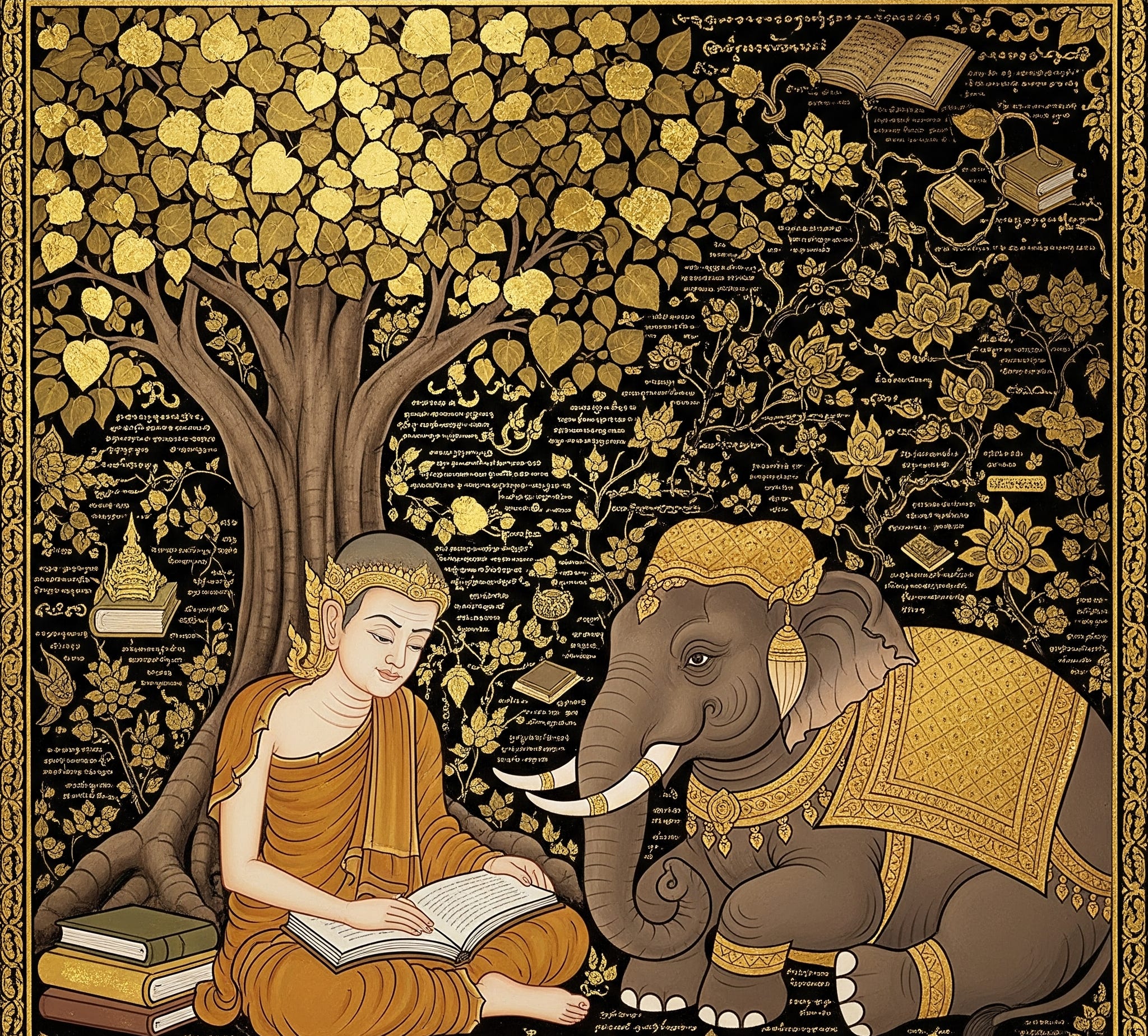
None of this is possible without a revolution in human capital. For too long, Thailand’s education system has been its Achilles' heel. Instead of slow, incremental reforms against an entrenched bureaucracy, Thailand should leapfrog directly to the frontier of educational technology.
Personalized Learning: By embracing AI-driven learning software, every Thai child, whether in a wealthy Bangkok suburb or a remote village, can have a personalized tutor. This technology could adopt to each student’s pace, freeing up teachers to become mentors who focus on fostering creativity, collaboration, and critical thinking.
Skills for the Future: If AI handles foundational learning, class time can be devoted to hands-on projects: building robots, launching small businesses, or solving local community problems. This project-based approach cultivates the very skills: grit, problem-solving, and innovation that the modern economy demands. A government that declares an “Educational State of Emergency” and pushes through a bold reform package to create a generation of AI-literate, creative thinkers could fundamentally alter the nation’s trajectory.
Pillar 4: Stabilizing the Elephant

These strategic pillars require a stable foundation upon which to build. Long-term economic progress is best achieved within a predictable and coherent governance framework that all stakeholders can trust. The focus can then shift from a zero-sum conflict over a shrinking economic pie to a collaborative effort to expand prosperity for all Thais. By cultivating a shared vision for economic progress, Thailand can align its key institutions: government, business, and civil society toward the common goal of building a more resilient and innovative economy.
The Path Forward

As Thailand stands at this crossroads, the wisdom of the late King Bhumibol’s "Sufficiency Economy" philosophy of moderation and self-reliance is more relevant than ever. The kingdom must find a new equilibrium, a modern interpretation of sufficiency that embraces innovation while maintaining Thailand’s cultural identity. The blueprint for freedom exists. It lies in a shared national vision, a revolution in education, and a courageous bet on the industries of tomorrow.
The future is not a matter of chance, but of choice. For the young professional staring at their phone screen late at night, the choice must be more than just another installment plan. It must be a genuine opportunity to build a life of purpose and prosperity in a nation that has finally unleashed its true potential.
Thailand’s journey of dramatic transformation is far from over. Its next, most crucial chapter is yet to be written.
Notes
A longer version of this essay is available here

Thank you to everyone who carved out time to speak with me while researching this essay. Without your insights, this essay would not have been possible.
In addition to in-person discussion this analysis draws on reporting and expert commentary from Reuters, The Economist, Bangkok Post, The Nation, the World Bank, the IMF, and academic observers.
Key references include:
Great essay. Look forward to talking to you about it offline.