

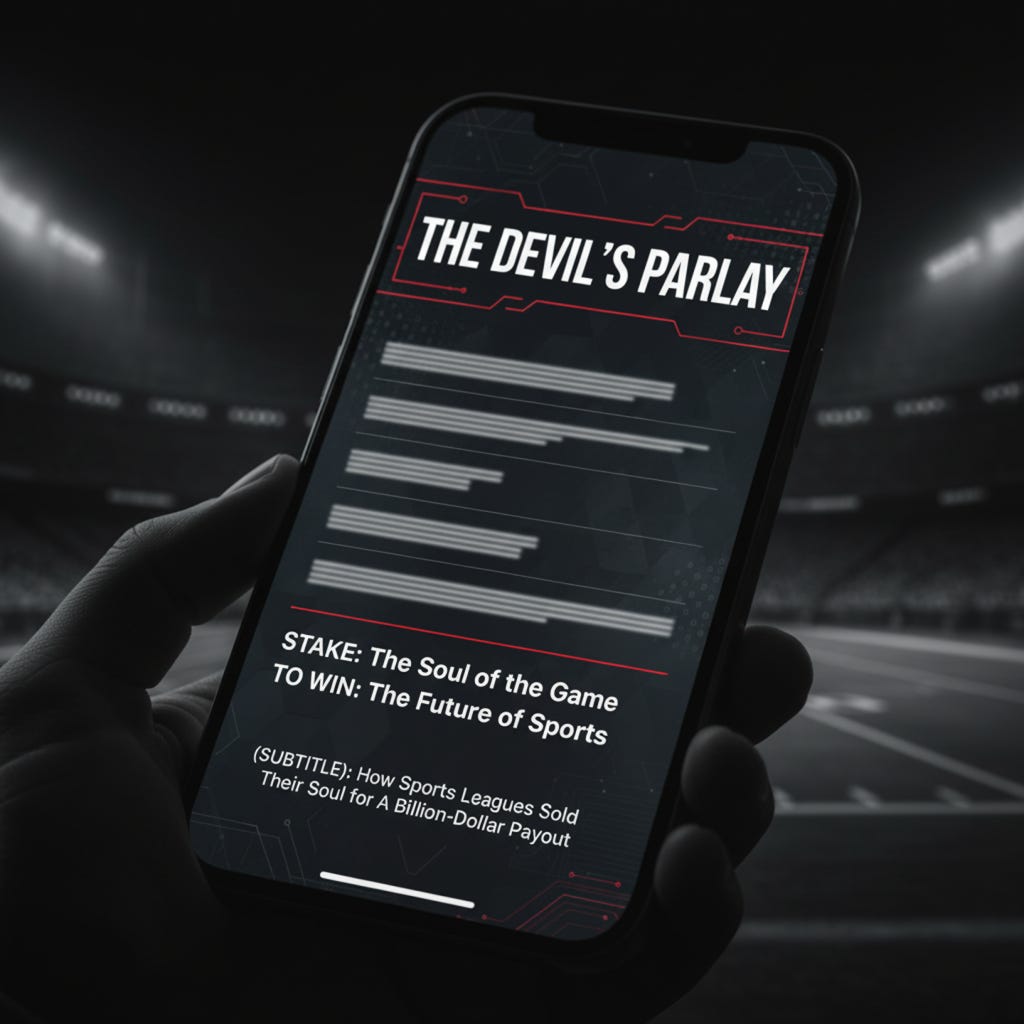
Professional sports leagues have made a deal with the devil.
For decades, betting was the ultimate sin.
It was the one, unforgivable act that got legends like Pete Rose banned from baseball for life, all for wagering on his own team to win.
Gambling was the major threat, the boogeyman that could destroy the sacred trust between a fan and the game. Leagues built a sacred wall to keep it out, terrified of repeating the 1919 “Black Sox” scandal that nearly killed baseball.
Today, that old enemy is the leagues’ richest new partner.
The wall is gone, replaced by a red carpet.
Turn on any NFL or NBA pre-game show.
You’ll hear it instantly.
The hosts, analysts, and former players you’ve trusted for years aren’t just talking about who will win.
They’re shouting about “same-game parlays,” “player props,” and whether a star quarterback will throw for “over or under” 250.5 yards.
Trusted faces have become salespeople, gleefully explaining how a $10 bet can turn into $500, all sponsored by an “Official Betting Partner.”

This new world of sports betting is exploding.
In 2023, Americans legally bet over $100 billion on sports.
Leagues like the NBA and NFL, who once fought gambling in court, now have official sportsbook logos splashed all over their stadiums and broadcasts.
This flood of new money has, for many fans, made the games more exciting. They have money on the line.
But it also creates a huge, unavoidable temptation. With so much cash riding on every single play, how can we be sure every game we watch is 100% real?
We can’t, and thats a major problem for the future of sports.
In 2024, NBA player Jontay Porter was banned from the league for life. He wasn’t caught throwing a whole game; that’s old-fashioned, clumsy, and difficult.
He was caught fixing his own stats.
He faked an illness to leave a game early, guaranteeing that he would finish “under” the points and rebounds that people were betting on. His friends, armed with this inside information, placed huge bets on those “props” and won.
This is the new, modern face of sports corruption.
It’s a quiet, easy-to-hide infection made possible by a system that has deliberately turned every tiny moment of a game into a casino chip.
The Wall Comes Down
To understand how radical this new era is, you have to understand the century of fear that came before it.
The 1919 “Black Sox” scandal, where eight Chicago players were accused of throwing the World Series for gamblers, was a foundational trauma for American sports.
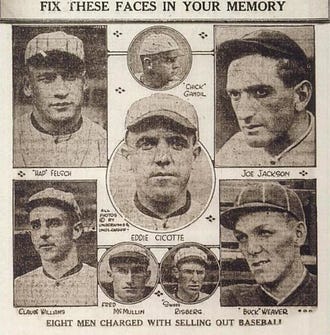
It led to the creation of the first Commissioner of Baseball, a virtual dictator whose entire job was to protect the “integrity of the game.”
That rigid, terrified mindset ruled for a hundred years.
The most famous victim of it was Pete Rose.
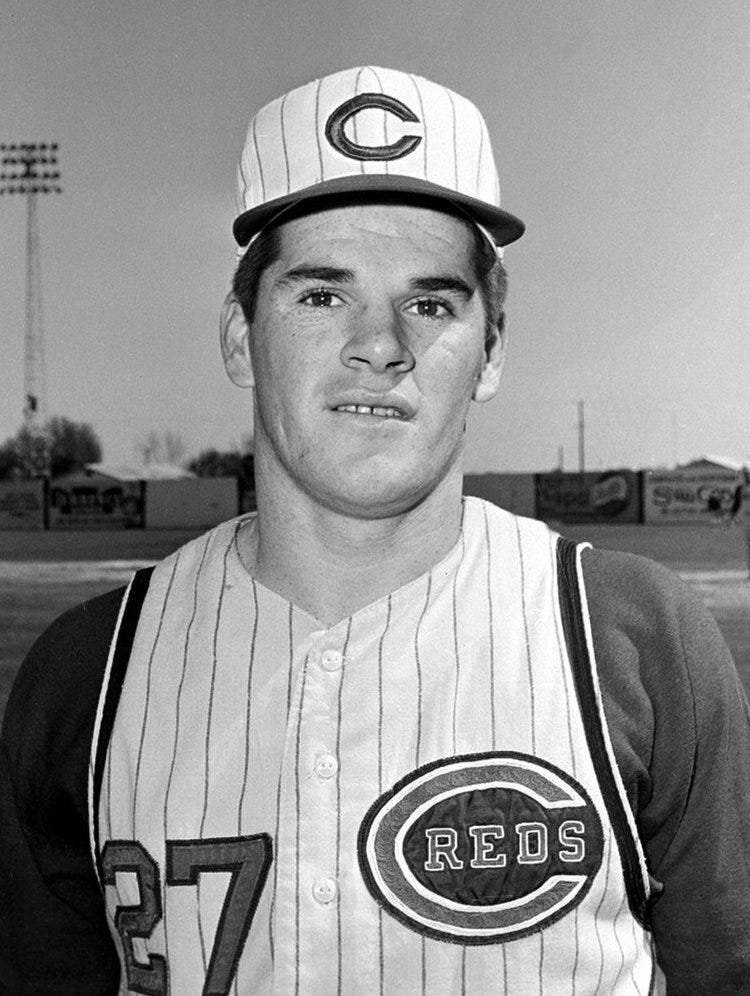
Rose was a baseball icon, “Charlie Hustle,” the man who still holds the all-time hits record. But in 1989, he was banned from the sport for life. His crime was not throwing games. He was banned for betting on baseball while he was a manager, and the league’s investigation (the Dowd Report) concluded he bet on his own team to win.
His defenders have always argued this was harmless.
If he bet on his team to win, wasn’t his incentive the same as always?
This argument, then and now, completely misses the point.
A manager’s job is to protect the long-term health of his team.
A manager with a $10,000 bet on tonight’s game has a different goal. He might be tempted to use his best relief pitcher for three innings to secure his bet, even if it blows out the pitcher’s arm and costs the team the next two games.
The rule exists because there is no such thing as a “harmless” bet.
The mere presence of the wager poisons the decision-making. Rose’s lifetime ban was the ultimate symbol: the wall between sports and gambling was absolute.
Even a decade before the prop bet-era, a warning shot was fired that should have been taken more seriously.
In 2007, the sports world was rocked by the case of Tim Donaghy, a 13-season veteran NBA referee.
The FBI discovered Donaghy was betting on games he officiated.
Donaghy didn’t need to fix the winner of the game.
He just needed to influence the point spread.
Think of a point spread like a head start given to the team that’s expected to lose (the “underdog”) to make the game fair for betting. For example, if the blue team is really good and the red team isn’t, a sportsbook might say the spread is 7 points.
This means for a bet on the “favorite” blue team to win, they must win the game by more than 7 points.
If they only win by 5, the people who bet on the “underdog” red team win their money.
To “influence” this, a player or ref doesn’t have to completely change who wins or loses.
They only have to make sure the favorite doesn’t win by enough.
If the favored team is winning by 10 points (covering the 7-point spread), a player could intentionally miss a shot or make a “mistake” that lets the other team score.
Now the final score is closer, and the favorite only wins by 3 points.
The favorite still won the game, but they didn’t cover the spread.
For his role in the scandal, Tim Donahy was sentenced to 15 months in federal prison, but he proved a terrifying concept: a single, corrupt person could subtly manipulate a game’s outcome for betting purposes.
Donaghy was the bridge between the old world and the new.
He was “spot-fixing” before we even had a word for it.
The Scalpel in the Slot Machine
Basketball is uniquely vulnerable because with only five players on the court, one person’s actions have a huge impact. In football, one lazy player out of 11 might not change a play. In basketball, one player who decides not to play defense can give up a an extra basket or two.
The game is also fluid and high-scoring, making “point-shaving”, winning by less than the point spread, a classic corrupt move.
But the old-school fix (point-shaving) and the old-school scandal (match-fixing) were sledgehammers.
The new betting products, legalized in 2018, have created a scalpel.
The biggest change is the “proposition bet,” or “prop bet.”
This is a wager on a specific event inside a game, usually a player’s individual stats.
“Will LeBron James score OVER or UNDER 26.5 points?”
“Will this player get MORE or LESS than 8.5 rebounds?”
“Will this quarterback throw an interception?”
Sportsbooks love prop bets because they keep you engaged (and betting) on every single play, not just the final score.
But these prop bets have also created “spot-fixing.”
A single player can do it all by himself.
A basketball player who wants to cheat no longer needs to convince his teammates to lose. He just needs to make sure he personally grabs seven rebounds instead of nine to make his “under 8.5 rebounds” bet a winner.
Think about the psychology of this.
It’s so much easier for a player to justify in his own head.
He can tell himself, “I’m not hurting the team. We can still win. I’m just making sure I miss one rebound.” This act is nearly impossible for integrity monitors to spot. A star player having a bad night and only getting seven rebounds isn’t a red flag. It’s just “part of the game.”
Any player, even a benchwarmer with limited minutes, can now get in on the action. He can get paid to commit one extra foul or miss one free throw. The number of potential cheaters in any given game has grown from a handful of conspirators to every single person on the roster.
If prop bets are the opportunity, then “parlays” are the motive.
And how Sportsbooks bleed bettors dry.
A parlay is a single bet that combines two or more bets into one ticket. It’s an all-or-nothing lottery ticket. If you bet a five-leg parlay and even one leg loses, your whole bet is worthless. But if all five hit, you get a massive payout.
I another way to picture this, is to imagine you are a waiter in a restaurant. You place a $20 bet with your fellow waiter that you can predict a customer’s entire order App, Main, and Dessert.
If you are right, he will pay you $100. If you are wrong about any portion you lose your $20.
To sweeten the deal, your fellow waiter offers you the chance to win $500 if you also predict the table’s drink orders.
This is the “opportunity” being pushed upon bettors.
Sportsbooks and TV announcers push parlays constantly.
They are the “slot machines” of sports betting: highly enticing, almost always a loss for the customer, but incredibly profitable for the house. For a criminal, a parlay is a powerful tool.
A cheater can build a four-leg parlay.
Three of the legs can be “safe” bets on heavy favorites.
The fourth leg is the fixed one: “Jontay Porter to get UNDER 5.5 assists.” By guaranteeing that one unpredictable leg hits, the corruptor can use the fixed prop bet to secure a massive, multiplied payout. The parlay turns a small, easy-to-fix event into a highly profitable crime.
The Guardians Become the Dealers
This system of temptation wasn’t an accident. It was built, encouraged, and paid for by the sports leagues themselves.
After the 2018 Supreme Court decision, the leagues that had claimed gambling would destroy their sport did a complete 180. The money was simply too big to ignore.
The NFL signed a five-year partnership with three sportsbooks (DraftKings, FanDuel, and Caesars) worth a combined total of nearly $1 billion. Teams scrambled to get their own betting partners; more than 25 NFL teams now have at least one.
The leagues even created a new revenue stream by selling their official, real-time game data to the sportsbooks, the very data needed to power the prop bets that are so dangerous.
This creates a sickening hypocrisy.
The leagues, the guardians of the game, have become the primary advertisers for the gambling industry.
FanDuel’s tagline, “Make Every Moment More,” is the perfect summary of the strategy.
The goal is to turn fans from passive viewers into active financial speculators. The pre-game shows, as you’ve seen, have become sales funnels. The league runs ads telling its players “Don’t Bet on It,” while at the same time, it runs a 3-hour pre-game show telling its fans “You Must Bet on It.”
The inevitable blowback is already here, and it’s much bigger than one “bad apple” like Jontay Porter. The problem is systemic and it’s spreading across all sports. The NFL has suspended multiple players, like Calvin Ridley for a full season and Josh Shaw, for betting on league games. The NHL, long seen as clean, had its first major case when Shane Pinto was suspended 41 games.
But the most alarming case, by far, came from the NBA.
In 2025, a massive federal investigation dubbed “Operation Nothing But Bet” showed the problem is now in the hands of organized crime. The FBI arrested more than 30 people, uncovering a sophisticated ring with alleged ties to New York’s Mafia families.
The scheme involved Miami Heat guard Terry Rozier.
According to the indictment, Rozier allegedly tipped off a friend that he planned to exit a game early with a fake injury. Bettors with this “insider information” placed over $200,000 in wagers on Rozier’s “under” statistics. When he left the game after just nine minutes, they cashed in.
What is potentially damning for the NBA is they cleared Terry of these allegations earlier in their internal investigation. Presumably the FBI would have reviewed these findings and still decided to proceed with their own indictment.
Sports media has also become intertwined with Sports Betting that they also appear to be running cover for the scandal, blaming “Trump/politics”
The problem is also infecting college sports, where the athletes are younger, more vulnerable, and unpaid.
In 2023, investigators charged over a dozen athletes from the University of Iowa and Iowa State with illegally betting, including some who bet on their own games.
That same year, the University of Alabama’s head baseball coach was fired for texting a gambler friend that his starting pitcher was injured. The gambler immediately tried to place a $100,000 bet against Alabama.
The Price of the Deal
The leagues may be getting richer, but this new world is having real, painful consequences for everyone else.
For a growing number of people, sports betting is a destructive addiction.
Modern betting apps are designed to be addictive, like a slot machine that lives in your pocket, with frictionless deposits and a 24/7 stream of “in-game” betting opportunities. I have written more about this here.
The human cost is devastating. With marriages destroyed and gambling being the addiction with the highest suicide rate. This is the hidden cost of “making every moment more.”
The leagues will tell you they are policing the game.
They spend millions hiring “integrity monitoring” firms like Sportradar to look for weird betting activity. This is how they caught the Porter bets.
But this system is a “band-aid,” not a cure.
It’s reactive, not preventive.
It can spot a weird bet after it’s been placed, but it can’t stop the corrupt deal from happening.
It also has a huge blind spot: it can only monitor the legal market. It cannot see the billions being bet with illegal offshore bookies.
Regulators know this.
When some states try to ban prop bets on college players, that betting activity doesn’t disappear; it just moves to the unregulated shadow market, where there is zero integrity monitoring.
This “integrity monitoring” is a form of “integrity-washing.”
It allows the leagues to project an image of safety and control.
It lets them treat the symptom (catching a bad bet) without ever addressing the cause (aggressively promoting the very prop bets that are easiest to fix).
It’s a moral alibi that allows them to keep profiting from a system they know is corruptible.
The deal with the devil is complete.
Sports leagues got their billions in revenue, and fans got a more “engaging” way to watch.
But the cost is becoming clear.
Every time a player is caught, a little more trust dies.
Every time an investigation finds another betting ring, fans are left wondering if the game they just watched was fair.
If the leagues aren’t careful, they will find they sold something they can never buy back: the belief that the game is real.
Thanks for the explainer. I understand sports broadly but never the gambling side