

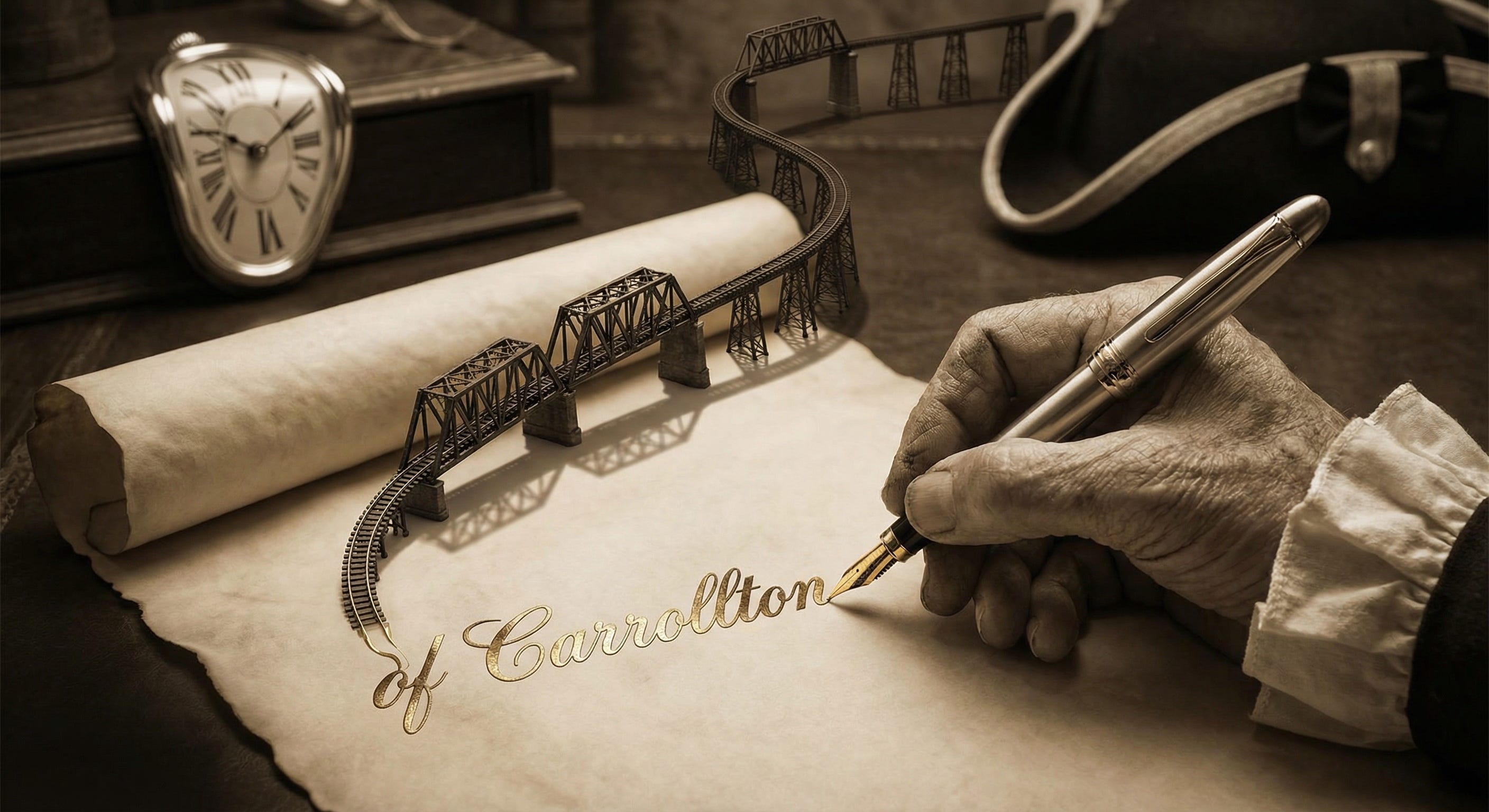
Visitors came to the Carrollton estate in Charles Carroll’s final years.
Farmers, politicians, curious strangers.
They all wanted the same thing: to shake the hand of the last man alive who had signed the Declaration of Independence.
When Carroll died on November 14, 1832, the thirteen colonies had become twenty-four states.
The US population had grown from 2.5 million to 13 million.
And the railroad age was beginning.
Carroll had signed the Declaration of Independence fifty-six years earlier. Then he watched, longer than any other signer, as those principles played out in practice.
For Carroll, one principle mattered more than most: religious freedom.
He was the only Catholic to sign.
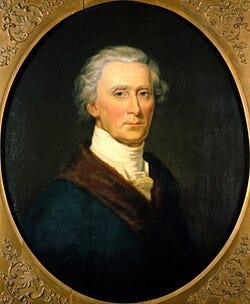
And his religion made his path to that table in Philadelphia unlike anyone else’s.
The Catholic
It would take America nearly two hundred years to elect a Catholic president. When John F. Kennedy won in 1960, his religion was still considered a political liability. Reporters asked whether he would take orders from the Pope. Voters worried about divided loyalties.
The suspicion Kennedy faced in the twentieth century was nothing compared to what Carroll dealt with in the eighteenth.
In Maryland, where Carroll lived, Catholics could not vote.
They could not hold office.
They could not practice law.
The government could fine them for sending their children to Catholic schools overseas.
Maryland had been founded as a safe haven for Catholics. By the 1700s, Protestant leaders had taken control and turned it into the opposite.
Despite all of this, the Carroll family sent young Charles to France when he was sixteen. For the next sixteen years, he studied at a Jesuit college and then trained as a lawyer at the Inner Temple in London. He learned everything a man needed to enter public life.
Then he came home. And none of it mattered.
When Carroll returned to Maryland in 1765, he was thirty years old. Fluent in French. Trained in law. And completely barred from using any of it. He could not vote or hold office. He could not practice the profession he had spent a decade learning. The only thing he could do was manage his family’s enormous estates and wait for something to change.
He didn’t wait quietly.
Carroll published anonymous political essays under pen names, debating the colonial governor in Maryland’s newspapers. He couldn’t enter a courtroom. But he could write. And he did, for years, building a reputation that no one could attach to his real name.
The Richest Signer
The Carroll family was one of the richest in the colonies.
Charles Carroll’s grandfather arrived in Maryland in 1688 with nothing but ambition. Within a generation, the family owned tens of thousands of acres. They had plantations stretching across counties.
They held property in Baltimore and Annapolis. They owned shares in the Baltimore Iron Works, one of the largest industrial operations in the colonies, producing pig iron for everything from tools to cannons.
By the time Carroll signed the Declaration, he was arguably the richest man in America. His holdings were worth an estimated $2 million in 1776 dollars, roughly the equivalent of hundreds of millions today.
That kind of wealth gave Carroll a freedom that other signers did not have.
He didn’t depend on trade with Britain.
He didn’t need to practice law.
He could afford to be a revolutionary because he could afford to lose everything.
But could he afford to lose his head?
The Signature
When Carroll signed the Declaration of Independence, he added something no other signer did: his address.
“Charles Carroll of Carrollton.”

The story goes that another delegate pointed out there were several Charles Carrolls in Maryland. His father and his cousin shared the same name. The British might not know which Carroll had committed treason.
“They will know now,” Carroll reportedly said, and added “of Carrollton” in clear script. Whatever the reason, practical or defiant, his signature was the only one on the Declaration that included an address. He was making certain the British would know exactly who to hang.
Why would the richest man in America do that?
A man who had everything to lose and nothing obvious to gain?
Carroll had spent his entire adult life barred from public office because of his religion. The Declaration promised to change that.
For him, signing wasn’t just a political act. It was personal.
The Mission
In early 1776, before independence was declared, the Continental Congress authorized a desperate mission to Canada.
The goal was simple: convince French-speaking Canadians to join the revolution, or at least stay neutral. Benjamin Franklin led the group. Samuel Chase and Charles Carroll joined him. They brought along Carroll’s cousin John Carroll, a Jesuit priest, hoping his Catholic connections might open doors that Protestant diplomats could not.
The journey north in the spring of 1776 was brutal. The roads were mud. The weather turned cold again. Franklin was seventy years old and fell sick along the way. Carroll, the wealthy Catholic who couldn’t hold office, ended up paying Franklin’s expenses for the return trip.
Montreal in April was still half-frozen. The streets were narrow. French Canadians watched the American delegates arrive and said little.
They remembered that colonists had fought to conquer New France just two decades earlier.
They remembered the anti-Catholic laws in the colonies to the south.
The conversations the delegates had went nowhere and the mission failed before it really began.
But Carroll had done something no Catholic in the colonies had done before. He had sat at the table where power happened.
When he returned to Maryland, the old rules were already breaking.
In July, the Continental Congress appointed him to Philadelphia.
He arrived on July 18. On August 2, he walked into the chamber where the delegates were signing the Declaration.
He saw the document spread across the table with many names already added.
He picked up the pen and added his own.
A man locked out of public life for decades had just helped create a nation where, at least in theory, his religion would no longer define what he could and could not do.
The Railroad and the Long Life
Carroll was thirty-eight when he signed the Declaration. Most men his age could expect another twenty or thirty years. Carroll got fifty-six more.
He didn’t waste them.
He served in the Maryland Senate until 1800, shaping state policy for a quarter century. He invested in the nation’s growing infrastructure. He became one of the first directors of the Baltimore and Ohio Railroad, the first major railroad in America, the one that would prove trains could move goods and people faster than anyone had imagined.
On July 4, 1828, a crowd gathered on the outskirts of Baltimore. They had come to watch the laying of the cornerstone for the railroad’s first section. Carroll was brought to the site. He was ninety-one years old, the oldest and most famous man in the country. The crowd pressed close. They knew what they were seeing. The same hand that had signed the Declaration fifty-two years earlier was about to launch the age of steam.
Carroll picked up a silver trowel. His body was frail but his grip was steady. He placed the cornerstone into the earth. The crowd watched in silence. Here was a man who had been alive since before the French and Indian War, standing at the edge of Baltimore, ushering in a future he would never fully see.
Carroll said the moment was as important as signing the Declaration itself.
The Declaration had created a nation. The railroad would connect it.
Carroll, at ninety-one, was present at both beginnings.
The Legacy
After Carroll’s death, his estate was valued at over $1 million, still one of the largest fortunes in America. The Carroll family remained prominent in Maryland for generations.
But Carroll is best remembered for two things: being Catholic and being last.
The only Catholic signer. The last surviving signer.
In a series of fifty-six men, those two facts have kept his name alive when dozens of others have been forgotten.
His cousin John Carroll, the Jesuit priest who had traveled to Canada with him, went on to become the first Catholic bishop in the United States. The Carroll family helped shape what American Catholicism would become, from Carroll’s signature in 1776 all the way to Kennedy’s inauguration in 1960.
What Carroll Teaches Us
Most people stop preparing when they stop seeing a path forward. Carroll never did. He spent thirty years locked out of public life with no guarantee that would ever change.
He studied anyway. He wrote anyway.
He managed his estates and sharpened his mind for a door that might never open.
When the door finally swung, he walked through it the same day.
Next: George Wythe
From the richest signer, we turn to one of the most influential.
George Wythe of Virginia was Thomas Jefferson’s mentor. He taught law to Jefferson, John Marshall, and Henry Clay. Three men who would shape American law and politics for generations. He was the first professor of law at any American university. He signed the Declaration of Independence and helped draft Virginia’s state constitution.
And then, at the age of eighty, he was murdered. Poisoned, apparently, by his own grandnephew, who was hoping to inherit his estate.
Wythe’s death was a scandal that rocked Virginia. The trial that followed exposed the limits of American justice in ways that still echo today.
Next Friday, we’ll tell the story of the teacher who shaped the founders, and the crime that ended his life.
This is Essay #9 of 56 in “The 56” series, profiling every signer of the Declaration of Independence. New essays every Sunday and Friday, culminating on July 4, 2026, the 250th anniversary of American independence.
Subscribe to follow the journey.
Sources: