

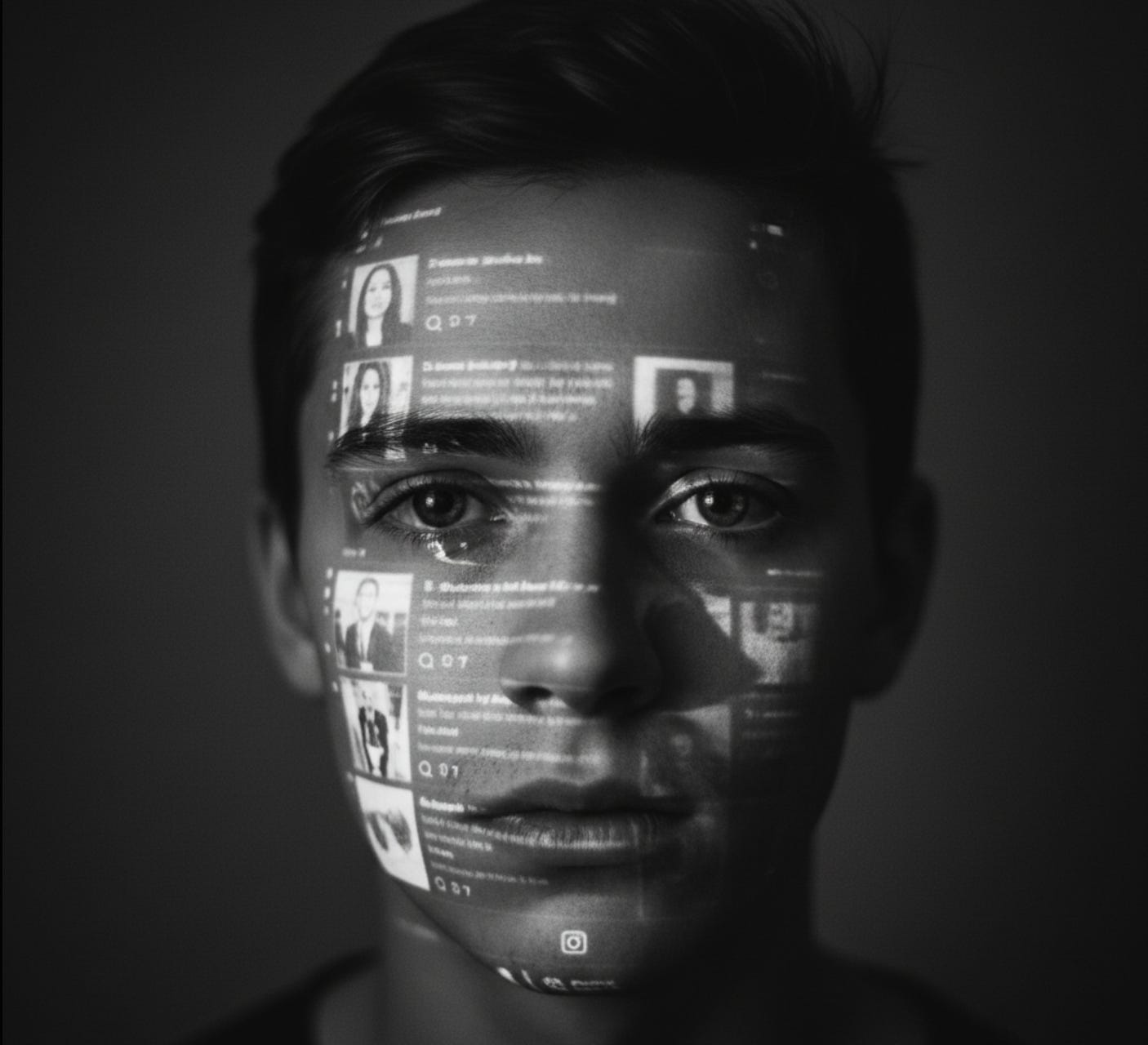
Hunter S. Thompson’s generation was animated by a fear of the young. A fear of their energy, their rebellion, their capacity to upend the established order with a cocktail of hedonism and righteous anger. The "loathing" was a two-way street a visceral disgust for the hypocrisy of the establishment, met with the establishment's contempt for the long-haired, loud-mouthed youth.
Today, that dynamic has been inverted. The dominant force is not a fear of the young, but a quiet fear within the young. It is a fear of economic irrelevance, of social awkwardness, of making the wrong move in a world of digital permanence.
And the loathing?
It has faded, turned inward, mutated into a resigned anxiety. This generation isn't storming the barricades; they are retreating to their bedrooms and wilting away in the blue light of screens. They have become increasingly disconnected from the chaotic, random, and often alcohol-fueled experiences where connections are forged and lives are made.
The evidence for this great retreat is stark and varied. It’s a story told not in protest songs, but in sobering economic data and shifting consumer trends.
The Economics of Abstinence
Before we can even discuss the social choices of today's youth, we must confront the brutal economic landscape they inhabit. A recent, alarming report from South Korea paints a picture that resonates across the developed world: for six consecutive months, the employment rate for people aged 15-29 has fallen below that of seniors aged 60 and over.
Let that sink in.
The generation that should be building careers, earning disposable income, and investing in their futures is less employed than the generation that should be enjoying retirement. As corporations increasingly favor experienced workers for a shrinking pool of stable jobs, young people are left with precarious gigs or nothing at all. As Yonsei University's Kim Jeong-sik bluntly stated, “The state’s role is to create jobs for the sons, not just for the fathers.”
This economic situation helps us understand youth behavior. The after-work drinks, the spontaneous weekend trips, the simple act of buying a round for friends all require a steady paycheck. When your primary concern is cobbling together rent from three different apps, the $15 artisanal cocktail is not a tempting social lubricant; it’s a source of financial anxiety.
This economic reality directly fuels the "sober curious" movement in Japan. While presented as a wellness choice, it is inseparable from the economic stagnation that has plagued the country for decades. Young people like 25-year-old Hanami Ohashi, who has "one alcoholic drink a week at most," are making a rational choice. Why spend money on expensive drinks in a bar when an endless, cheaper universe of entertainment: gaming, streaming services, social media are all available at home?
The state’s role is to create jobs for the sons, not just for the fathers
The decline of nominication, the Japanese cultural tradition of building relationships through drinking is not simply a cultural shift. It’s a direct consequence of an economic system that has failed to provide its young with the basic security their parents took for granted. They aren't going out because, in a very real sense, they can't afford to. The retreat begins not as a choice, but as a necessity.
The Lost Art of Social Lubrication
This is where we must have an honest conversation about alcohol. In our modern wellness-obsessed culture, it’s easy to paint alcohol as a monolithic evil. We rightfully decry binge drinking and alcoholism. But in doing so, we risk forgetting the crucial, nuanced role that moderate drinking has historically played in human society: it is a social lubricant.
Alcohol, for better or worse, is a shortcut to vulnerability. It temporarily dismantles the guards we keep up, the carefully constructed personas we present to the world. It quiets the inner critic that obsesses over saying the right thing, allowing for freer, more spontaneous, and often more honest interactions. The best friendships, the most unexpected business connections, the most memorable love stories often don’t begin in the sterile, structured environment of a coffee shop. They are born in the noisy, messy, unpredictable atmosphere of a pub, a dive bar, or a backyard party.
If I like back through my own life, I can think of very few of the top social experiences that didn’t involve alcohol in some way. Whether it was meeting people while out or planning to to meet for drinks then XYZ happened, hard to have that flow from grabbing coffee or going to yoga.
This is the world that young people are increasingly opting out of. They are choosing the filtered, curated, and fundamentally safe interactions of the digital world. As 28-year-old Kyoka Noguchi suggests, when it comes to meeting people, “People use apps for that now.”
Dating apps, like all social media, encourage a kind of risk-averse, consumerist approach to human connection. You swipe through profiles, optimizing for traits you think you want. Conversations happen via text, giving you time to formulate the perfect, witty response. There is no real chance of public embarrassment, of a fumbled introduction, of the kind of awkward, unscripted moment that, in the real world, often breaks the ice and leads to genuine connection.
By retreating from social arenas where alcohol is present, young people are missing out on the vital training ground for what one might call "social resilience." They are not learning how to read a room, how to engage in playful banter, how to navigate the complex dynamics of a group, or how to handle a slightly awkward silence. These are the soft skills that don't appear on a resume but are absolutely critical for building a career and a life. They are skills honed in the unpredictable flux of real-world social gatherings, not in the algorithmic certainty of a Discord server.
The Third Place is Now a Hard Drive
Sociologist Ray Oldenburg coined the term "the third place" to describe the crucial anchors of community life that exist outside our two primary environments: the home (the "first place") and the workplace (the "second place"). Third places are bars, cafes, bookstores, and other informal public spaces where people gather, connect, and build social capital.
For generations, the bar was a quintessential third place. It was a neutral ground where people of different backgrounds could mix, where friendships were maintained, and where the community's social fabric was woven. Today, for many young people, that third place is not a physical location. It is digital. It is a Twitch stream, a subreddit, a massive multiplayer online game.
While these digital spaces can provide a sense of belonging, they are a poor substitute for the real thing. They are inherently disembodied and often anonymous. They encourage performance over presence. More importantly, they lack serendipity, the magic of the unplanned encounter. You will never bump into an old friend you haven't seen in years while scrolling through TikTok. You will not strike up a conversation with a fascinating stranger who happens to be sitting next to you in a World of Warcraft raid. The algorithm is designed to feed you more of what you already like, enclosing you in a comfortable, predictable bubble.
Real life, and the third places that facilitate it, is built on a foundation of inefficiency and chance. It's in these unoptimized spaces that opportunity strikes. It’s where you hear about a job opening from a friend of a friend. It’s where you meet your future bandmate. It’s where you stumble into a debate that changes your perspective on the world.
Asahi Breweries' own research in Japan found that over half of adults, some 50 million people, don't drink, yet many still "longed for aspects of bar and pub culture." This reveals a deep-seated human need for a third place that is not being met. Their response is telling: create "Instagrammable" sober bars and market non-alcoholic drinks as "#sober" or "nighttime soda water." The beverage industry is adapting, trying to sell the aesthetic of social life without the substance, offering the backdrop for a social media post rather than the genuine article. It’s a culture of performance, a apperance of the connection they are too anxious or too broke to pursue authentically.
A Generation Wilting in Place
How best can we visualize this generation? Like a plant wilting away at home. A plant raised in a sterile, climate-controlled greenhouse, never exposed to the stress of wind or rain, grows tall but weak, lacking the resilience to survive in the outside world.
This is the danger facing a generation raised in the climate-controlled environment of the digital realm, shielded from the economic and social risks their parents navigated. Their fear is understandable. The economy they are trying to enter is unstable and the social world outside of it is fraught with perceived dangers. The digital world offers a safe, comforting, and endlessly entertaining alternative.
But comfort is the enemy of growth.
By avoiding the possibility of a boring night out, they sacrifice the possibility of a legendary one.
By avoiding the chance of an awkward conversation, they sacrifice the chance of a life-changing connection.
By avoiding the financial risk of a few drinks with colleagues, they sacrifice the chance to deepen their the professional connection that leads to promotions and new opportunities.
This is not a call for a return to the three-martini lunches of a bygone era or a demand that every young person become an alcoholic.
It is a lament for what is being lost: spontaneity, serendipity, and the messy, beautiful, unscripted chaos of real life. It is a recognition that the "smart drinking" and "sober curious" trends, while born of legitimate health and economic concerns, are also symptoms of a deeper social problem.
The fear and loathing of the young is no longer an external force to be fought against. It is an internal condition of quiet fear that has younger generations locked in place, and a fading loathing that has left them with little energy to fight for the economic and social spaces they are being denied.
We are witnessing the rise of a generation that is safe, sober, and profoundly, tragically stuck. And the longer they wilt in their rooms, the harder it will be to convince them that there is a world outside worth experiencing.