


Samuel Adams didn’t start the American Revolution. But he made sure it happened.
For fifteen years before the Declaration of Independence, Adams worked without stopping to turn colonial anger into a push for revolution. He wrote newspaper articles under fake names and organized boycotts. He was closely tied to the Sons of Liberty and helped plan the Boston Tea Party. He created committees of correspondence that spread radical ideas from colony to colony.
He understood something that the people around him didn’t. Revolutions aren’t made in legislative chambers. They’re made in tavern gossip and newspapers working together to influence the minds of ordinary people.
By the time independence was declared in 1776, Samuel Adams had been pushing for it for over a decade. He had done more than almost anyone to make the idea of revolution thinkable. And then inevitable.
When he died, Boston newspapers called him “the Father of the American Revolution.”
It wasn’t an exaggeration.
The Failure
Samuel Adams was born on September 27, 1722, in Boston. His father was a successful brewer and local political figure who expected his son to follow him into business.
Samuel tried. And he failed, spectacularly.
After graduating from Harvard in 1740, Adams worked briefly for a merchant, lost the job, tried to start his own business with a loan from his father, and lost that money too.
He took over his father’s malting business and ran it into the ground. He served as a tax collector and failed to collect taxes, eventually owing the city thousands of pounds he couldn’t pay back.
By his forties, Samuel Adams had no money and no business worth mentioning. He dressed shabbily, lived in a run-down house, and depended on friends and family for support.
His only talent was politics.
The Gift
Samuel Adams discovered his gift in the 1740s, writing for his father’s political faction in Boston newspapers.
Colonial Boston was a mess of competing interests. Merchants, craftsmen, religious groups, political clubs. Newspapers were weapons for one side or the other, and Adams learned early how to use them. He wrote under fake names. Dozens of them over the years. He attacked his enemies and promoted his allies.
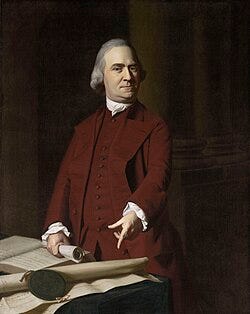
Adams had a gift for the memorable phrase and the emotional appeal. He knew how to make people angry and channel that anger toward political action.
When the Stamp Act crisis erupted in 1765, Adams was ready.
The Organizer
The Stamp Act required colonists to pay a tax on printed materials. Newspapers, legal documents, even playing cards. It was the first direct tax Parliament had ever imposed on the colonies, and it provoked furious resistance.
Adams was at the center of that resistance.
He didn’t just write about the Stamp Act. He organized against it. He helped found the Sons of Liberty, a network of radical groups that coordinated protests across the colonies. On August 14, 1765, a mob hung a straw dummy made to look like Andrew Oliver, Boston’s designated stamp distributor, from a large elm tree. That evening, they destroyed Oliver’s office and damaged his home. Oliver resigned the next day. Collecting the tax became impossible.
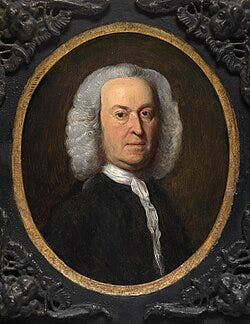
The violence was calculated. Adams understood that peaceful petitions wouldn’t work. The British government would simply ignore them. What the colonists needed was pressure, and pressure required force.
The strategy worked. The Stamp Act was repealed in 1766.
The lesson stuck.
The Network
After the Stamp Act, Adams built the network that would make revolution possible.
In 1772, he created the Boston Committee of Correspondence. The group communicated with other towns about political developments.
The idea spread.
Soon, committees of correspondence existed throughout Massachusetts, then throughout the colonies. They became a shadow government, coordinating resistance outside official channels.
This was Adams’s genius. He understood that revolution required organization. Publishing pamphlets and hoping for the best wasn’t enough. You needed networks of people who trusted each other and could act together when the moment came.
In November 1772, Adams and the committee drafted the Boston Pamphlet, listing the rights of colonists and the ways Parliament had violated them. It was sent to every town in Massachusetts. Over 100 towns responded with their own statements of grievances. Adams was building a revolutionary movement, one committee at a time.
The Tea Party
On the night of December 16, 1773, a group of Bostonians disguised as Mohawk Indians boarded three ships in Boston Harbor and dumped 342 chests of tea into the water.
The Boston Tea Party has become a symbol of American resistance. The moment when colonists stopped petitioning and started acting. What’s less remembered is Samuel Adams’s role in making it happen.

Adams had been pushing against the Tea Act for months. He organized the meetings that preceded the Tea Party. He likely helped plan the raid itself. The participants were careful not to leave evidence.
When the tea hit the water, Adams knew there would be consequences. The British government would not let such defiance go unpunished. The Intolerable Acts soon followed which closed Boston Harbor and brought military occupation. The colonies lurched toward open rebellion.
The Congress
Samuel Adams arrived at the First Continental Congress in 1774 as one of the most radical delegates.
He had been pushing for independence for years. Most colonists weren’t willing to consider it yet. In Congress, he pushed constantly for more aggressive action and more steps toward a final break.
His cousin John Adams, who was also a delegate, later wrote that Samuel “had the most thorough Understanding of Liberty, and her Resources, in the Temper and Character of the People” of anyone he knew.
But Samuel also knew when to hold back.
He understood that the Congress included moderates who weren’t ready for revolution. Pushing too hard, too fast, would split the coalition. So he worked behind the scenes, building support for radical measures while letting others take the lead in public.
“had the most thorough Understanding of Liberty, and her Resources, in the Temper and Character of the People” - John Adams speaking about his cousin Samuel
When the Second Continental Congress declared independence in 1776, Samuel Adams signed the Declaration. It was the payoff for everything he had worked toward for fifteen years.
The Limits
After independence, Samuel Adams’s influence faded.
He was excellent at revolution but average at governing. The skills that made him a great agitator were less useful in building institutions.
Adams served in Congress until 1781, then returned to Massachusetts. He served as lieutenant governor from 1789 to 1793, then as governor from 1794 to 1797. His time as governor left no real mark.
He also opposed the Constitution. Adams worried that it created a government too powerful and too distant from the people. He only agreed to support it after being assured that a Bill of Rights would be added.
This was consistent with his lifelong suspicion of concentrated power. But it also showed his limits. The nation that Adams had helped create needed strong institutions to survive. His instinct was always toward disruption rather than construction.
The Man
What was Samuel Adams like?
He was plain and simple in his habits. He dressed simply and had no interest in wealth. His enemies accused him of hypocrisy. They said he stirred up mobs while keeping his own hands clean. But even they admitted he wasn’t in it for money.
Thomas Hutchinson, the royal governor of Massachusetts, considered Adams the most dangerous man in the colony. The two battled for years. Hutchinson eventually fled to England. Adams stayed and won.
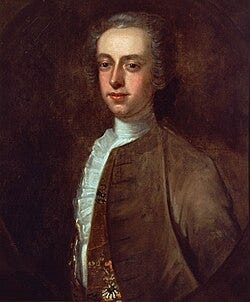
Adams was also relentless. He never stopped. He wrote and organized without pause. When others grew tired or discouraged, Adams kept pushing.
John Adams, who knew him as well as anyone, said: “Samuel Adams was born and tempered a wedge of steel to split the knot of lignum vitae which tied North America to Great Britain.” Lignum vitae is one of the hardest woods in the world. What John meant was that Samuel was built to break what seemed unbreakable.
A wedge of steel. It’s an apt description. Adams’s purpose was to break the bond between colonies and empire. To create rupture where there had been unity.
That’s not a skill everyone needs. But in the 1760s and 1770s, it was exactly what the American cause required.
The Legacy
Samuel Adams died on October 2, 1803, at the age of eighty-one.
His reputation has shifted over the centuries. During his lifetime, he was honored as a founding father. In the 19th century, he was criticized as a dangerous troublemaker who stirred up crowds and violence. In more recent times, historians like Ira Stoll and Pauline Maier took a fresh look. They saw Adams as a skilled political organizer who understood how to move ordinary people better than anyone in his generation.
Today, his name is best known as a beer brand. An ironic fate for a man who failed at brewing and spent his life in politics.
But it fits.
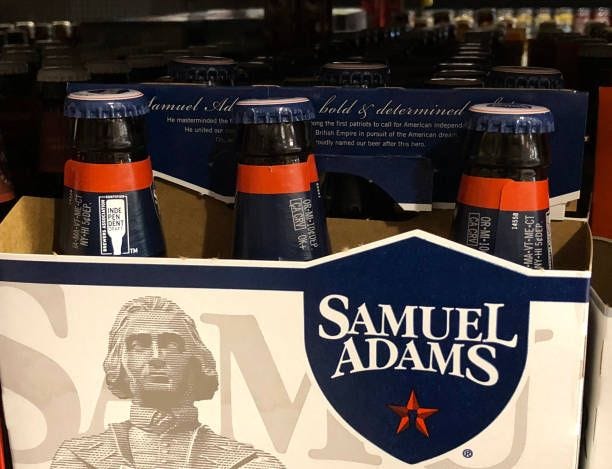
Samuel Adams’s real legacy is a method. Political change requires organization and the mobilization of ordinary people, not just good arguments.
Every political movement since owes something to Samuel Adams. He didn’t invent propaganda or protest. But he showed what they could accomplish.
What Adams Teaches Us
Samuel Adams’s story is about the power of relentless focus.
He failed at everything except politics. He had no money and no business success. What he had was a cause. He pursued that cause for decades, through failure and frustration, until it succeeded.
There is something both inspiring and uncomfortable about this kind of focus. His persistence is what made the Revolution possible. But it also suggests that changing the world requires an obsession that most people cannot keep up.
Adams gave everything to the Revolution except his life. He lived to eighty-one. But the cause was all he had.
His identity was the cause.
Without it, he would have been a failed businessman in a shabby house, forgotten by history.
Instead, he was the Father of the American Revolution. The agitator who understood that revolution is built in taverns and newspapers before it reaches the streets.
Next: George Walton
From Massachusetts, we turn to Georgia, and to a signer whose rise was as unlikely as Samuel Adams’s.
George Walton was born poor. Dirt poor. An orphan, apprenticed to a carpenter, with no way forward. He taught himself to read. He taught himself law. He worked his way up from nothing to become one of Georgia’s leading politicians.
He signed the Declaration at twenty-eight. He was wounded and captured during the war. He served as governor and later as a judge. He lived the American dream before there was an America to dream of.
Next Sunday, we’ll tell the story of the orphan who signed independence.
This is Essay #14 of 56 in the “The 56” series, profiling every signer of the Declaration of Independence. New essays every Friday and Sunday, culminating on July 4, 2026---the 250th anniversary of American independence.
Subscribe to follow the journey.
Sources: