


On the morning of September 18, 1873, President Ulysses S. Grant sat down for breakfast at Ogontz, Jay Cooke's mansion north of Philadelphia. He was there to help his son Jesse settle in for a new school year. As the men ate breakfast, telegrams began arriving from New York that gave Grant a front-row seat to one of the 19th century’s biggest financial collapses.
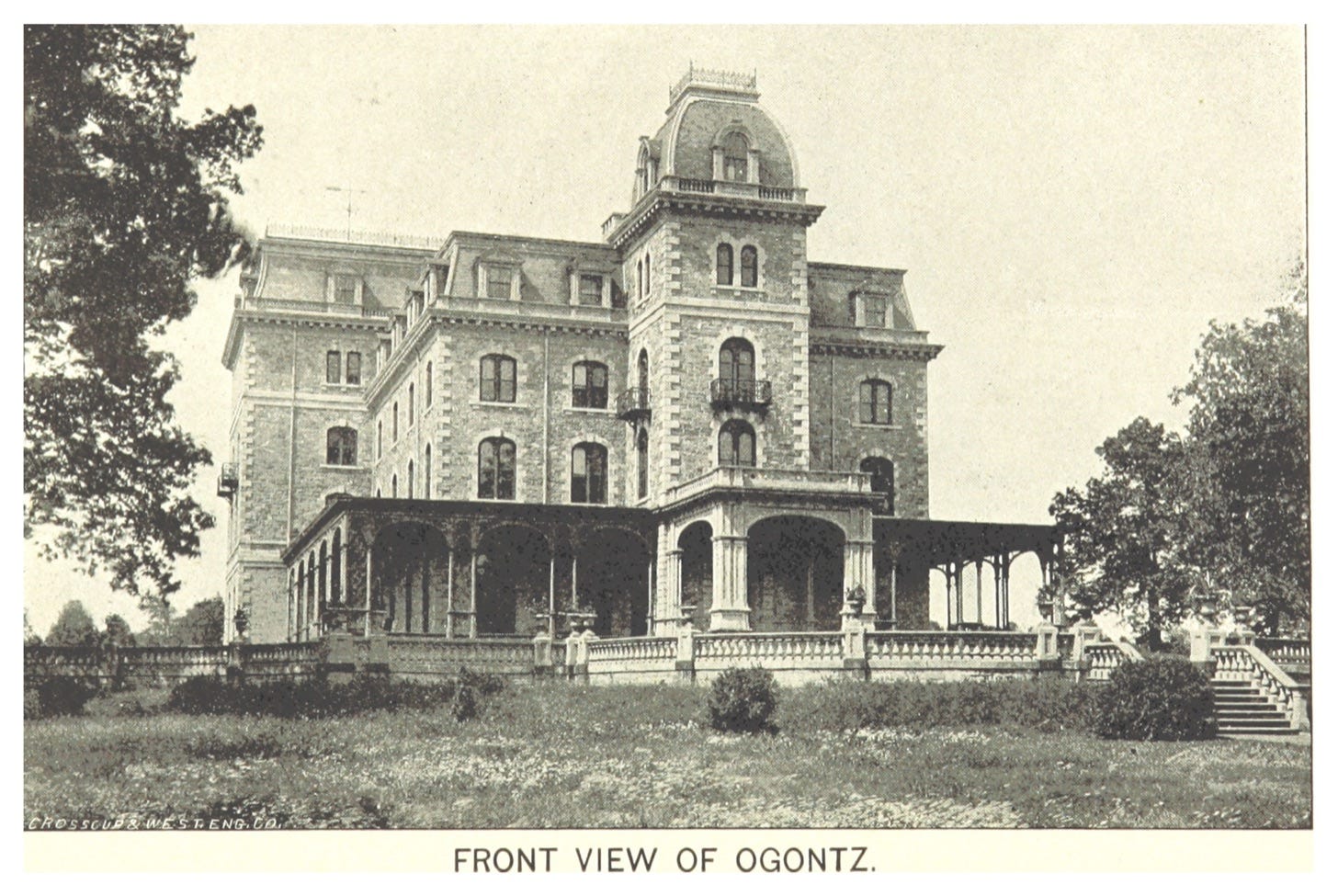
Few names in post-Civil War America carried more weight than Jay Cooke. During the Civil War, he sold more than $1 billion in bonds to ordinary citizens to fund the Union army. The war had sped up America’s industrial revolution, and railroads boomed alongside the factories. In 1870, Cooke agreed to sell $100 million in bonds for the Northern Pacific Railroad, a line that planned to run from Lake Superior to Puget Sound on a 47-million-acre federal land grant. Cooke expected to sell $50 million of those bonds to buyers in Europe. That July, the Franco-Prussian War broke out, panicking European markets and wiping out the German-led bond deal Cooke was counting on.

Cooke was not deterred. He assumed that once the railroad was built, farmers and freight would soon follow. The problem was that the railroad went up much faster than settlers could arrive. The economist O. M. W. Sprague later called the result “a large mileage connecting nothing in particular.”
By August 1872, Cooke had allowed Northern Pacific to overdraft $1,775,000 from his firm against a $500,000 contract limit. His own partner warned that he was in danger of using his depositors’ money to keep the work moving. As a private partnership, Jay Cooke & Co. relied on customer deposits that were supposed to go toward relatively safe investments generating reasonable returns.
Cooke had already turned to ordinary Americans to keep the train moving. He sent traveling salesmen into prairie towns and ran ads in local newspapers. The ads promised that 7.3% interest, paid in gold, would secure their future. Cooke summed up the pitch in a slogan:
“Safe! Profitable! Permanent!”
Sales fell far short of what Cooke needed, because many saw the railroad as too risky. Eventually, Cooke ran out of time and money. On September 18, partner Harris Fahnestock locked the New York doors before 11 a.m. and announced that the firm could no longer stand under the rapid withdrawal of its deposits. An upset crowd filled the street. After the collapse, the Philadelphia Press said, "An hour before its doors were closed, the Bank of England was not more trusted."
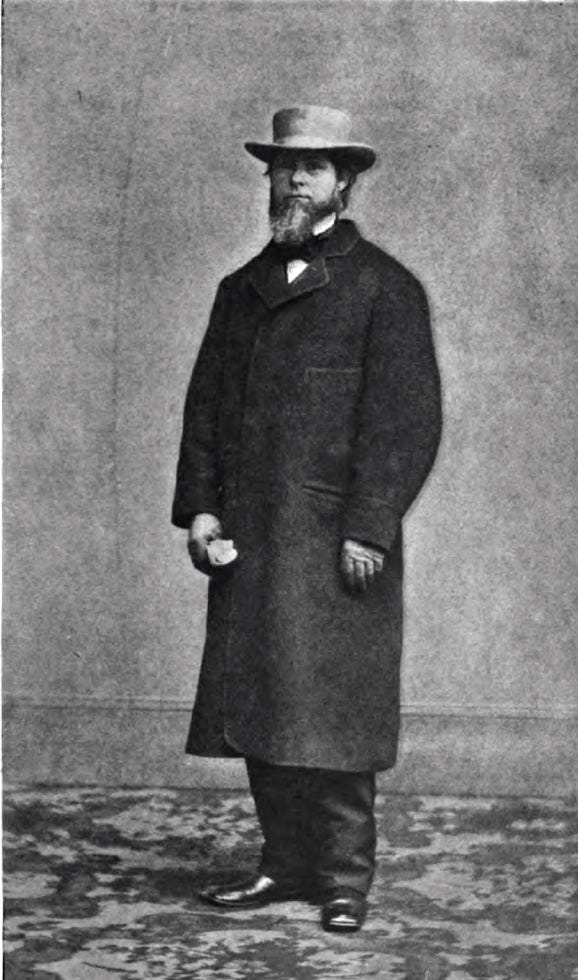
In Philadelphia, police arrested a newsboy for shouting word of the failure because nobody believed him. Cooke closed his doors and wept, something his biographer noted that no associate had ever seen him do. Far to the west, the Northern Pacific’s main line sat unfinished.
The Same Pitch
In the 1870s, Jay Cooke & Co. promised a railroad that was "Safe! Profitable! Permanent!" On July 23, 2025, the White House published America's AI Action Plan. It opened by stating that "The United States is in a race to achieve global dominance in artificial intelligence (AI)." Its pitch to firms building data centers and power plants was: "Build, Baby, Build!"
America’s AI buildout mirrors its 19th-century railroad boom. In 2026, 4 of America's largest tech companies plan to spend between $720 billion and $740 billion on data centers and other capital projects. That is about 2.2% of the entire American economy.
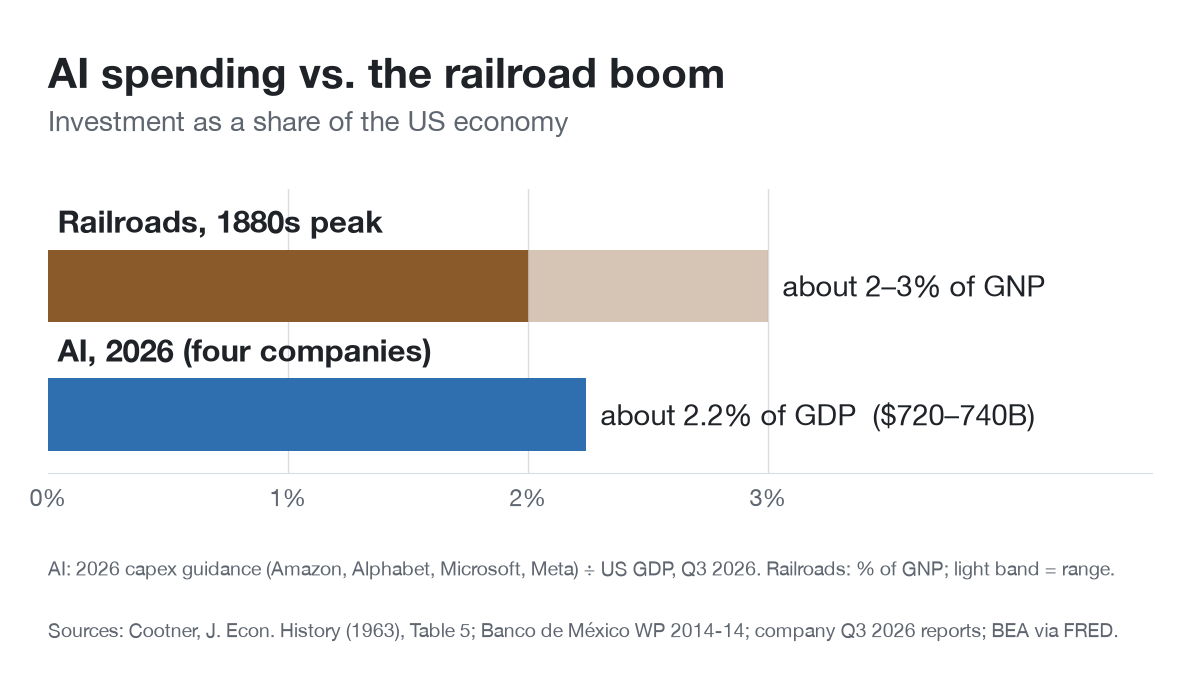
Like the Northern Pacific’s tracks, data centers are going up before paying customers arrive. By autumn 2026, OpenAI annualized revenue reached nearly $50 billion and Anthropic’s topped $65 billion, a combined $115 billion run rate. That means those 4 tech giants are spending about $6 on capital projects for every $1 the 2 AI firms take in.
Nvidia, the major chip supplier, is even backing its own customer's rent. In August 2026, Nvidia agreed to guarantee up to $105 billion in lease and power payments for an OpenAI affiliate at an Ohio data center site.
SB Energy Corp. owns that Ohio site. In its September 21, 2026 public filing, it wrote: "No data center capacity is currently in operation." Just as Jay Cooke tried to unload an unfinished railroad on the general public, Nvidia is standing behind up to $105 billion at a site with no operating capacity.
That same risk is shared across the AI industry. CoreWeave rents out Nvidia chips to AI firms and owes about $50 billion from the AI buildout. By October 2026, its bonds traded at yields near 15% as lenders worried about getting repaid. Silicon Valley learned this reckless playbook during the Federal Reserve’s 0% interest rate era. On December 16, 2008, the Federal Reserve cut its main interest rate to between 0% and 0.25% and left it there for 7 years. When COVID-19 hit, the Fed held an emergency meeting on March 15, 2020, cut rates back to the floor, and kept them there until March 2022. Cheap borrowing trained Silicon Valley to pour billions of dollars into products that solve nobody's problem.
“The United States is in a race to achieve global dominance in artificial intelligence (AI).” - America’s AI Action Plan
In a study released in February 2026, economists surveyed about 6,000 executives to see what AI was doing for their businesses. Despite the hype, 89% said AI had made no difference to how much their workers produced over the past 3 years. The tech giants do not seem to mind. They are burning through their own vaults the way Jay Cooke burned through his bank's reserves. Over the 12 months ending September 30, 2026, Amazon's free cash flow fell to $42.4 billion below zero.
Millions of Americans who never chose to back AI have their savings tied up in it. Index funds tie retirement savings to 8 tech companies that make up about 36% of the S&P 500. Everyday investors are also piling on debt of their own. Margin debt, the money people borrow from brokers to buy stock, hit a record $1.5 trillion in June 2026.
When revenue does not cover a large buildout, investors begin to look for someone else to pay for it. In the 1870s and in 2026, that meant acquiring the land and the public infrastructure underneath it.
The Land
In July 1845, magazine editor John L. O'Sullivan argued that America should annex Texas. He wrote that the country had a "manifest destiny to overspread the continent allotted by Providence." That phrase became the governing principle for US politicians driving western expansion. They believed the western part of the country belonged to whoever could use it properly.
Congress turned this belief into law with the 1862 Pacific Railway Act and its amendments. In some cases, railroads got up to 10 miles of land for every 1 mile of track they laid. Once the tracks were down, the railroads held a monopoly over the towns along the route. Railroad operators and grain warehouses set whatever prices they wanted, and farmers had to pay them to get their crops to market.
Farmers responded in December 1867 by forming the National Grange, which grew to roughly 800,000 members by the mid-1870s and demanded fair freight and storage rates. Between 1871 and 1874, the Grangers pushed lawmakers in Illinois and nearby states to cap what railroads and warehouses could charge. Railroads fought back and managed to repeal or gut the laws in 3 of the 4 Granger states. But the farmers kept fighting and won the key legal ruling. In March 1877, the Supreme Court upheld Illinois warehouse laws in Munn v. Illinois. The Court wrote that when private property is "affected with a public interest," the public has a right to regulate it. Once a business touches a whole community, the residents get a say.
Since the early 2010s, the tech industry has followed its own Manifest Destiny. In August 2011, Marc Andreessen wrote that software was eating the world. He named health care and education as "next up for fundamental software-based transformation." The AI boom carried that mindset into small towns across the middle of America. Coastal executives assumed flyover country was doing nothing worthwhile with its land and electricity. They believed local towns would be put to better use absorbing giant server farms.
In August 2026, home electricity prices were 10.4% higher in Ohio and 11.3% higher in Virginia than in August 2025. Over the same year, the national average rose 3.4%. The places that host these buildings also pay through their taxes. Texas lets data centers skip state sales tax. The state comptroller expects that break to cost nearly $1.8 billion a year by the 2030 budget year.
The independent watchdog for the PJM grid, which serves Ohio and Virginia, looked at the cost of keeping enough power plants ready for the year starting June 2025. It found costs rose by $12.5 billion, with data centers causing $9.3 billion of the increase.
Carrying on the legacy of farmers in the 1870s, local residents are pushing back against data center deals. As of September 2026, a Pew Research Center poll found that 60% of Americans were uncomfortable with a nearby data center, and 50% said the buildings hurt home energy costs.
On November 3, 2026, voters turned out against data centers. They won almost all of the local ballot measures across 10 states. In Wilmington, Ohio, about 80% of voters rejected rezoning in 4 separate referendums tied to a data center project.
Tech leaders often paint data center protesters as backward rebels blocking the future. History shows the opposite. People on the ground see the future more clearly than executives far removed from the sites they want to occupy. Local people live next to the buildings, and they pay the bills.
The Burn
Forest rangers now know that a healthy forest needs fire. When a forest goes too long without burning, dead branches and fallen trunks pile up on the ground. Over time, that pile grows so thick that it chokes out new life. Fire clears away that dead wood and puts its nutrients back into the soil. Financial markets work the same way when a boom piles up too much bad debt.
The Panic of 1873 swept through the railroad industry like a wildfire that nobody could stop. Between 1873 and 1875, corporate bond defaults reached 36% of the entire United States corporate bond market by face value. Investors who had bought the hype lost their savings. One overbuilt railroad after another ran out of cash.
Even as the banks failed, the railroad infrastructure stayed behind. New backers stepped in to reorganize the bankrupt lines and finish the work. Ten years after Cooke went under, crews connected the final 1,000 feet of Northern Pacific track on September 8, 1883. Finishing the cross-country route did not fix the money problem. The business still carried more debt than its freight revenue could pay. When another depression hit in 1893, the Northern Pacific fell into bankruptcy a second time.
This time, J.P. Morgan and his partners stepped in to direct the reorganization of the company. They wanted a railroad that could survive a downturn. To do that, they needed to cut the railroad’s yearly interest bill. Across 7 major railroad reorganizations between 1893 and 1898, bankers cut fixed debt payments by about 31%. The Northern Pacific saw its own yearly bill cut in half.
While bankruptcies cleared away the old debt, fierce competition and new technology drove down the price of moving goods. Across all American railroads, the average charge to haul 1 ton of freight for 1 mile dropped from 0.941 cents in 1890 to 0.729 cents in 1900. James J. Hill's Great Northern Railway never went bankrupt at all. Even so, Hill testified that his own railroad cut its average rate from 2.52 cents per ton-mile in 1882 to 0.857 cents by 1903. The railroad industry learned that progress requires financial pain, even if pain alone does not guarantee progress. When a washout finally clears away the bad debt, it opens the door for entirely new industries.
After the Burn
Cheap, reliable rail freight made room for businesses that had nothing to do with laying track. In Chicago, a meatpacker named Gustavus Swift saw a costly waste. Shipping live cattle east meant paying railroads to haul bones and hides that nobody could eat. His answer was simple: he slaughtered the cattle in Chicago instead and shipped only the chilled, dressed beef. Swift and thousands of other builders collected the real reward of the railroad boom after the speculators were gone. Economists later calculated that in 1890, the $8 billion invested in American railroads produced a 48% yearly return for the country. The railroad companies kept only 7% of that value for themselves. The rest went straight to the factories and farm families who used the cheap rails every day.
A pullback in the AI industry is coming. Some of that hurt will land on retirement savers and local communities that never chose to chase AI’s potential profit. Even so, a crash is not the end. It is the best time to build. Expensive money forces every idea to prove it helps someone before anyone pays for it. A 2009 Kauffman Foundation study found that more than half of that year's Fortune 500 companies started during a recession or a bear market.
In 2007, 2 young men in San Francisco started hosting guests at home to afford their apartment rent. In August 2008, as the wider economy sank, they founded Airbnb. It worked because it solved a real problem: they needed rent money, and travelers needed a cheap room. The next wave of AI needs that same discipline. Instead of chasing ideas that only look good to venture capitalists, builders will have to make tools that cut real costs for businesses and make everyday life easier. Only then will AI have its true breakthrough moment.