

It’s 11:00 p.m on a Friday in Seattle.
And I am miserable.
I’m in the basement room I’m renting for the summer.
One tiny window
No AC.
Only a small fan pushing warm air in circles.
I’m still in my work clothes.
Lying there staring at the ceiling exhausted from a supply chain job I don’t like and I am not very good at doing.
The kind of tired that isn’t just tired; it’s the weight that settles in when you know you’re in the wrong place and you are not sure how to change situation.
I spent years getting away from this kind of work.
Now after a decade, I’m seemingly back to same bad situation I was in after undergrad.
And I’ve saddled myself with a quarter-million dollars in loans, hoping “this time is different.”
I lie there in the heat thinking to myself: Why did I do this?
Why I Enrolled
The answer starts long before Seattle.
I didn’t grow up wanting to get an MBA.
If anything, I thought they were a massive waste of time.
Tim Ferriss influenced me early on: you learn faster by doing, not by studying what someone tried in the past.
I agreed before getting an MBA.
I mostly agree now.
I especially didn’t want to go back to school after how my undergrad experience ended
My student visa had gotten canceled while I was studying in Hong Kong after an advising mix-up.
Could someone from my program in the US have emailed me weeks earlier and given me time to find other options?
Probably
Did they?
Nope
They waited until after they came for a class dinner, to pull me aside and say, “You’re on your own.”
Needless to say, I didn’t have much interest in ever going back to school.
But
There’s a difference between a view when things are going well and what happens when you find yourself out of professional options, desperate for a change of scenery.
On a Midwest road trip in 2022, I stopped at Indiana University to stretch my legs and kill time.
The idea of going back to school wasn’t even on my radar.
I was just wandering, thinking about how my planned path was simply not working.
Then I walked past the student athletic center.
Watching students head in for a workout, I had a realization I couldn’t quite explain.
“I need to do something different”
Maybe I needed to give school one more shot.
As the road trip continued, I narrowed it to two things that would justify the experience.
New LinkedIn: I had tried to start a new professional networking app in Dallas and although I had some initial success, Dallas isn’t the best place for launching new tech ideas. I thought a school environment might be better.
Big Tech: I’d tried startups and mid-tech, but never big tech. By process of elimination, I hoped big tech would be a better fit.
Being basically broke at the time and having never planned to get an MBA I knew loans were the only way to make experience possible
A quarter-million dollars.
Staggering.
But my risk tolerance has always been…unconventional.
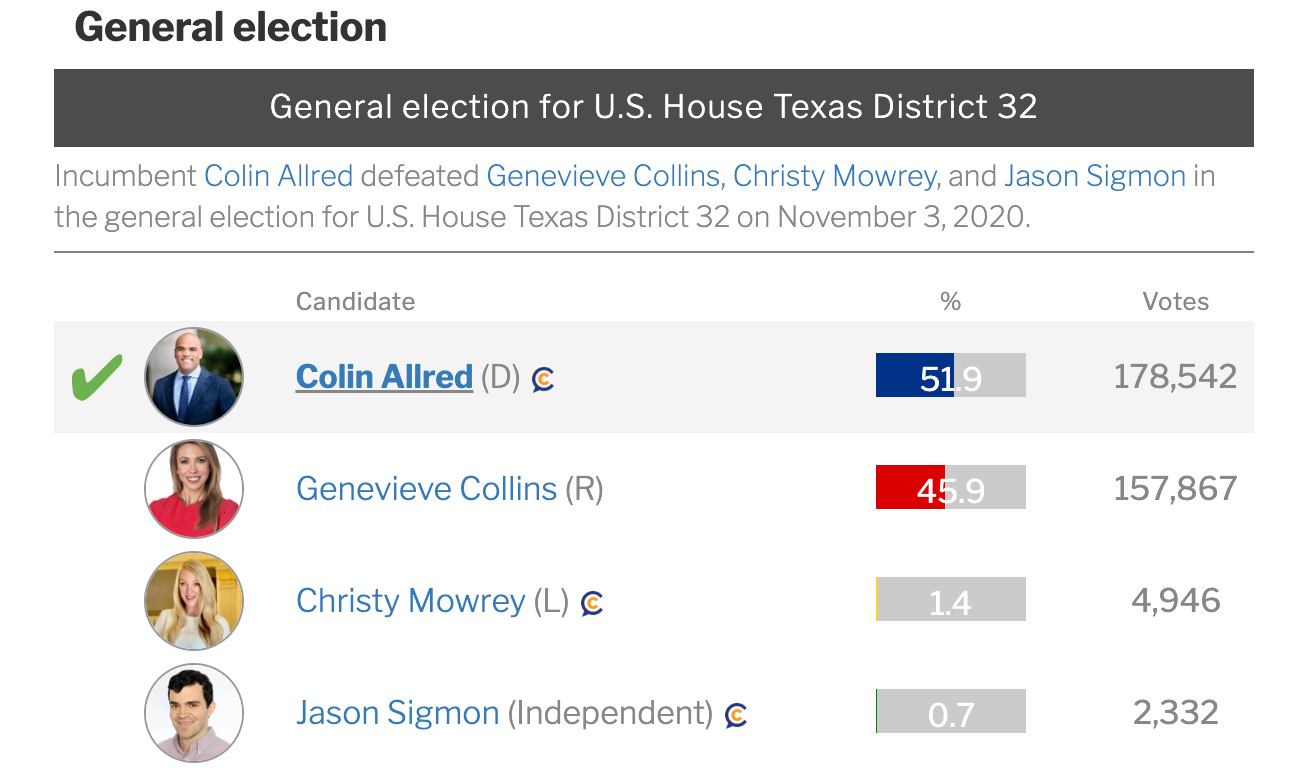
I ran for Congress during COVID
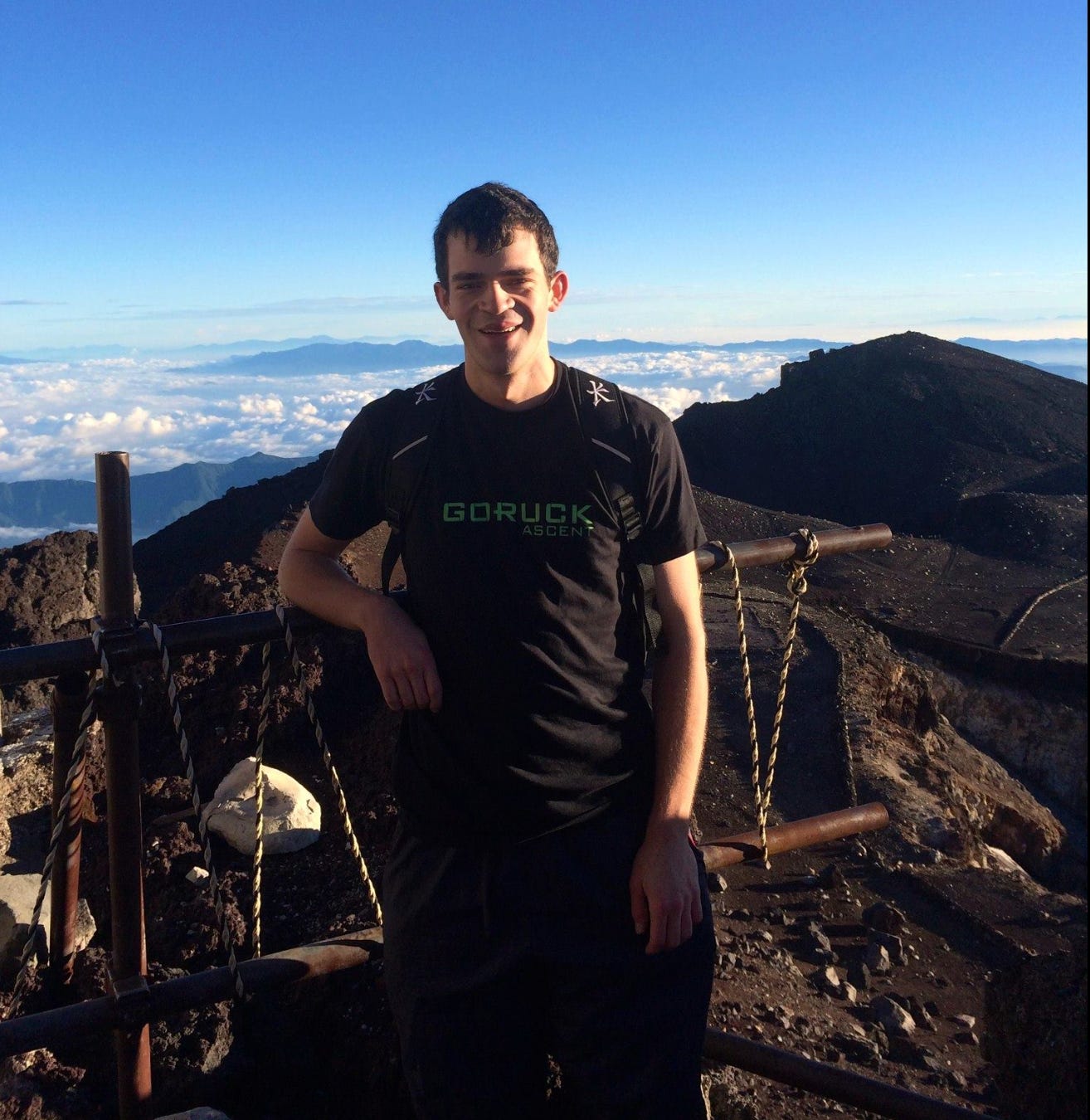
Spontaneously climbed Mt. Fuji in a T-shirt and shorts (don’t recommend, its cold at the top)
Taking on that debt felt like another high-stakes bet on myself
So it was ironic when, during the first week of orientation, a professor said he hoped we’d move from a 4 to a 6 on the risk-tolerance scale.
I sat there realizing I had the opposite problem.
I didn’t need to learn how to take risks
I needed to figure out how to dial my risk 13 down to a more sustainable 8 or 9.
I spent year one doing that, realizing my idea wasn’t going to work, I pivoted to goal two: get a big-tech job..
I technically achieved it.
But
It was a role I’d spent a decade escaping.
Supply Chain
The moment I saw the assignment, I was pretty disappointed.
There’s little worse than a job you dislike and aren’t good at.
For me, anything supply-chain-related is both.
Coming back for year two, it was obvious I wasn’t landing a full-time role, and I had to pivot with the meter running.
What I Actually Got
Let’s talk about that meter.

My loan balance now sits north of $250,000.
If you’re waiting for the part where I say, “But it all paid off,” this isn’t that essay.
I can’t point to a career outcome that justifies the cost.
I can point to some amazing experiences, classes, and friends.
Before we get to that.
Lets talk about…what didn’t work
What Didn’t Work
“Go on LinkedIn. Network. Good luck.”
That was the advice you often got from Career Services,
It’s not that people were unkind; it’s that the pipes were dry.
MBA students used to benefit from companies coming directly onto campus to recruit.
After COVID, many felt they didn’t need to anymore.
Outside of banking, and to a lesser degree, consulting, you mostly had alumni show up to talk about their jobs or run mock interviews.
The latter was especially unhelpful when classmates weren’t getting real interviews in the first place.
And then there’s the classroom.
I’m not anti-learning.
I’m anti-pretending.
In 2025, core classes make less sense.
If a student has no background in accounting or marketing and wants the basics, give them space to do it.
But requiring it for everyone, and inconsistently deciding what can be tested out of based on a department’s whims, is stupid.
Particularly if you’re paying out of pocket.
AI has only worsened this problem.
Too many professors bolted ChatGPT onto old lesson plans, or didn’t understand what it could do, and were then shocked at “cheating.”
Simply put, MBA programs are priced like a luxury and delivered like a commodity.
What I’m Glad I Did
If this reads as bitter, it isn’t.
I can point to experiences I wouldn’t trade:
People & Organizations:
For a long time, I boxed up significant health trauma, convinced no one could understand it.
It was a survival tactic, but it left me guarded.
In that class, the professor didn’t coddle me.
Nor did my group partner believe me when I said “I don’t have emotions”
They called me out on my own bullshit, forcing me to accept that while the past was hard, I couldn’t use it as an excuse to feel sorry for myself forever.
A simple, almost brutal truth that felt like a key turning in a lock.
It was a massive weight off my shoulders, the realization that you have to make the most of the hand you’re dealt.
Endurance events in Normandy for the 80th anniversary of D-Day.
I attempted Selection for the Fourth Time
Got frustrated I didn’t finish

Decided to go visit Le Mann and Le Mont-Saint-Michel in one day, and some how made it back in time to go do a 50-miler.

Two months researching Thailand and its property market
The Elephant in the Room

It’s 10:27 PM. A blue light illuminates a face in Bangkok, one of millions staring into a screen. On it, an offer glows with seductive simplicity: “Buy Now, Pay Later.” One tap, and the new phone, the holiday trip, the small luxury that makes life feel a little less relentless, is yours. It’s a moment of relief,…
One week in Hong Kong completing:
Two Marathons
One half
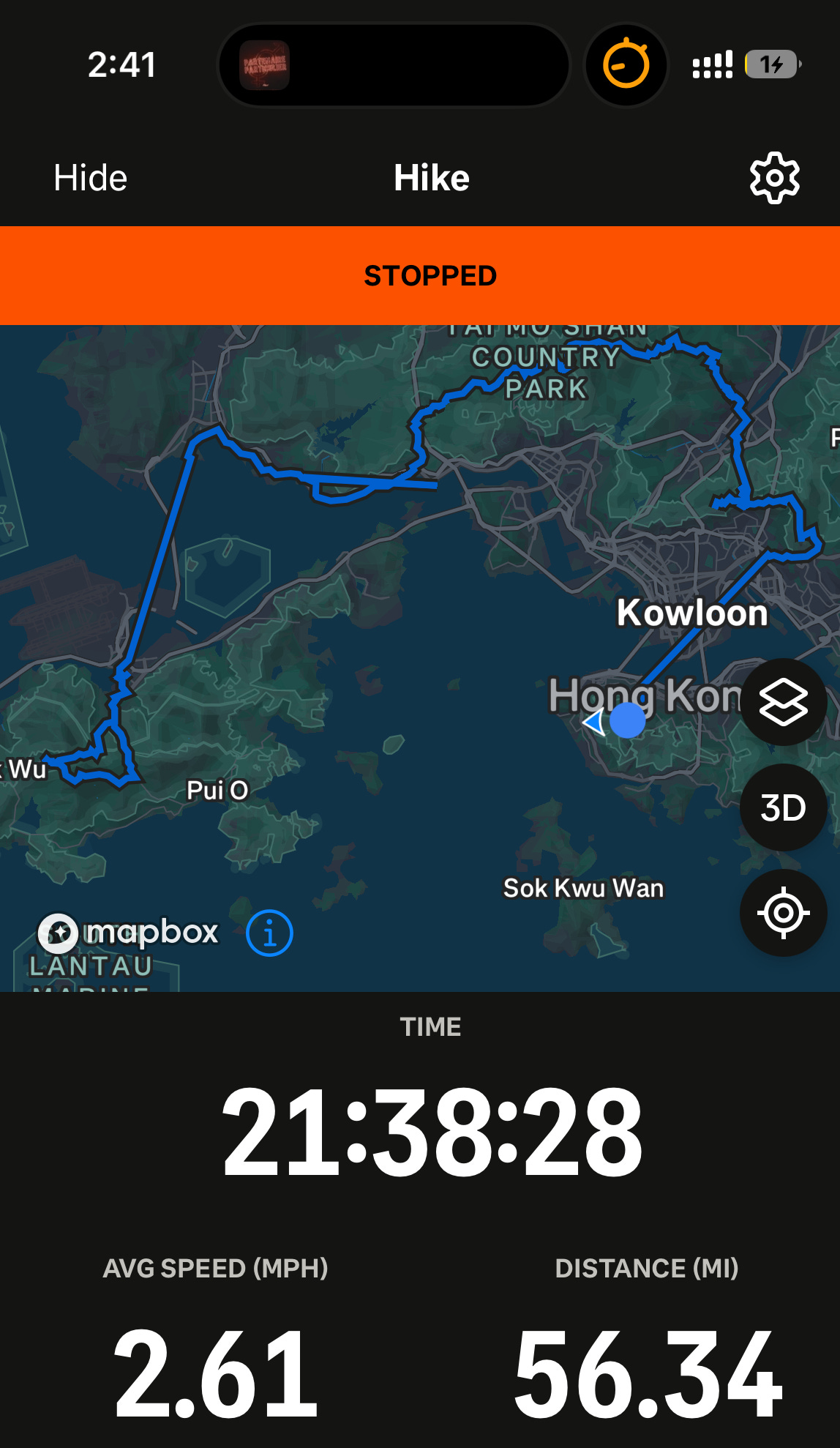
One 24 hour period topping the highest peaks in all four parts of Hong Kong: Lantau, New Territories, Kowloon, and Hong Kong Island all because AI told me it was likely impossible. - Route - Actual time was 23hr 46m.



What I’d Change
Price is the product.
At full price, for non-consulting/banking tracks, the MBA is incorrectly priced.
At a full ride, the same two years makes more sense.
Same experience; different denominator.
Here’s what should change
Federal level: flip the incentives
Risk-sharing requirement: Schools cover 10–20% of losses on federally backed graduate loans when a cohort’s repayment and employment fall below thresholds (e.g., <70% employed in-field at 6 months; <80% current on loans at 2 years).
Outcome-based eligibility: Access to federal loans scales with verified outcomes by track. If a program can’t place product managers, it doesn’t get full federal financing for that track until it improves.
Truth-in-pricing mandate: Pre-admit disclosures must show track-specific placement, comp, and median debt; a standardized “MBA K-1” one-pager.
School level: put skin in the game now
Escrow the success tranche: 15–25% of tuition goes into escrow, released only when the student hits a clear offer threshold (salary or role-match) within 6–12 months; otherwise it reverts to the student.
AI-native labs: Replace lecture hours with decision labs that use AI tools, rotating roles, and graded post-mortems. Potentially modeled as a non-technical and longer version of Austin’s GauntletAI
Contracted pipelines: Memoranda with employers specifying interview counts per term by function. Track SLA compliance; publish it
Student level: informed consent on path and price
Path election at matriculation: Pipeline track (placement-linked pricing) or Independent track (reduced tuition, no placement guarantee).
Outcome-aligned payment options:
Base tuition + success payment (due only above salary floor).
Capped income share for independent track (e.g., 6–8% for ≤24 months, cap 1.2–1.5×).
Traditional loan only if outcomes exceed benchmarks.
Metrics that actually matter
Placement by function at 3/6/9/12 months.
Median comp by function (base+bonus).
Time-to-offer distributions.
Debt-to-income at 12 months.
12-/24-month mobility (role change, comp lift).
If schools won’t price outcomes, students should.
There are cheaper ways to buy a pivot than $250,000.
What I’d Do Instead
If you’re thinking, “I want to use 1–2 years to change, but spend way less,” here’s what I’d do instead
Months 0–3 (learn): Master a narrow AI/content niche. Daily 2-hour build + 1 tutorial; ship 3 micro-projects/week; keep a public notes thread.
Months 4–6 (specialize): Pick a niche (e.g., AI for real-estate underwriting); review 1 tool/week; publish 12 long-form posts; record 6 founder interviews.
Months 7–9 (authority): Launch a cohort course or newsletter; land 1 conference talk; make 2 open-source contributions; sign 3 pilot clients.
Months 10–12 (monetize): Productize a service; target $5–10k MRR; hire a part-time editor/ops.
Monetizing to $5–10k MRR after a year is not guaranteed, but neither is an MBA.
One path guarantees debt; the other could leave you with an income stream.
Final Verdict
Are MBAs a scam?
No.
Scams require intent to deceive.
The majority of people in and involved with MBA programs have good intentions.
The problem is the incentives for MBA programs are now grossly misaligned.
They cost too much, teach you too little, and take too long for most people.
People like to tie a bow on experiences like this.
You learned resilience.
You built character.
Maybe.
What I can say without reservation is that the MBA gave me what I needed
Time and space
What I didn’t get was an outcome that justifies the cost
And that cost matters.
There is a world where MBA programs change from Masters of Bullshit Administration to Masters of Business Advancement, but it requires fundamental changes to how they are structured.
As long as faculty have no reason to change
Students still suffer through core classes
Recruiters stay away from campuses.
The problems will only get worse.
If you’re on the fence about an MBA
Don’t do it.
If you’ve always wanted it: know exactly what you’re buying in 2025
The Cost
Placement by function
Time to Offer
Decide with your eyes open.
Regardless of which path you choose
I hope you find the right path for you
Postscript
As for me
I have extended my runway for a few months, maybe longer.
Outside of time with classmates, my favorite memories of the past two years were the endurance events.
I’m taking those lessons and launching Crimson, a fitness and nutrition app.
If you want early access, let me know and I’ll add you to a small beta list.

