

South Korea's democracy has a deadly problem
At 10:23 PM on December 3, 2024, South Korean President Yoon Suk-yeol appeared on television and shocked his nation. With his approval ratings at 10%, he made a desperate gambit: he declared martial law.
For six hours, armed soldiers occupied the National Assembly building. In response, lawmakers held an emergency session and voted 190-0 to overturn the martial law order. By dawn, Yoon had rescinded the declaration. Two weeks later, he was impeached.
Yoon's impeachment was the latest chapter in a long-running pattern. Every single South Korean president since 1948 has ended their time in office in scandal, prison, exile, or death.
This pattern points to a deep, systemic problem. In other democracies, ex-presidents build libraries and foundations. In South Korea, the presidency has become a path to personal ruin.
The List of Fallen Leaders
To understand the scale of this pattern, here is the fate of South Korea’s thirteen presidents:
Syngman Rhee (1948-1960): Massive student protests forced him out. He died in exile in Hawaii.
Yun Po-sun (1960-1962): A military coup removed him from power.
Park Chung-hee (1963-1979): His own intelligence chief shot him during dinner.
Choi Kyu-hah (1979-1980): Another military coup forced him out.
Chun Doo-hwan (1980-1988): Courts sentenced him to death for treason and the Gwangju massacre. He was later pardoned.
Roh Tae-woo (1988-1993): Got 17 years in prison for corruption and treason. Also pardoned later.
Kim Young-sam (1993-1998): Left office during an economic crisis. His son went to jail for corruption.
Kim Dae-jung (1998-2003): Won the Nobel Peace Prize, but his sons went to jail for taking bribes.
Roh Moo-hyun (2003-2008): Killed himself in 2009 during a corruption investigation.
Lee Myung-bak (2008-2013): Got 17 years in prison for taking bribes.
Park Geun-hye (2013-2017): Impeached and got 25 years in prison for corruption.
Moon Jae-in (2017-2022): Indicted on bribery charges in 2025.
Yoon Suk-yeol (2022-2025): Impeached for declaring martial law.
The Real Power Behind the Throne
South Korean presidents operate within a system where much of the economic power lies with massive family-run companies called chaebol.
This system was born from necessity. In the 1960s, South Korea was one of the world's poorest countries. Park Chung-hee chose a handful of companies like Samsung, Hyundai, and LG as partners. The government provided them with huge loans, tax breaks, and protection from foreign competition. In return, these companies built the heavy industries that turned a poor farming country into an industrial power.
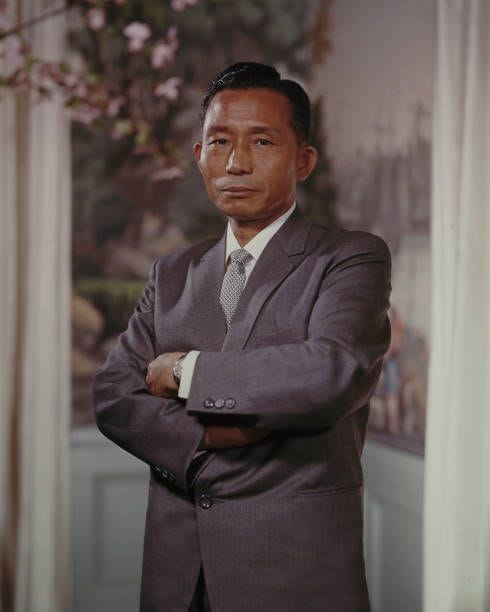
The chaebol system delivered the "Miracle on the Han River," but it also created a structure of dependency that persists today.
This creates a difficult situation. To reach the presidency, candidates need massive campaign funds. The chaebol have that money, but they often expect government favors in return. Presidents who participate can become entangled in corruption. The same system that delivered South Korea's economic miracle also contributes to its leaders' downfall.
Every major presidential scandal traces back to this relationship. Roh Tae-woo admitted to collecting $650 million from companies. Lee Myung-bak was convicted for taking millions in Samsung bribes. Park Geun-hye’s administration was found to have extorted tens of millions from the country's biggest companies.
Scandals by themselves don’t lower birth rates. The clearer link is trust and uncertainty. When leaders fight and rules keep changing, people feel the future is risky, so they wait on marriage and kids. Studies in rich countries show that job, housing, and policy uncertainty makes couples delay or skip births, and low trust in government weakens the impact of family policies and overall trust in government
This is why big spending alone has not worked. Family policy helps most when it is steady, predictable, and focused on real costs like childcare and parental leave. Countries with stable childcare and long‑term support tend to get better results because people believe the help will last.
The Human Cost
When instead the only certain thing about the political environment, is its instability, there are severe consequence. South Korea's fertility rate dropped to 0.72 in 2023, the world's lowest, far below the 2.1 needed to maintain a stable population.
Young Koreans cite economic pressure, systemic hopelessness, and an unforgiving culture as reasons for not having children. Some women have joined the 4B movement - refusing to date, marry, have sex with, or have children with men as a form of protest.
This sentiment echoes across Asia. In China, some young people have embraced a "Four Nos" attitude - no dating, no marriage, no buying homes, no having children.
The numbers tell a stark story. About 80% of school-age children attend private tutoring academies. Families with two high school children can spend a large portion of their income on education alone. Housing in Seoul is so expensive that many young people cannot afford their own apartments, let alone raise families.
The deeper issue may be psychological. Young professionals face difficult choices between career advancement and family life in a culture that often demands total commitment to work.
The government has tried to respond by spending $200 billion over 16 years trying to boost birth rates. Instead, the fertility rate has dropped 25%.
The Cultural Success Paradox
While facing these domestic issues, South Korea has become a cultural powerhouse. K-pop, K-dramas, and Korean films dominate global markets. Seven of the top 10 biggest-selling albums in the United States in 2024 were K-pop albums. Netflix's most-watched series are often Korean productions.
Yet this global success masks domestic challenges. In 2024, K-pop album sales in South Korea fell from 115.7 million to 93.3 million units. For the first time since 2014, domestic sales declined. The industry is responding by "taking the K out of K-pop" - almost half of K-pop songs released in 2024 had majority English lyrics.
BTS alone contributed an estimated $4.65 billion to South Korea's economy in 2019, representing 0.3% of the country's GDP. Cultural exports grew from 0.2% of GDP in 2004 to $12.3 billion by 2019. Yet the creators of this content live in a society where having children feels impossible and political leadership is a path to destruction.
South Korea has become a content factory for the world's escapism while struggling with its own need to escape. Young Koreans create beautiful stories about love and success for global audiences, then return to a reality where they can't afford housing and don't trust their government. The parallel is striking: just as presidents appear powerful globally but are trapped domestically, Korean culture appears vibrant internationally while reflecting deep domestic despair.
The Illusion of Power
The South Korean president holds enormous power. The constitution gives them the ability to hire 10,000 government workers, control a $400+ billion budget, and command the prosecutors, police, and spy agencies.
The system was designed during a period of authoritarian rule and was kept even after the transition to democracy in 1987.
This concentration of power is a key reason the presidency is so fraught. It makes every election a high-stakes event where the winning side gains total control, and the losing side faces years of scrutiny. This creates an environment where each new president often investigates their predecessor. The presidency becomes less a job to hand over peacefully and more like a throne to be captured.
The People Fight Back
South Koreans have a powerful check on presidential power: mass protest.
This tradition has deep roots. During the 1980 Gwangju Uprising, citizens faced down military brutality. The events of the uprising turned many against military rule and created a generation of democracy activists.
The spirit of Gwangju continued. In 1987, millions joined the June Democracy Movement, forcing the military to accept direct presidential elections. In 2016-17, millions more held candlelight vigils to demand Park Geun-hye's removal. The protests were peaceful but steady, and Park was ultimately impeached.
Mass protest has become a safety valve in South Korean politics. When normal checks fail, the people can step in.
The Path Forward
South Korea now faces a choice. It can continue with the current system, or it can make changes to break the pattern.
Korean political experts are debating two main reform paths. The Democratic Party has proposed keeping the presidential system but switching from a single 5-year term to a 4-year, two-term presidency. The opposition Liberty Korea Party has suggested a semi-presidential system like France, where a president and a prime minister chosen by the National Assembly would split executive power.
Both plans would require changing the constitution, which needs approval from two-thirds of the National Assembly and then a national referendum.
But changing the constitution may not solve the entire problem. The political culture often treats opponents as enemies, not rivals. This winner-take-all mentality could continue the cycle of investigations and retribution even with new rules. And any true reform would likely need to address the chaebol system.
The Loneliness of Success
South Korea's development in 50 years is a story of rapid success. It went from poverty to wealth, from dictatorship to democracy, and from a minor player to a global trendsetter.
But the country is also dealing with the consequences of its own achievements. The economic model that delivered the miracle is intertwined with its political dysfunction. The democratic system that ended military rule has not yet found a way to consistently transfer power peacefully. And the cultural success that made Korea globally relevant hasn't solved deep problems at home.
Korean films often feature characters who achieve their dreams, only to discover success feels hollow. South Korea has become that character. The country reached incredible heights but discovered that success can be isolating.
Watching Yoon Suk-yeol's desperate attempt to hold onto power through martial law, you see the same pattern from those Korean films. There's always a moment when the main character realizes they've been playing a rigged game. The question for South Korea is whether it can write a different ending.
Until then, it'll remain lonely at the top in South Korea. And the country's presidents will keep discovering that the highest office in the land is also the most dangerous place to stand.