

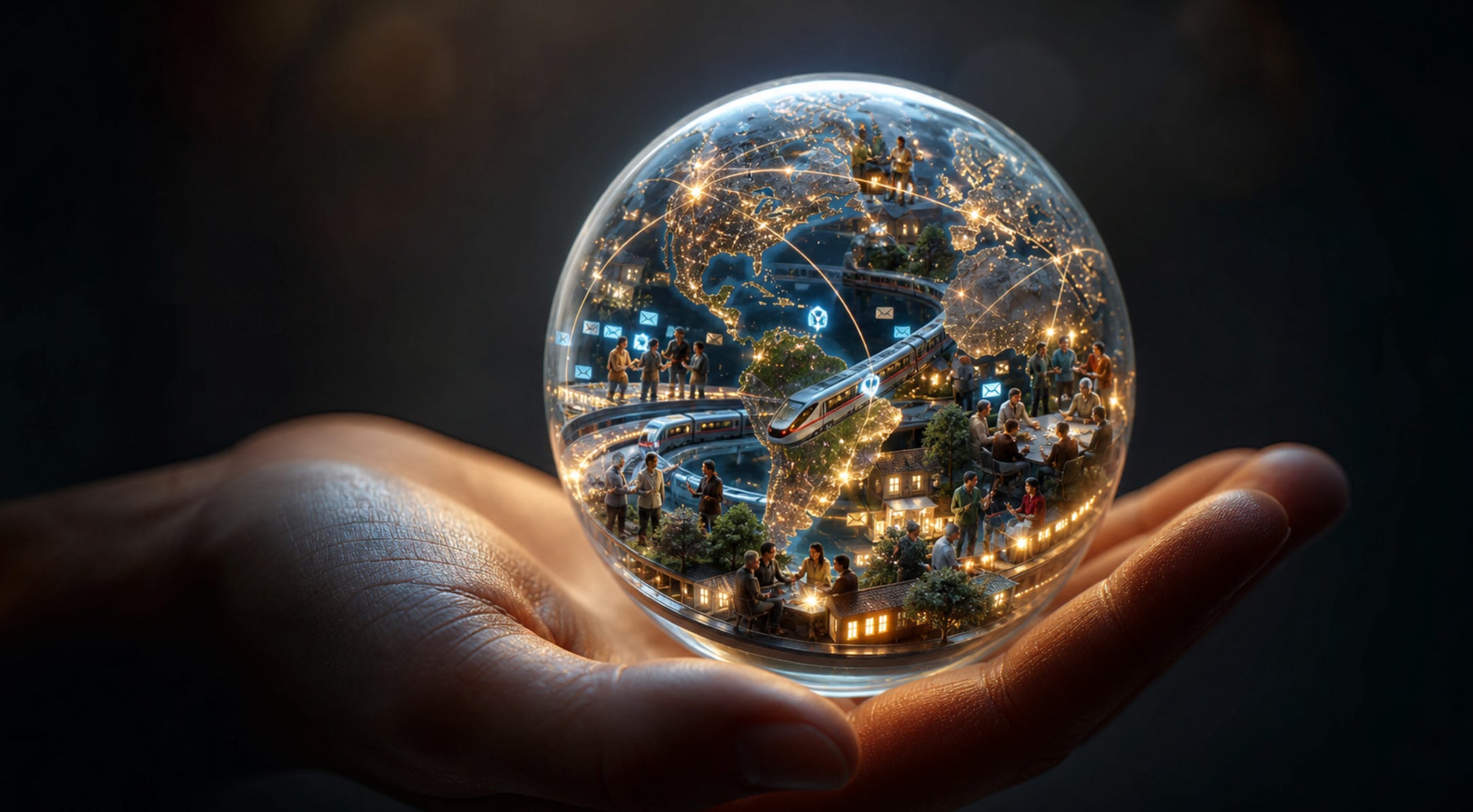
I was the kind of kid who did not get invited to a lot of things. I spent most of my time at home alone, playing video games or getting lost in books. I never played games the way they were designed to be played. In Star Wars Galaxies I would drive my little vehicle around for hours, exploring. In World of Warcraft I would play a character until I had to “grind” or got bored and would end up starting a new character. I was experimenting with what was in front of me, not playing for whatever the game wanted me to win.
MySpace worked for me. I do not actually remember what was on my profile. What I remember is that it was mine in the way the name literally implied. You walked into my space when you visited it. Everyone else had their own page too. The internet at the time still had room for people on different frequencies, and I loved it.
It was also the only version of the Internet I ever fit on. Every platform that came after had its own social game stacked on top of the actual product, and those games never interested me.
Then Facebook showed up. From day one every page looked like every other page. Zuckerberg had decided what the world needed was another way for people to compare each other.
One movie that captured the social scene at the time was Mean Girls. The Plastics had a rule, on Wednesdays we wear pink, that everyone had to follow if they wanted to sit at the right table. Facebook gave that rule an algorithm and a global audience. The rule changed every week, and the software that generated it was invisible to you. If you broke it, the algorithm stopped showing your posts.
Social media became less about media for you and the people you actually knew, and more about your own personal rat race to make whatever content the algorithm wanted. And to hopefully impress other people struggling in their own online rat race.
I got a Facebook account because one day a classmate decided I needed one. I did not see the point of it at first. Then party invites and weekend photos moved onto Facebook. Getting tagged in the right post became a way of measuring whether you were in the right group. I went along with all of it because the gatekeeper for staying in touch had moved online, and there was only one.
In college, I had a friend named John who used Facebook the same way kids in middle school used the cafeteria. If a person’s posts kept pulling a high percentage of likes from their friend list, John considered that person important. If the percentage was low, the person was not. That became the social hierarchy.
Natasha Dow Schüll wrote Addiction by Design in 2012, a book about slot machines. Casinos, she found, did not want big winners. They wanted players in the zone, pulling the lever in a rhythm, losing slowly. Every social platform that came after Facebook learned the same trick. The point was to keep you pulling, not to give you what you wanted to read.
For me X is the worst. I open it during a slow stretch of work and end up frustrated about my lack of professional progress compared to others. The algorithm has not picked any single post to hurt me. It keeps showing me whoever it thinks will keep me scrolling, and most weeks that is people who appear to be further along than I am. LinkedIn has become self promos or work updates. Substack is people sharing their stock tips, or saying AI is evil, or selling their AI guides. All designed to keep you pulling, chasing the one thing humans need…connection.
That is not what we got. We got the place we go to find out what total strangers are angry about today. The algorithm picks the strangers, and the strangers are always angry. Vulture recently ran an article on Joe Lim a man who ran a large social media operations says ninety percent of what you see online is advertising wearing a costume. His company Floodify ran sixty-five thousand fake accounts and posted fifty thousand videos a day, every one of them built to look like something an ordinary person made on an ordinary afternoon.

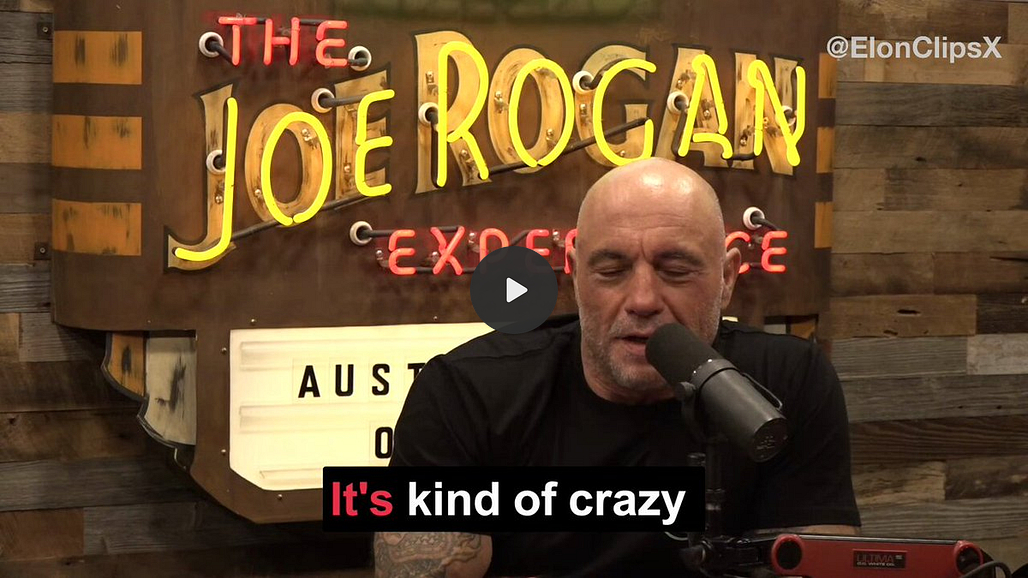
The trick is called clipping. You cut a song or a speech or a podcast into pieces and post the pieces from accounts that look like fans. If they get enough views fast enough, the algorithm reads the spike as real excitement and pushes the clip out to real people, who then get excited for real.
The fake interest manufactures the real kind. A firm that tracks this looked at the fight over Bad Bunny headlining the Super Bowl and found that four percent of the accounts produced a quarter of the posts. Conservatives were angry the NFL had picked a headliner who sings in Spanish. Liberals were angry at the conservatives. The two sides matched each other so closely in timing and volume that the same operation was probably running both of them. You can rent a crowd now, and a dollar buys a thousand of them, cheaper than any advertising that has ever existed. It works because nobody forms an opinion from scratch anymore. The first comment you see becomes your opinion before you have finished reading.
One corner of the internet saw all this coming. 4chan is where a lot of the internet was born, the heaven and the hell of it, the place where most of what is good and most of what is monstrous gets made before the rest of us repost it. It runs as a libertarian experiment with almost no moderation, where anything goes, which is why it produces both real innovation and real horror. Reddit is the opposite. A small layer of admins writes the rules and enforces them toward their own liberal politics, and you can watch it happen. 4chan has no name stamped on anything and no number to chase, and out of that anonymity came a reflex the rest of us are only now catching up to. Years before a marketer stood on a stage this spring and admitted that everything on the internet is fake, the 4chan already had a term for this concept. Fake and ghey.
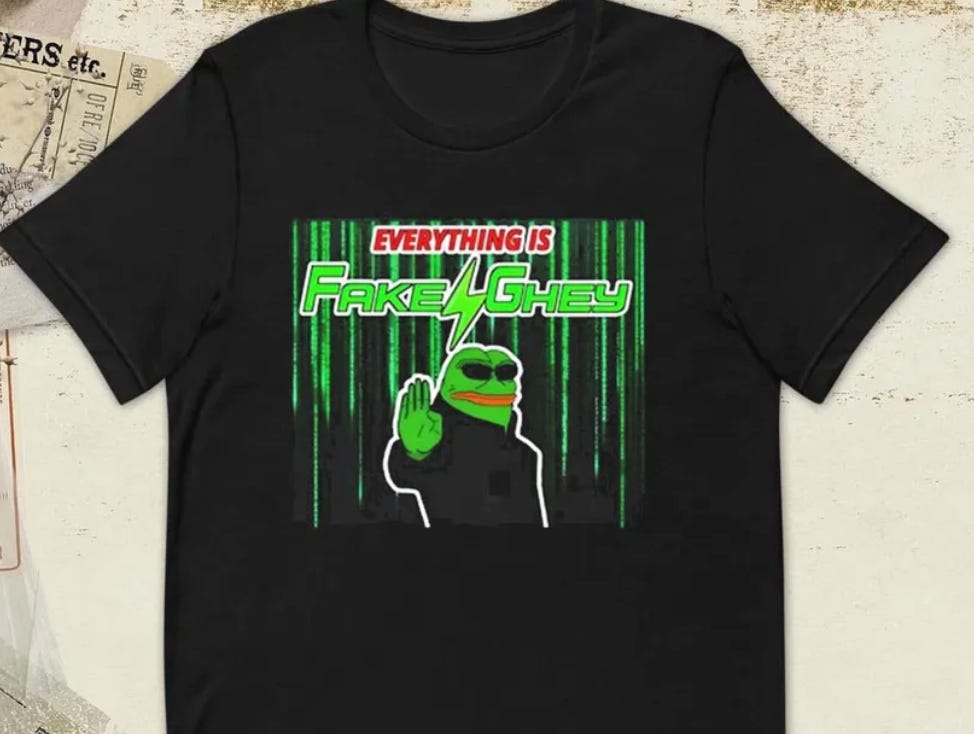
Today’s “viral trends” are no longer organic, only ads designed to appear organically generated. The real cost of all of this is that it is harder to meet anyone now. Everyone lives in their own bubble. Robert Putnam is a Harvard political scientist who, in Bowling Alone, tracked how Americans quietly stopped joining things. The clubs, the leagues, the lodges, the union halls, the standing Friday-night crowds all thinned out across the second half of the twentieth century. Putnam describes a working-class tavern in 1955 Pittsburgh. On any Friday night, the twenty-four-year-old steelworker had a foreman in his forties on his right and a retiree near seventy on his left. The young man learned the trade from the older men. He also learned how to grieve and how to manage a marriage. That cross-age teaching is the thing the algorithm cannot replace. The algorithm sorts you toward whoever it thinks will keep you scrolling, which is usually whoever is angriest that day.
As the career prospects for young people continue to decline many of them are turning to online businesses to make ends meet, and the metrics there are fake too. I ran into this myself a few years ago, trying to sell things through Facebook ads. The dashboard would light up with sales and clicks and people who had supposedly interacted with my products, and then the real data showed no sale, or a wall of activity that never matched anything on my end. The platform billed me for it either way. Facebook admitted in 2016 that for two years it had overstated how long people watched videos, and eventually paid forty million dollars to the advertisers who had bought against those numbers. Google charged me for clicks my own site never saw. The reported numbers are their own product, inflated to keep you spending and to make the place look more alive than it is.
Aleksandr Solzhenitsyn, the Russian dissident who exposed the Soviet labor camps in The Gulag Archipelago, understood a regime built on what everyone privately knows to be false. He wrote that the one act available to an ordinary person is simply to stop participating in the lie. That’s it, all you have to do, stop scrolling.
Putnam’s longer argument, in The Upswing, is that America has survived this kind of civic collapse before. The Gilded Age looked like ours: high inequality and low trust. Local organizers in the early 20th century built the civic infrastructure in the decades that followed. It took organizers and journalists who decided the work was worth doing, even though most of them did not live to see their work pay off.
Make your world smaller. The feed made it bigger and made you smaller. It told you to be concerned with the other side of the world, not what’s going on outside your front door. Shrink it back and you get yourself back. They took the page with your name on it. Take it back. My space and your space were never theirs to sell.