

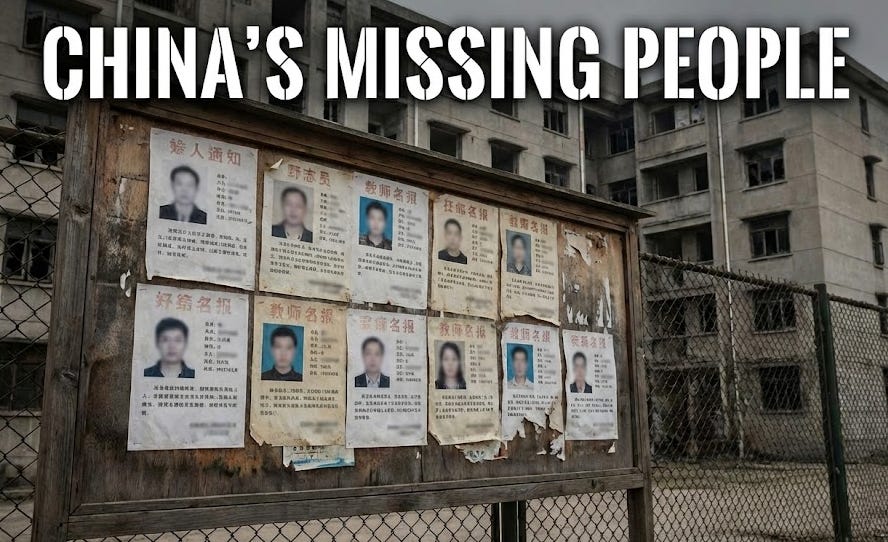
Imagine for a moment that the entire population of Japan suddenly disappeared.
Every bustling intersection went quiet.
Every train stopped running.
Every school, office, and home emptied out.
It sounds like the plot of a disaster movie or a science fiction story, but Japan is, thankfully, still there.
The people are safe.
But in China, that same number of people—over 100 million people—seem to be missing.
This is a mystery buried in stacks of paperwork, hidden in computer databases, and visible in the empty windows of giant skyscrapers.
For years, the world has accepted that China is a nation of 1.4 billion people.
It is the bedrock of the global economy and the image we all have of the country: crowded, bustling, and endlessly growing.
However, a growing group of researchers, data detectives, and even brave insiders are suggesting that this number is wrong. They believe China’s population is much smaller than the government claims. They argue that these millions of people are not hiding in secret bunkers. They simply never existed at all.
To understand this mystery, you have to observe a morning in China. For decades, the streets were filled with the noise of millions of children heading to school. But today, a strange silence is spreading across the provinces. Kindergartens that once had lines of parents camping out overnight to secure a spot are now begging for students. Some are shutting their doors forever; others are turning their colorful classrooms into nursing homes for the elderly.
To put it in perspective, this table shows the Yearly Decrease in Kindergartens across China in 2022, 2023, and 2024

The children aren’t just late for class.
They aren’t coming.
So, where did all the people go? To find the answer, we have to look past the official headlines and dive into a world of “ghost data,” empty hospitals, and cities built for a future that may never arrive.
Part I: The Detective and the Ledger
Every investigation needs a detective. In this case, the lead detective is a scientist named Dr. Yi Fuxian. He is a researcher at the University of Wisconsin-Madison, and for years, he has been saying something that makes Chinese officials very angry: he says the census is lying.
Counting a billion people is incredibly difficult. But Dr. Yi argues that the errors in China’s count aren’t mistakes—they are intentional. To understand why, you have to follow the money.
Before that, it’s important to understand how China works.
Outside the country, many people view China as a country where everyone follows directions from Beijing. That is not exactly true. Instead, Beijing issues goals it wants achieved at every level of government and leaves it up to officials to figure out how to achieve that goal.
It’s a bit like a ‘choose your own adventure’ novel. The goal is clear, but at each level the official in charge determines how to achieve their objective.
Whether or not someone moves up in China’s government is largely dependent on hitting the goals set out for them, in any way possible.
This leads us to the money.
In China, local governments—the mayors and officials in charge of towns and counties—get money from the central government in Beijing based on how many people they have.
The dynamic is similar to a franchise model. Local governments receive payments from Beijing based on their population count. It is a per-person reward system: the more residents an official claims, the larger the budget for schools, roads, and salaries.
So, they have a strong reason to pretend the people are still there, working hard to achieve their local numbers. Dr. Yi believes that for the last twenty years, local officials have been inflating their numbers. They might count people who moved away years ago, or they might invent births that never happened.
When you add up these little lies from thousands of towns over twenty years, you end up with a massive lie: a gap of about 130 million people.
The Leak in the System
For a long time, this was just a theory. But in the summer of 2022, a piece of hard evidence appeared. A hacker known as “ChinaDan” breached a database belonging to the Shanghai National Police. He claimed to have downloaded the personal information of Chinese citizens—names, addresses, ID numbers—and offered to sell it online.
The hacker released a sample of the data to prove it was real. Security experts checked the sample and confirmed that the names and ID numbers were genuine. But the most shocking part was the size of the database. It contained records for about 1 billion people.
If the police database was truly a national list of everyone in the country, as it appeared to be, then where were the other 400 million people?
China’s census continues to report about 1.4 billion.
The police database only has about ~1 billion.
That gap suggests that Dr. Yi’s theory might actually be conservative.
Could one-third of China’s population only exist on paper?
Part II: Clues in the Cupboard
When official numbers are unreliable, analysts look for ‘proxies’—data points that are harder to fake than a census form. In China’s case, the most revealing proxy is vaccines.
The Vaccine Gap
In China, every newborn is required to get a BCG vaccine (for tuberculosis). This is a strict rule, and the government tracks these shots carefully.
If there were truly 1.4 billion people, and birth rates were as high as the government claimed in the past, we should see a certain number of vaccines being used every year. But we don’t. For years, the number of vaccine doses has been lower than the number of reported births.
This is the “ghost child” phenomenon.
A local official might write down that 1,000 babies were born in his town to look good for his bosses, but the hospital only gave out 800 vaccines because only 800 babies actually existed.
Part III: The Silence in the Schools
For the past twenty years, China has been consolidating its rural schools. Originally, this was a strategic move to pool resources and provide rural students with better teachers in urban centers. But recently, the motivation has shifted. They aren’t closing schools to improve quality anymore; they are closing them because there are no students left to teach.
In 2023 alone, the number of kindergartens in China dropped by nearly 15,000. In 2024, it dropped by another 21,000. That means roughly 57 kindergartens are closing every single day.
Why? Because the “supply” of children has run out.
For a long time, China had a “One Child Policy,” which limited how many kids a family could have. The government thought they had too many people. Unfortunately, this program proved too successful.
Now, even though families are allowed to have three children, young people are saying “no.” The cost of living is too high, apartments are too expensive, and the pressure to work is too intense.
Instead, young people have embraced the opposite view. First came the movement to ‘lie flat’ (Tang Ping)—doing the bare minimum to get by. Now, that has evolved into ‘let it rot’ (Bai Lan), an active embrace of a deteriorating situation.
The result is a “fertility collapse.” In 2022, China had the lowest number of newborns since records began. The fertility rate (the number of kids the average woman has) has fallen to about 1.0. To keep a population stable, that number needs to be 2.1.
This creates a domino effect.
First, the maternity wards in hospitals go quiet. We are already seeing this with maternity wards and hospitals being shut down across the country. Next, the kindergartens close. Then, in a few years, the elementary schools will empty out. Finally, the universities and the workforce will shrink. This process is estimated to peak between 2030-2040.
To try and avoid complete school shutdowns, kindergarten teachers are being sent out to the streets to hand out flyers, begging parents to enroll their kids. But you cannot recruit children who were never born. Instead, for many school operators, their only option is transitioning their schools to elder care homes.
Part IV: The Hospital Paradox
If there are fewer young people, shouldn’t there be more old people? And if there are more old people, shouldn’t hospitals be booming?
This is where the mystery gets stranger. You would expect healthcare to be the one “safe” business in an aging country. Yet, hospitals in China are going bankrupt at a record rate. In 2025, nearly 800 hospitals have closed their doors.
This seems impossible. Public hospitals in big cities are still crowded. But the “missing people” are causing a financial crisis in the healthcare system.
First, the “missing babies” mean that the obstetrics departments—which used to make money—are now losing money.
Second, the system for paying hospitals has changed. In the past, hospitals made money by ordering lots of tests and drugs. Now, the government pays a fixed price for each illness. Because the population is older and sicker, it often costs the hospital more to treat them than the government pays. So, having more patients actually makes the hospital lose money.
This problem isn’t confined to one city. Wuhan, Hubei Province, and Chongqing have all experienced record numbers of closings.
Third, in smaller cities there simply aren’t enough patients left to keep the lights on. A hospital built for a town of 500,000 people cannot survive if the real population has shrunk to 300,000. The beds are there, the doctors are there, but the patients are not.
Part V: The Black Box of COVID-19
There is a darker chapter to this story. We talked about the people who were never born and the people who were invented by officials. But there is also the category of people who died and were not counted.
During the COVID-19 pandemic, China kept strict lockdowns for three years. Officially, the government said that only about 80,000 people died in hospitals during that time.
Evidence of the true toll leaked out from unlikely places. In the province of Zhejiang, the government accidentally published data showing that cremations (funerals) jumped by 72% in the first three months of 2023. If you apply that percentage to the whole country, it suggests that between 1.5 million and 2 million people died in a few months.
A unique aspect of China’s COVID experience was the lockdowns and quarantine camps. China’s central government didn’t describe exactly how to accomplish a reduction in Covid deaths; they left that to local officials to determine. This led to extreme scenes, ranging from officials welding doors shut to police arresting anyone who ventured out of their home outside the allowed period.
This pressure cooker exploded in late 2022, when a deadly apartment fire in Western China—where residents were allegedly locked in due to quarantine rules—sparked nationwide protests. All of this leads to a potential explanation.
While the U.S. debated the distinction between dying from COVID versus dying with COVID, China faced a different reality.
China might have had a situation where people died not because of Covid, but in an effort to prevent Covid; starvation and preventable diseases surged.
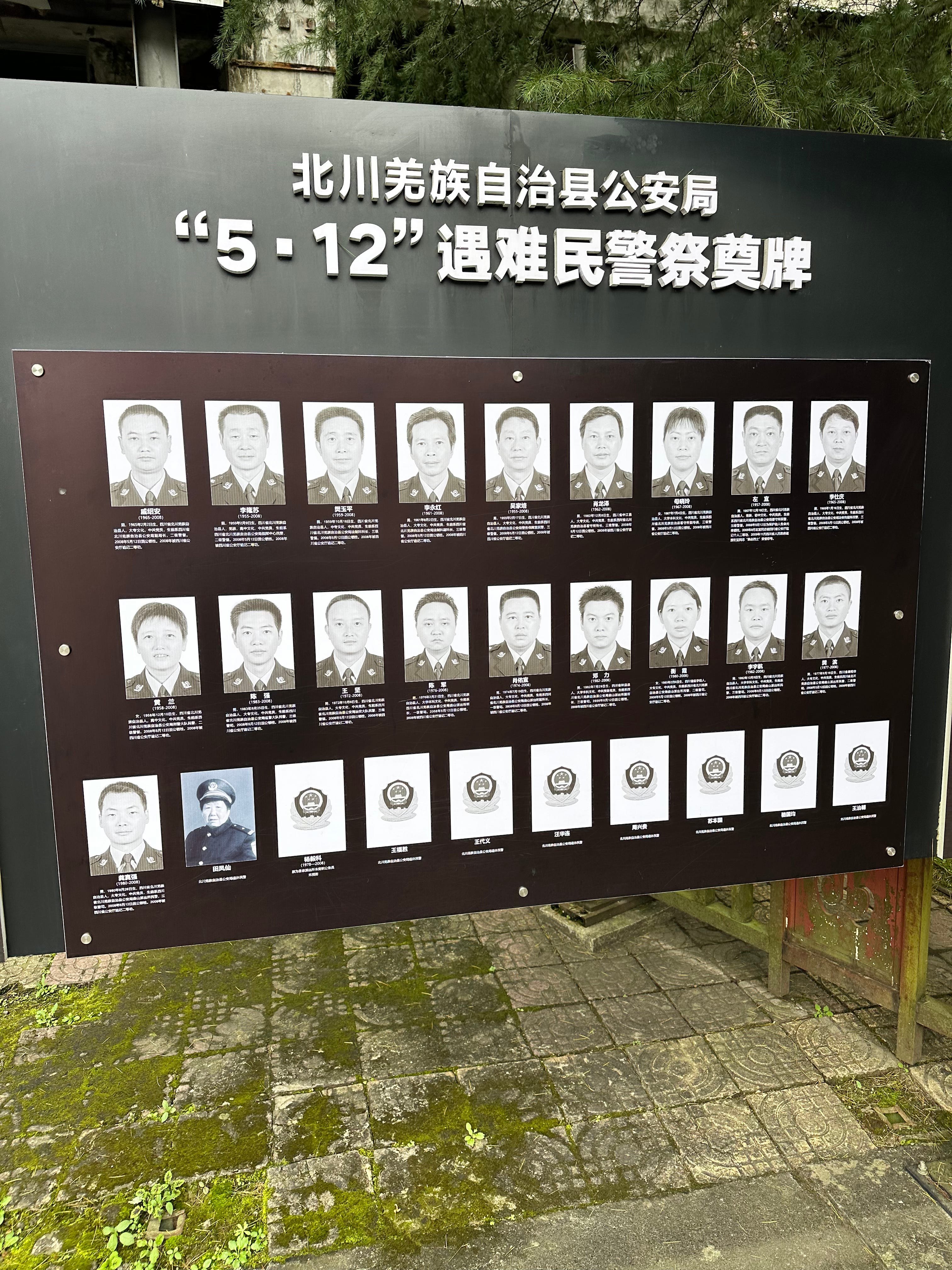
While more people died during Covid than reported, it doesn’t explain the missing 100 million. However, it contributes to the idea that the population is shrinking faster than admitted with the elderly and rural populations bearing a particularly heavy toll that has never been officially acknowledged. One thing that helped put this into some perspective was recently visiting the town of Beichuan, near the Epicenter of the 2008 Sichuan earthquake.
In front of the ruins of the police station, there was a board honoring those that lost their lives. Most notable were the ones that were missing photos. When I asked our guide about this, she said that either no one claimed the person or no one had a photo of them. If that was a problem in 2008, is it unreasonable to assume that situation could occur on a larger scale 15 years later?
Part VI: My Journey to the Interior
As part of my trip to Sichuan, I also traveled to Chongqing, a place often called the world’s largest municipality. If you look up Chongqing on Instagram or YouTube you will see a city that looks like it is out of the future.
Chongqing’s overall population is 32 million with about 22 million of that living in the metro area.
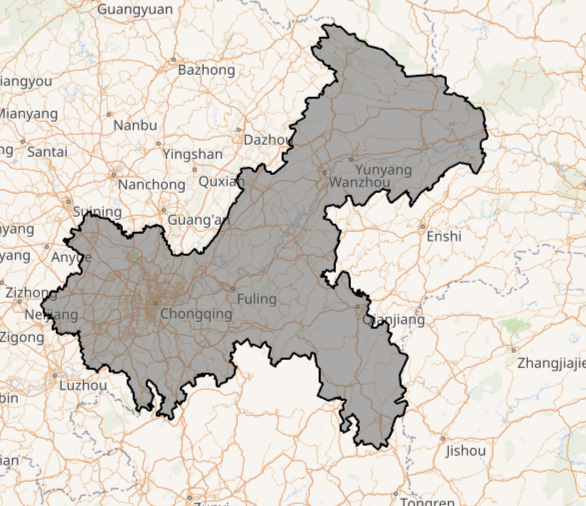
That is the population of Texas and New Mexico combined, all in one administrative zone.
With that number in mind, you would expect to see a city packed with people and tourists. What I found was very different.
Empty shopping areas
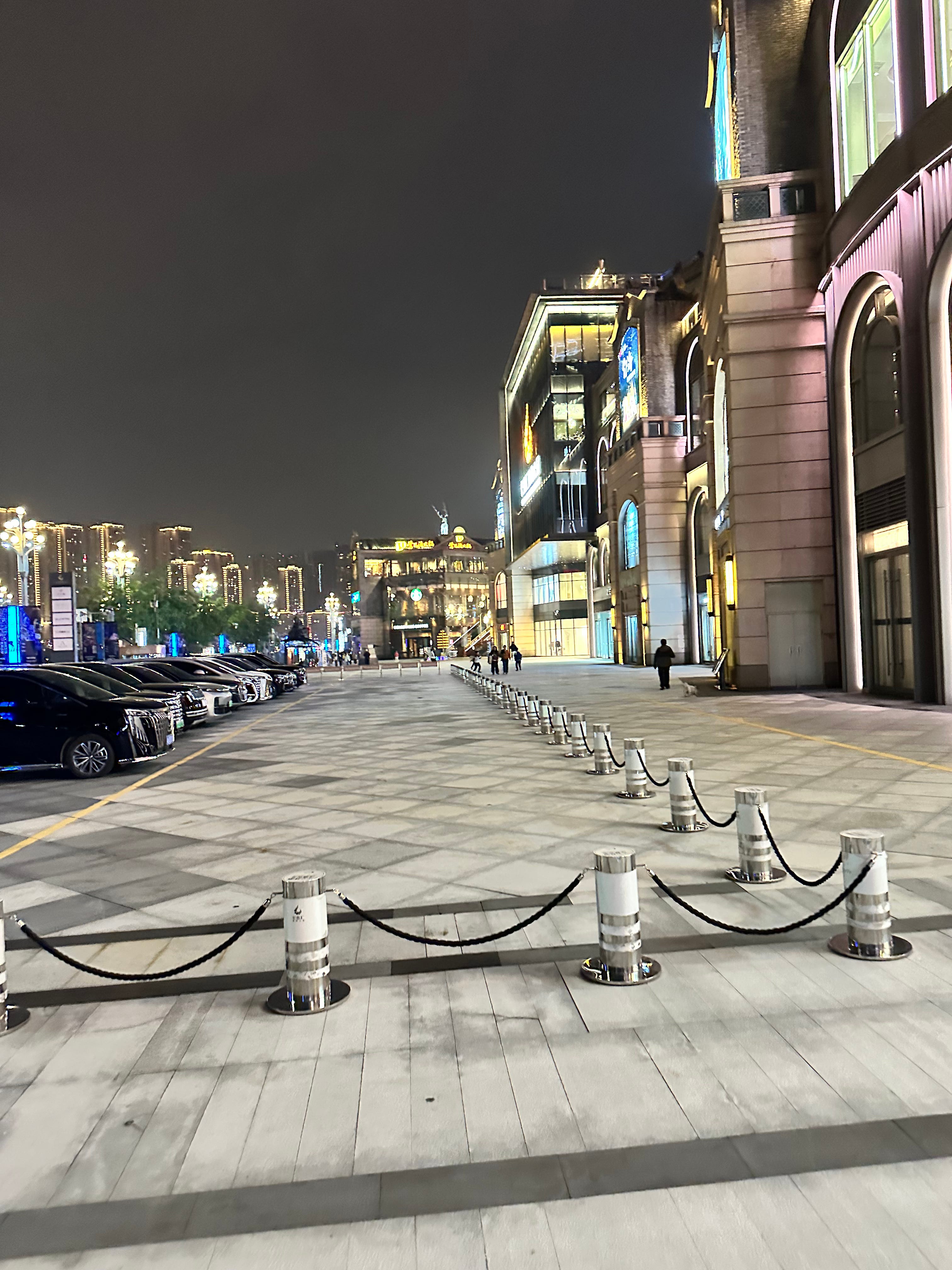
Empty Buildings
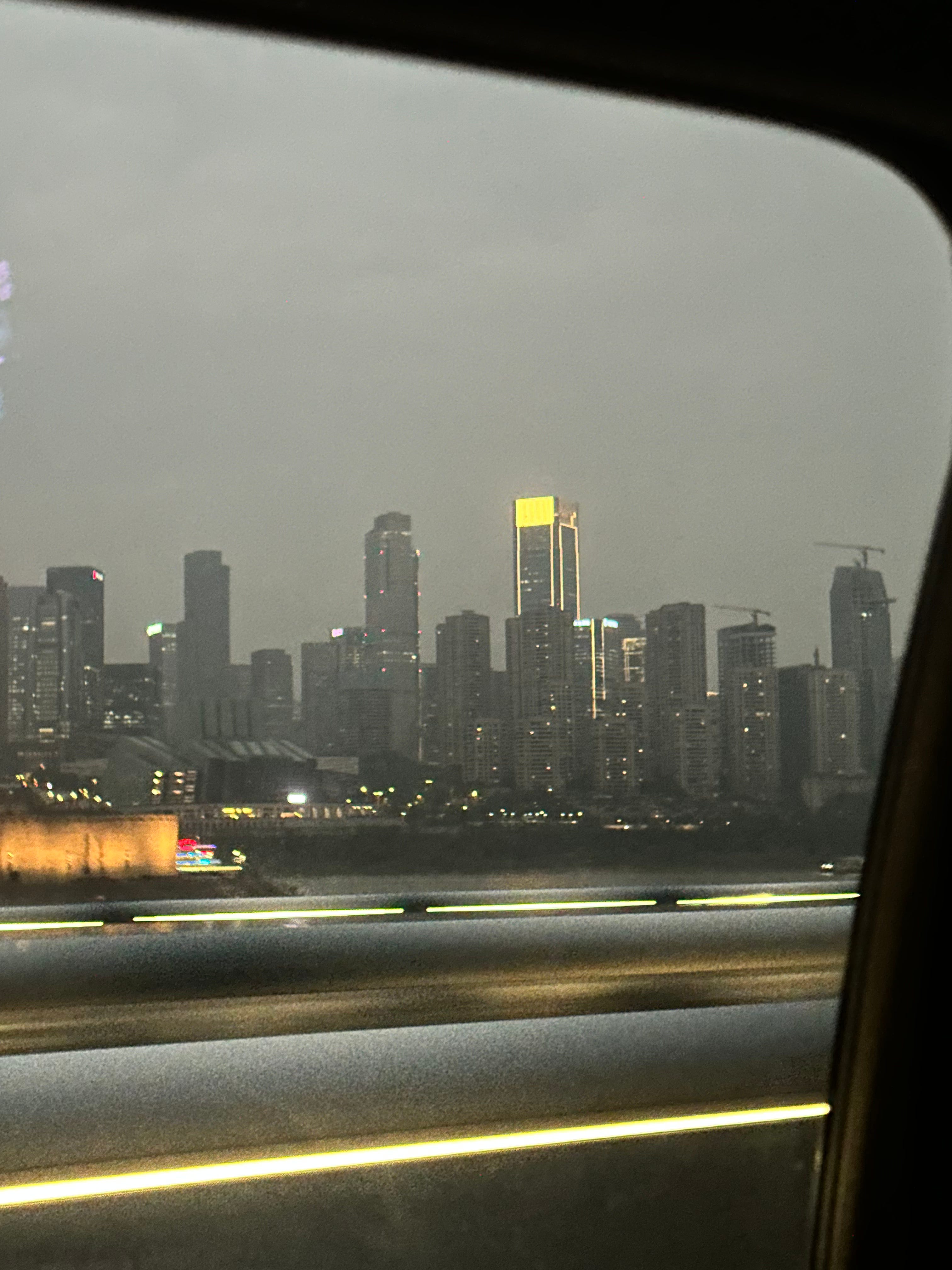
Even where Mixue, China’s rising fast food chain, opened its new superstore there don’t seem to be any people.
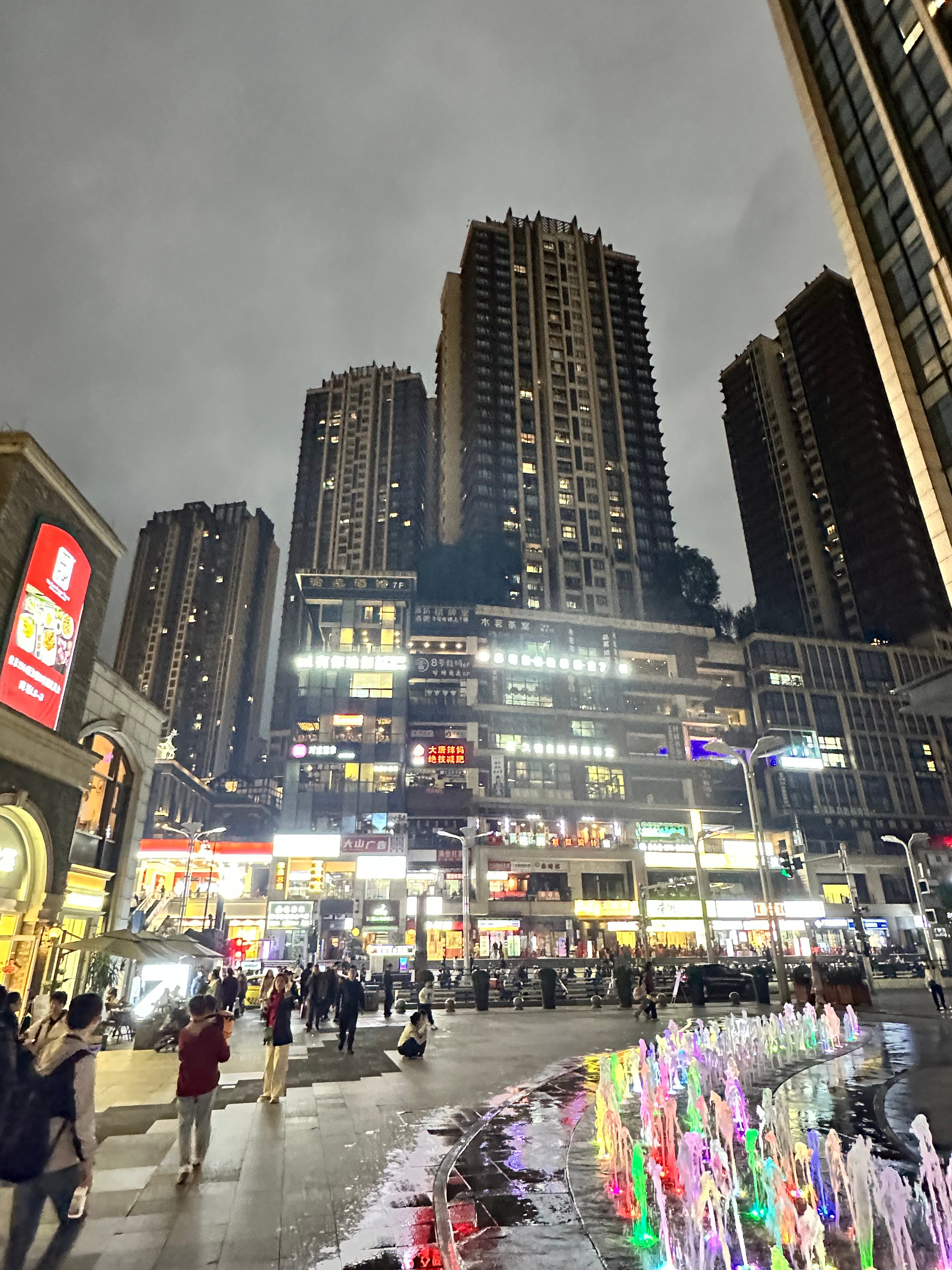
One explanation for the empty apartments is the implosion of Evergrande and Country Garden, two of China’s largest real estate firms. They got caught up building apartments as investments that turned into a major problem. Many of the apartments on Chongqing’s riverbank were likely sold to investors with no one ever intending to live in them due to a combination of the restriction on investment opportunities for Chinese citizens and preference for reselling unoccupied apartments.
This is the phenomenon of the “Ghost City.” In China, because the stock market is risky, people put their money into apartments. They buy a second or third home as a bank account made of concrete. They don’t rent it out because they want to keep it “new” for resale.
In Chongqing, the emptiness felt structural.
It wasn’t just a few rich people’s spare homes. It was miles of housing built for a middle class that hadn’t arrived. The city had built infrastructure for a future where the population keeps growing forever. But standing there in the dark, I realized that future had been cancelled.
This scene repeated in the rural parts of Chongqing and the outskirts of the city. A question kept repeating: where are all the people?
Part VII: The Great Decoupling
What I witnessed in Chongqing, and what the data detectives are seeing in the spreadsheets, is a “decoupling.”
For years, China’s economic reputation was pegged to the number 1.4 billion. That number justified building the high-speed trains, the massive airports, and the millions of apartments. It justified the factory orders from companies like Apple and Nike, who wanted to sell shoes and phones to 1.4 billion customers.
But now, reality is decoupling from the official story.
The “Missing People” are a mix of three groups:
The Statistical Ghosts: The ~100 million people who were added to the books by local officials wanting bonus money.
The Missing Children: The 12 million+ babies who were never born because young people stopped having families.
The Uncounted Lost: The millions of elderly who passed away during the pandemic without being recorded.
When you add these groups together, you get a country that is significantly smaller, older, and quieter than the world realizes.
This explains why China’s economy is struggling to recover.
You cannot force people who don’t exist to buy houses.
You cannot force ghost children to fill kindergartens.
The housing market is crashing not just because of bad debt, but because there are already 65 to 80 million empty homes in China, and not enough people to fill them.
Conclusion: The Ghosts in the Ledger
In the end, it doesn’t matter what the official spreadsheets say.
You can write down “1.4 billion” on a piece of paper, and you can repeat it on the news every night.
But you cannot force 1.4 billion people to manifest in the real world.
Behind every statistic is a human story, and that is perhaps the saddest part of this investigation. The “missing people” are not just data errors. They represent the grandchildren who were never born because their parents were too worried about the future to have them. They represent the grandparents who passed away quietly in crowded hospital corridors, their passing unmarked by the state. The numbers tell us the scale of the change, but the empty chairs at the dinner tables tell us the cost.
We may never know the exact number.
Is the real population 1.28 billion?
Is it 1.2 billion?
Or is it even lower?
The precise digit is less important than the direction the arrow is pointing. The era of China’s endless growth is over.
As I left the darkened streets of the city, looking back at those silent towers, I realized the mystery wasn’t about where the people went.
The mystery is how long the world can keep pretending they are still there.