


If you missed last week’s essay (”Here We Go Again”): The U.S. captured Venezuela’s president in a surgical nighttime raid, and soon announced it would “run” the country until a “safe transition,”. Donald Trump also declared the Monroe Doctrine, now the “Donroe Doctrine”, was back in force and the Western Hemisphere belonged to America.
On January 3rd, 2026, while Delta Force operators were preparing to breach Nicolás Maduro’s residence in Caracas, a Chinese delegation led by Xi Jinping’s Special Envoy was wrapping up a meeting at the presidential palace.
They were still in Caracas when the bombs fell.
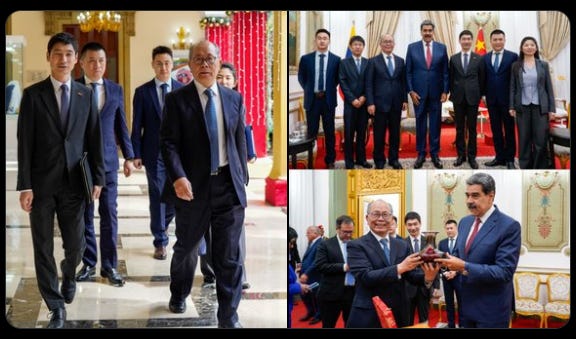
The military operation took two hours and twenty minutes.
In Beijing and Taipei, the question on everyone’s mind is whether what happened in Caracas could happen in Taiwan.
Chinese military commentators wasted no time drawing parallels. Social media filled with analysis of how the PLA could replicate a “decapitation strike” against Taiwan’s leadership.
The logic is seductive: surgical precision, overwhelming force, and speed can neutralize a government before the world can react.
Venezuela’s military never fired a shot.
Now Maduro finds himself facing a potential life sentence in a New York jail cell, not the presidential palace.
If America can do it in its backyard, why can’t China do it in its own?
Maybe it can. But when you look closely at what China actually is, not the paper tiger of its critics or the unstoppable juggernaut of its propagandists, the picture gets complicated fast.
The Technology Problem
One of the first things that people asked was “how could this happen?”
The immediate question was: “How could this happen?"
Venezuela had deployed China’s advanced air defense technology precisely to avoid this type of situation.
The JY-27A radar.
The HQ-9 surface-to-air missile system, China’s answer to the Russian S-300.
This was supposed to be a showcase for Chinese military exports, proof that Beijing could provide credible alternatives to Western and Russian systems.
The U.S. struck anyway.
We don’t know the full technical details of how American forces neutralized Venezuelan air defenses. But we know the outcome: 150+ aircraft operated over Venezuelan airspace, and not a single one was shot down. The operation succeeded so completely that Maduro was captured in his residence before any effective resistance could be organized.
The HQ-9 is not some obsolete system. It’s a modern platform that China has deployed for its own defense and sold to allies. If American forces can defeat it in Venezuela, the implications for similar systems defending China’s coast are uncomfortable.
Chinese military planners now have concrete evidence that their exported systems, and potentially their domestic ones, may not perform as advertised against American capabilities. Venezuela was supposed to demonstrate Chinese technology. Instead, it was publicly embarrassed.
This overconfidence may have roots in a 2010 intelligence coup. Chinese counterintelligence dismantled the CIA’s network in China, identifying and eliminating dozens of American sources. Beijing concluded its capabilities were simply superior to Washington’s. But that was counterintelligence, not air defense. And when America commits to a military objective, the calculation changes entirely.
The air defense failure points to a deeper problem. China hasn’t actually tested its military against a serious adversary in decades.
The Combat Problem
The last time China fought a real war was 1979.
Deng Xiaoping ordered 200,000 PLA troops to invade Vietnam. The stated goal was to “punish” Hanoi for ousting China’s ally, the Khmer Rouge, and for mistreating ethnic Chinese in Vietnam.
China expected a quick, decisive victory. What it got was a bloodbath.
Vietnam had just spent a decade fighting the United States. Its forces were battle-hardened, experienced in guerrilla warfare, and intimately familiar with the terrain. They let the Chinese advance, then bled them in the hills and jungles of the northern provinces.
The PLA had spent the previous three decades purging and remodeling itself after it had expelled the Japanese in WWII. What resulted was an army filled with systemic issues.
Communication between units was poor and their logistics broke down almost immediately.
Officers had been selected for political loyalty during the Cultural Revolution, not military competence.
Troops were poorly trained and equipped with outdated weapons.
The “human wave” tactics that had worked in Korea were suicidal against Vietnamese defenders with automatic weapons.
After three weeks, China declared victory and withdrew. The casualty figures tell a different story.
Beijing has never released official numbers. Most historians put Chinese military deaths at roughly 26,000-30,000 and Vietnamese military deaths at roughly 20,000-30,000. China invaded with superior numbers and still suffered comparable or higher casualties than the defenders.
The war also revealed something the PLA’s leadership preferred not to discuss: China’s military could not sustain operations far from its supply lines. The invasion penetrated only about 40 kilometers into Vietnamese territory before logistics issues forced a halt.
The Taiwan Strait is 130 kilometers wide at its narrowest point. An amphibious invasion would require exactly the kind of sustained logistical capability the PLA failed to demonstrate in 1979.
Has the PLA improved since then?
Certainly.
Modernized equipment, restructured command, professional training.
But it hasn’t been tested.
Moving supplies from a central China factory to a port city is one thing.
Supplying an army across a contested ocean channel while under fire is something else entirely.
The 1979 war remains the PLA’s most recent large-scale combat operation.
Every general currently serving has never commanded troops in actual battle.
Compare this to the U.S. military, which has been in continuous combat operations for most of the past 35 years. American officers have commanded in Grenada, Panama, Iraq twice, Afghanistan, Syria, and now Venezuela. They’ve made mistakes, learned, and adapted.
The PLA has trained. That’s not the same thing.
Xi Jinping appears to know his military has problems. His response has been the largest purge of the People’s Liberation Army since the founding of the PRC.
The Purge Problem
Since 2023, Xi has removed two defense ministers. Two consecutive Rocket Force commanders have been expelled. In October 2025 alone, nine senior military officials were purged, including He Weidong, a vice chairman of the Central Military Commission. That’s the first time a sitting CMC vice chairman has been removed since 1967.
The official reason is corruption. The corruption appears to be real, with procurement contracts being awarded based on kickbacks rather than quality. Many of the officers have reportedly bought their promotions rather than earning them.
This leads U.S. intelligence officials to conclude that critical weapons systems may have reliability problems because the officials who oversaw them were more interested in personal enrichment than military readiness.
Seven of the nine officials purged in October 2025 had previously served in the Eastern Theater Command, the command responsible for Taiwan contingency planning.
If Xi were preparing for imminent action against Taiwan, he would not be wiping out the leadership of the command responsible for executing it. You don’t fire your generals right before a war. You fire your generals when you discover they’re not ready for one.
There’s another reading of the purges, though.
Every month, some China commentator predicts a revolt brewing against Xi. It never materializes, but the fear might be real in Beijing.
These generals knew the Eastern Theater Command intimately.
They know what an invasion would actually cost.
If they were counseling caution—telling Xi that Taiwan would be a bloodbath—he might prefer generals who tell him what he wants to hear.
The optimistic interpretation: Xi is cleaning house because he knows his military isn’t ready. The darker interpretation: he’s clearing out anyone who might tell him no.
The purges suggest Xi has concluded that his military has serious problems, problems serious enough that major operations would be risky. U.S. intelligence appears to agree. According to Bloomberg’s reporting on their assessments, the corruption inside the Rocket Force “is so extensive that U.S. officials now believe Xi is less likely to contemplate major military action in the coming years than would otherwise have been the case.”
The purges might eventually produce a more capable military.
But capability isn’t Xi’s only constraint.
Even if the PLA were ready, the question remains whether China can afford a war.
The Economic Problem
China’s economy is in trouble.
The real estate crisis that began with Evergrande’s collapse in 2021 has not been resolved. Country Garden, once considered stable, is facing liquidation hearings. Vanke, a state-backed developer, which I covered last month, is now signaling debt restructuring needs.
Investment in real estate development is down nearly 15% year-over-year.
China’s real estate market is now in its fifth consecutive year of contraction.

Demographics are worse.
China’s total fertility rate has fallen to 1.0, among the lowest in the world. The working-age population has been shrinking since 2012. Twenty-two percent of the population is now over 60.
Youth unemployment hovers around 17%, despite government programs and manipulated statistics. Twelve million college graduates entered the workforce in 2025, the largest class in history, competing for a shrinking number of jobs.
Producer prices have been negative for over three years and consumer confidence continues to fall.
Local government debt sits somewhere between $9 trillion and $12 trillion in off-balance-sheet financing vehicles.
If those were not big issues, China also has to know invading Taiwan won’t be cheap.
Estimates of a Taiwan conflict range from $2 trillion (Rhodium Group) to $10 trillion (Bloomberg Economics) in losses. China’s exports currently account for 20% of their GDP. A war could trigger sanctions that could cut the country off from global markets.
The German Marshall Fund put it bluntly: conflict would bring “massive economic disruption, catastrophic military losses, significant social unrest, and devastating sanctions.” It would risk “cutting off the country’s only sources of economic growth in the future, leaving its economy entirely dependent on weakening domestic demand.”
Xi could still choose war.
Leaders have made economically irrational decisions before.
But even if he did, there’s another question: who would fight it?
The Demographic Problem
For decades, China enforced a policy that most families could have only one child. The economic consequences are well known: aging population, shrinking workforce, pension crisis. The military consequence is rarely discussed.
According to Professor Liu Mingfu of the PLA National Defence University, at least 70% of PLA soldiers are from one-child families. Among combat troops, the figure rises to 80%.
In previous generations, a family might have four or five sons. Losing one in war is devastating, but the family continues. The parents still have support in old age. The lineage survives.
In one-child China, losing that son means the end of everything.
The family line terminates.
Four grandparents and two parents who invested everything in a single child are left with nothing.
The Chinese have a term for these families: shidu, meaning “lost their only.” Over one million Chinese families have already experienced this, losing their only child to accidents, illness, or other causes. Approximately 76,000 families join their ranks every year.
China has now repealed the one-child policy, but not much has changed. Young Chinese aren’t rushing to have children. The “tang ping” (lying flat) and “bai lan” (let it rot) movements reflect a generation that’s checking out of a system that demands everything and promises little.
Professor Liu stressed in a 2012 government report what should be obvious: “Sending a Chinese family’s only son to battle has been taboo since ancient times.”
This raises a question about the PLA’s rank and file. Why do young Chinese join the military?
Research from MERICS (the Mercator Institute for China Studies) found that “the dominant reason is the financial benefits... Practical rather than geopolitical or ideological reasons appear to dominate military career considerations.”
With youth unemployment at 17% and 12 million university graduates competing for shrinking opportunities, the PLA offers something increasingly rare: a stable job with benefits. Seventy-three percent of 2024 graduates said they preferred government or state positions, up from 51% in 2019.
The military has responded by sweetening the deal. In 2020, China approved a 40% salary increase for PLA personnel. Recruitment drives happen twice a year now, up from once. The messaging emphasizes career development, technical training, and social mobility.
The messaging does not emphasize dying for the motherland.
The gap between signing up for a stable paycheck and signing up to storm a beach under fire is vast. RAND Corporation research found that “negative perceptions of the PLA limit the quality and educational background of those willing to join” and that life in the PLA “is widely perceived as harsh.” Desertion and draft evasion are “widespread problems.”
The government’s own Study Times warned that “soldiers from the one-child generations are wimps who have absolutely no fighting spirit.”
The Soviet Union learned this lesson the hard way.
When the Red Army invaded Afghanistan in 1979, the leadership expected a quick campaign.
What they got was a decade-long mess that cost approximately 15,000 Soviet lives.
The numbers were manageable by historical standards. The Soviets lost far more in World War II.
But something had changed in Soviet society.
Families were smaller, making each death hit harder.
In response, mothers organized for the first time.
The Committee of Soldiers’ Mothers became a force the regime couldn’t contain.
Grief went public.
At a 1985 Politburo meeting, Gorbachev read citizen correspondence expressing “mothers’ grief over the dead and the crippled.”
It wasn’t the only factor in the Soviet withdrawal, but it mattered.
A war that military planners considered sustainable became politically impossible because society had changed underneath them.
China’s demographic situation is more extreme than the late Soviet Union’s. One-child families are the norm, not the exception. The emotional and economic investment in each child is even more concentrated.
We got a preview of how China handles casualties in 2020. A border clash with India in the Galwan Valley killed soldiers on both sides. India announced 20 deaths. China delayed.
When Beijing finally acknowledged casualties, the official figure was four. Independent estimates suggested the real number was higher. A journalist who questioned the official figures was arrested.
This was a minor skirmish in a remote location. Yet the government treated casualty numbers as a state secret worth imprisoning people over.
The German Marshall Fund’s modeling of a Taiwan scenario estimates 100,000 PLA personnel killed after several months of fighting. One hundred thousand only sons. One hundred thousand family lines ended.
Maybe the Party could suppress the grief.
Maybe nationalism would override mourning.
Or maybe Xi looks at those numbers and decides the cost is too high.
Even if he decided to pay it, Taiwan has spent 75 years preparing for exactly this scenario.
The Taiwan Problem
Every country has multiple priorities.
The U.S. balances domestic concerns against global commitments.
Japan juggles economic policy, demographic decline, and regional security.
South Korea manages North Korea, China relations, and internal politics simultaneously.
Taiwan has one priority: survive.
Everything Taiwan does militarily, diplomatically, and economically flows from a single question: how do we still exist as an independent entity in ten years, twenty years, fifty years? There is no “peacetime” strategic posture. There is no luxury of assuming the threat will remain theoretical. For 75 years, Taiwan has lived with the knowledge that the world’s most populous country claims its territory and reserves the right to take it by force.
This clarity of purpose produces a different kind of defense planning.
The “porcupine strategy” is a deliberate doctrine: make Taiwan so painful to digest that China decides the meal isn’t worth it. Instead of trying to match China ship for ship, Taiwan aims to make invasion so costly that China never attempts it.
In the words of Winston Churchill: “We shall defend our island, whatever the cost may be... we shall never surrender.” Taiwan has adopted that posture.
Coastal defense missiles that can sink landing ships before they reach shore. Hundreds of them, dispersed across the island, mobile, difficult to target. Naval mines that can be deployed quickly to choke the landing beaches. Mobile air defenses that can relocate after firing. Anti-armor weapons by the thousands.
The July 2025 Han Kuang exercises were Taiwan’s largest since 1984: over 22,000 reservists, 10 days of live-fire operations, explicitly practicing anti-invasion scenarios. PLA analysts studied the exercises and admitted the porcupine strategy “could pose a significant threat” to a Chinese campaign.
Taiwan isn’t doing this alone. In December 2025, the Trump administration approved an $11.15 billion arms package, the largest single sale in history: 82 HIMARS rocket artillery systems, 420 ATACMS missiles, 60 self-propelled howitzers, Javelin and TOW anti-armor missiles, military software and drones. Since 2015, the U.S. has notified Congress of more than $28 billion in approved sales to Taiwan.
Taiwan has also increased its own defense budget to over 3% of GDP, exceeding NATO’s minimum standard. A special program over eight years will fund the “Taiwan Dome” integrated air defense system and indigenous submarine development.
Taiwan’s military has one job: prepare for invasion.
Every dollar goes toward the same purpose.
Every exercise practices the same scenarios.
Every officer’s career is built around the same threat.
China has more resources. But Taiwan has more focus. In a war, that might matter.
And Taiwan wouldn’t be fighting alone. Japan has been quietly preparing for this scenario for years.
The Regional Problem
For 80 years, Japan’s military was constrained by Article 9 of its constitution, which renounced war and prohibited offensive military capability.
That era is ending.
Japan’s defense budget has grown for 11 consecutive years. The FY2026 budget exceeds ¥9 trillion ($58 billion), part of a five-year plan to double military spending. Japan is acquiring long-range missiles, including Tomahawks and indigenous Type-12 missiles with 1,000-kilometer range. It’s developing a sixth-generation fighter jet with the UK and Italy.
More significantly, Japan has begun reinterpreting what self-defense means. On November 7, 2025, Prime Minister Sanae Takaichi told the Diet that a Chinese attack on Taiwan “could constitute an existential crisis for Japan”—a “survival-threatening situation” under Japan’s 2015 security legislation that could enable collective self-defense.
That’s the first time since 1945 that a Japanese leader has suggested Japan might intervene militarily in a Taiwan conflict.
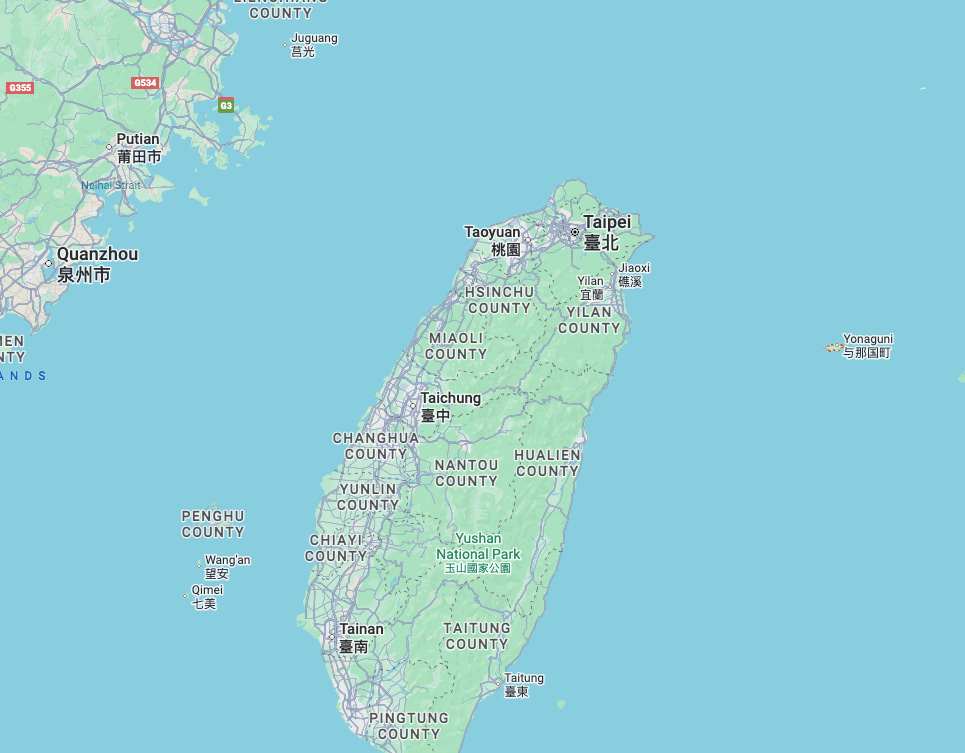
Japan has deployed missile units on Yonaguni Island, just 110 kilometers from Taiwan. China can’t attack Taiwan without considering Japanese involvement.
South Korea presents a different picture. In December 2024, President Yoon Suk-yeol declared martial law. It lasted six hours before the National Assembly voted it down. By January 2025, he had been arrested and indicted for leading an insurrection. In April 2025, the Constitutional Court removed him from office.
The new president, Lee Jae Myung, has pursued a more balanced approach to China. South Korean public opinion strongly favors neutrality in any Taiwan conflict, and Lee has signaled he won’t take sides.
But South Korea hosts 30,000 U.S. troops and critical military infrastructure. And analysts warn that Kim Jong Un might escalate provocations if China attacks Taiwan, creating simultaneous crises on the peninsula and in the strait.
China can’t move on Taiwan without considering what happens everywhere else.
The Occupation Problem
Even if China took Taiwan, what then?
China struggles to project cultural influence abroad.
Hollywood dominates global entertainment.
South Korea has K-pop and K-dramas. Japan has anime and video games.
China’s highest-grossing animated film, Ne Zha, made $726 million at the box office, almost all of it domestic.
Black Myth: Wukong was 2024’s breakout video game success, but its audience was primarily gamers already deep into that genre.
An invasion would need to be followed by occupation.
Occupation requires some degree of acceptance from the population.
If China takes Taiwan by force, it inherits an island of nearly 24 million people who it would have to “occupy” forever.
The Honest Answer
Will China invade Taiwan?
I don’t know.
Anyone who tells you they know is selling something.
The case for “yes, eventually”:
China has made reunification a core political commitment
The U.S. is signaling focus on the Western Hemisphere
Xi has consolidated power to a degree not seen since Mao
The case for “no, not soon”:
China’s military track record is poor and untested
Economic headwinds constrain adventurism
The one-child generation signed up for jobs, not death
Regional responses raise the stakes
Taiwan has been preparing for this specific conflict for 75 years
What I would watch:
Whether the PLA stabilizes after the purges or continues churning leadership
Whether China’s economy stabilizes or deteriorates further
Whether U.S. attention genuinely shifts to the Western Hemisphere or pivots back to Asia
Taiwan’s own defense preparations and political stability
Venezuela showed that surgical strikes can work.
But Venezuela was a decaying autocracy with a military that existed on paper.
Taiwan is a functioning democracy with a military that has been preparing for this scenario for 75 years.
China may dream of more Taiwan bubble tea. But getting it may cost more than they are willing to pay.
This is the companion piece to “Here We Go Again” (Venezuela essay).
Here We Go Again

In the early hours of January 3rd, 2026, Delta Force operators breached a residence in Caracas.