

You’re 26. You make $42,000 a year. The median home in your city costs $420,000, which is ten times your salary. Your parents bought theirs at three times theirs.
You have a 401(k) that might matter in 40 years. You have student loans that matter right now. You don’t have a house, you’re not going to have a house, and every financial advice column tells you to skip the latte and invest the difference.
So when Coachella offers to split $649 into four payments of $162.25, you click yes.
Of course you do.
Sixty percent of Coachella‘s general admission buyers this year purchased tickets on payment plans. Not because they’re bad with money. Because the math of their lives pushed them here.
The Logic
This is the part most coverage gets wrong. The headlines frame Buy Now, Pay Later as reckless spending by young people who can’t delay gratification. That framing misses what’s actually happening.
A LendingTree study found that 23% of Americans have used BNPL to pay for concerts or festivals. Among Gen Z, it’s 37%. Among millennials, 35%.
One in three young Americans has financed a concert. And if you look at what else is available to them, it starts to make sense.
Homeownership feels impossible. The typical first-time home buyer is now 56 years old. Retirement planning feels like science fiction when you’re carrying student debt into your thirties. The big financial milestones that used to define adulthood have been priced out of reach for most people under 35.
So what do you spend on?
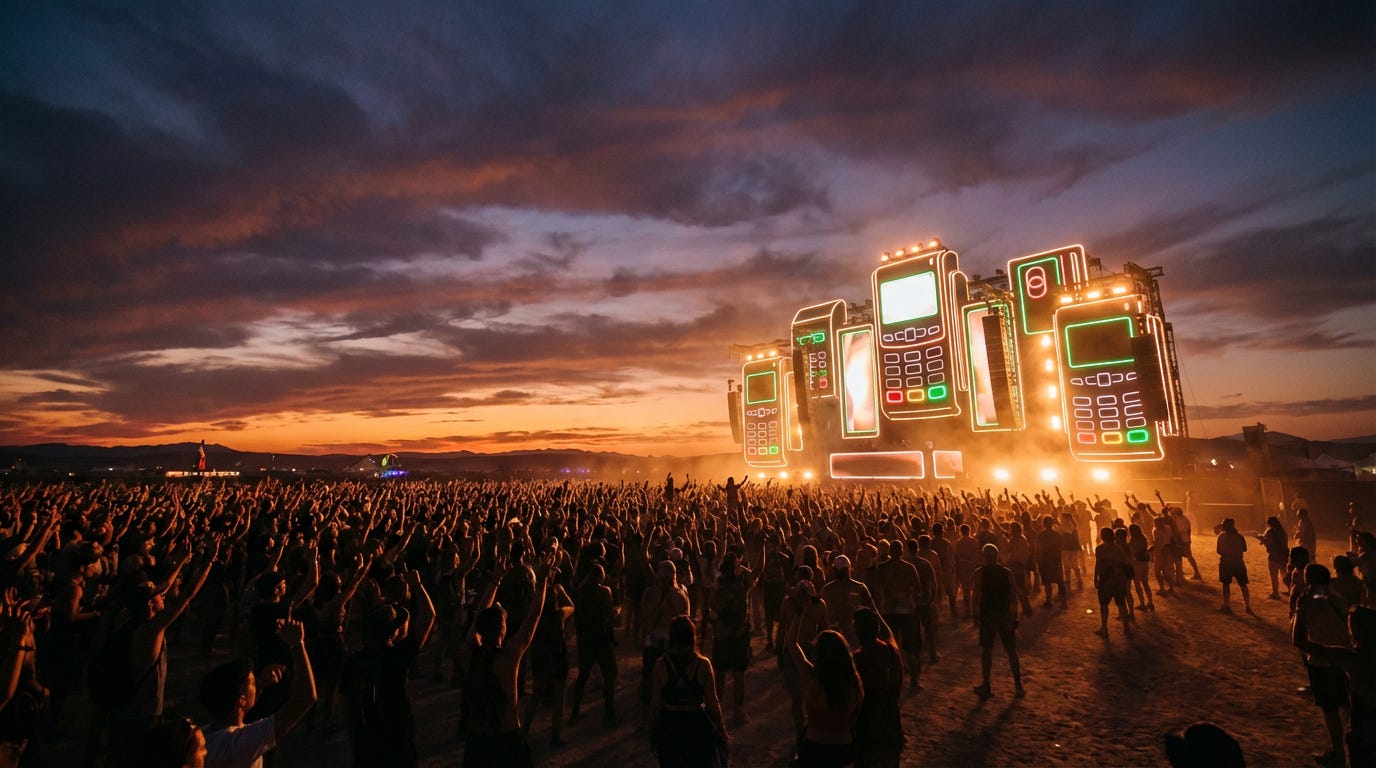
The thing you can actually have. A weekend in the desert with your friends. A memory that’s yours.
The “treatonomics“ trend puts a name to it: small luxuries as self-care in an economy that won’t give you the big ones. You deserve that concert. You’ve earned that experience. And honestly? The framing has a point. Life is hard. Joy matters.
The Numbers
BNPL makes spending frictionless. That’s the product. And friction, it turns out, was doing a lot of work.
41% of BNPL users were behind on payments in the past year. That’s up from 34% the year before. The trend line is going the wrong direction.
More than half of Americans, and 57% of Gen Z, believe BNPL encourages overspending. They know it. They use it anyway. Because $162.25 doesn’t feel like $649, even when it is.
The number that should worry everyone: one in three concertgoers expects to go into debt over concerts or festivals this year. Not worries about debt. Expects it. Plans for it.
The Invisible Ledger
Traditional credit has guardrails. You apply for a credit card. The bank checks your credit history. It sets a limit. If you miss payments, it hits your credit score. Future lenders see the damage. The system isn’t perfect, but it’s visible.
BNPL bypassed all of it.
Until recently, most BNPL transactions weren’t reported to credit bureaus. You could carry loans from Afterpay and Klarna at the same time, and neither would show on your credit report. Lenders couldn’t see how much you owed. You couldn’t either, unless you manually tracked every four-payment plan across every app.
Regulators have been playing catch-up. Australia’s ASIC review found the same pattern. The UK’s Woolard Review recommended bringing BNPL under financial regulation. The debt was real.
It just didn’t count. Until it did.
The Reckoning
In June 2025, FICO announced it would start incorporating BNPL data into its credit scores. In April 2025, Affirm began sharing consumer loan data with Experian.
For people who’ve been paying on time, this could be a small win. On-time payments will now count for something.
For people who’ve been stacking BNPL loans across platforms, treating them like money that doesn’t show up anywhere, the bill is arriving. Credit scores will finally reflect what they actually owe.
BNPL grew fast because spending felt consequence-free.
Miss a payment? Doesn’t touch your credit.
Stack multiple loans? Nobody’s counting.
That era is ending, and the people who leaned on it hardest are the ones least prepared for what comes next.
The Real Price
Coachella entry-level tickets went from $499 to $649 between 2024 and 2025. The BNPL option added another $41 in enrollment fees. That’s $690 for a weekend, split into payments that feel smaller than they are.
The average concertgoer now spends around $1,000 per year on live events. For a Gen Z worker earning median wages, that’s roughly 3% of their annual after-tax income. On concerts.
If that’s a conscious choice made with cash in hand, fine. Spend your money on what makes you happy. But BNPL removes the moment where you check whether you actually have the money. It replaces a decision with a checkout flow.
Nobody’s sitting down, looking at their bank account, and choosing concerts over savings. They’re tapping a button that says “4 easy payments” and dealing with the math later.
The Damage
A generation locked out of homeownership, watching retirement drift further away every year, decided to spend money on the one thing they could actually experience. Not because they’re financially illiterate. Because the financial system has stopped working for them.
The financial industry saw this as an opportunity and built a product to exploit it. BNPL doesn’t solve the problem of things being too expensive. It makes expensive things feel cheap. It turns a $649 decision into a $162 impulse. And it does it at the exact moment you’re most emotionally invested, standing in a checkout line with your friends already making plans.
The scary part isn’t that people are financing Billie Eilish tickets. The scary part is that it makes perfect sense. When the traditional markers of financial progress are out of reach, of course you optimize for the things within reach.
Of course you click “4 easy payments.”
Of course sixty percent of Coachella goes on a plan.
The question nobody is asking: what kind of economy makes this the logical choice?
And right now, nobody in charge is asking that question.
They’re too busy building the next payment plan.